As the possession game sputters, the grind has become routine. A look at situational play, the long-ball dilemma, the Zubi-Rice pivot, the cost of defending, the underlying data, and what can improve
Thelonious Monk spent much of the 1970s as a recluse. He didn’t play many shows, but he kept his wit, as retold by Robin D. G. Kelley in The Life and Times of an American Original:
In March of 1976, Thelonious happened to be listening to a special broadcast by Columbia University’s radio station, WKCR, dedicated to his music. A guest expert began droning on about how Monk created extraordinary music, in spite of “playing the wrong notes on the piano.” Perturbed, Monk dialed the Columbia switchboard and left a message to “tell the guy on the air, ‘The piano ain’t got no wrong notes.’”
We can’t stop watching football, and we can’t agree on what football is. It’s art, but it’s not fully art, because art doesn’t usually have a clock or a scoreboard. When I go to museums or galleries, I’ve noticed the most enduring works typically feature zero (0) video assistant referees. Michelangelo, for all his foresight, didn’t put David in a Hollywood Bets shirt.
But it’s not the tidy competition of a 100m dash either. Part of the appeal of throwing a javelin or a shot put (or whatever) must be the cold truth of the result. In a world of vagaries and human factors and embarrassing little negotiations over lane changes and client approvals and social calendars, there is, alas, something clear and authoritative and knowable in this life. I have to imagine the expected javelin throw distance (xJTD) and the actual javelin throw distance are the same fucking number.
In football, the nerds assure us the scoreboard does, often, lie; at very least, it leaves itself open to interpretation.
Sounds like art to me. Maybe that’s why so many people insist Arsenal are playing the wrong notes.
Source: Arsenal.com
Occasionally, I put on old games, partially because I don’t sleep much, and partially because I like anchoring myself and getting a sense of what has actually changed (versus what just feels like it has). The other night, I put on an 89/90 Arsenal match. The first two goals were scored from inswinging corners.
Time is a flat circle. In The Simple Art of Murder (1944), the novelist and screenwriter Raymond Chandler wrote a critical essay examining the evolution of the detective story.
The classic detective story has learned nothing and forgotten nothing. It is the story you will find almost any week in the big shiny magazines, handsomely illustrated, and paying due deference to virginal love and the right kind of luxury goods. Perhaps the tempo has become a trifle faster and the dialogue a little more glib. There are more frozen daiquiris and stingers and fewer glasses of crusty old port, more clothes by Vogue and décors by House Beautiful, more chic, but not more truth.
Chandler wrote about the explosion of popular detective fiction, from the sheer volume of bad novels published, to how closely their contours can resemble those of the good ones. The stinkers fail for a million ordinary reasons, but largely because it’s hard to find a writer who can hold the cards of art and science in the same hand.
I suppose the principal dilemma … is that for any approach to perfection it demands a combination of qualities not found in the same mind. The coolheaded constructionist does not also come across with lively characters, sharp dialogue, a sense of pace, and an acute use of observed detail. The grim logician has as much atmosphere as a drawing board. The scientific sleuth has a nice new shiny laboratory, but I’m sorry I can’t remember the face.
The topics, the themes, the narrative thrust can help ‘platform’ a book. But really, it comes down to the skill of the author.
[S]ome very dull books have been written about God, and some very fine ones about how to make a living and stay fairly honest. It is always a matter of who writes the stuff, and what he has in him to write it with.
Like a detective in a Chandler story, Arteta and Arsenal have spent the season building a difficult case in a league that doesn’t give anything away. It has been a decidedly grind-it-out period, punctuated only by an obligatory thrashing of Spurs. With the discourse clanging, every week produces new post-mortems that proclaim the notes are all wrong, all while the team keeps stubbornly persevering. This late in the season, the particulars of the plot matter less than the character study underneath, that lingering question of who Arsenal will be at the end.
Billy's BBQ is a reader-supported publication. To receive new posts and support my work, consider becoming a free or paid subscriber.
Source: Arsenal.com
👉 I. What good looks like
“I always say that my ideal is to get pole with the minimum effort, and to win the race at the slowest speed possible.” — Alain Prost, four-time Formula 1 Champion
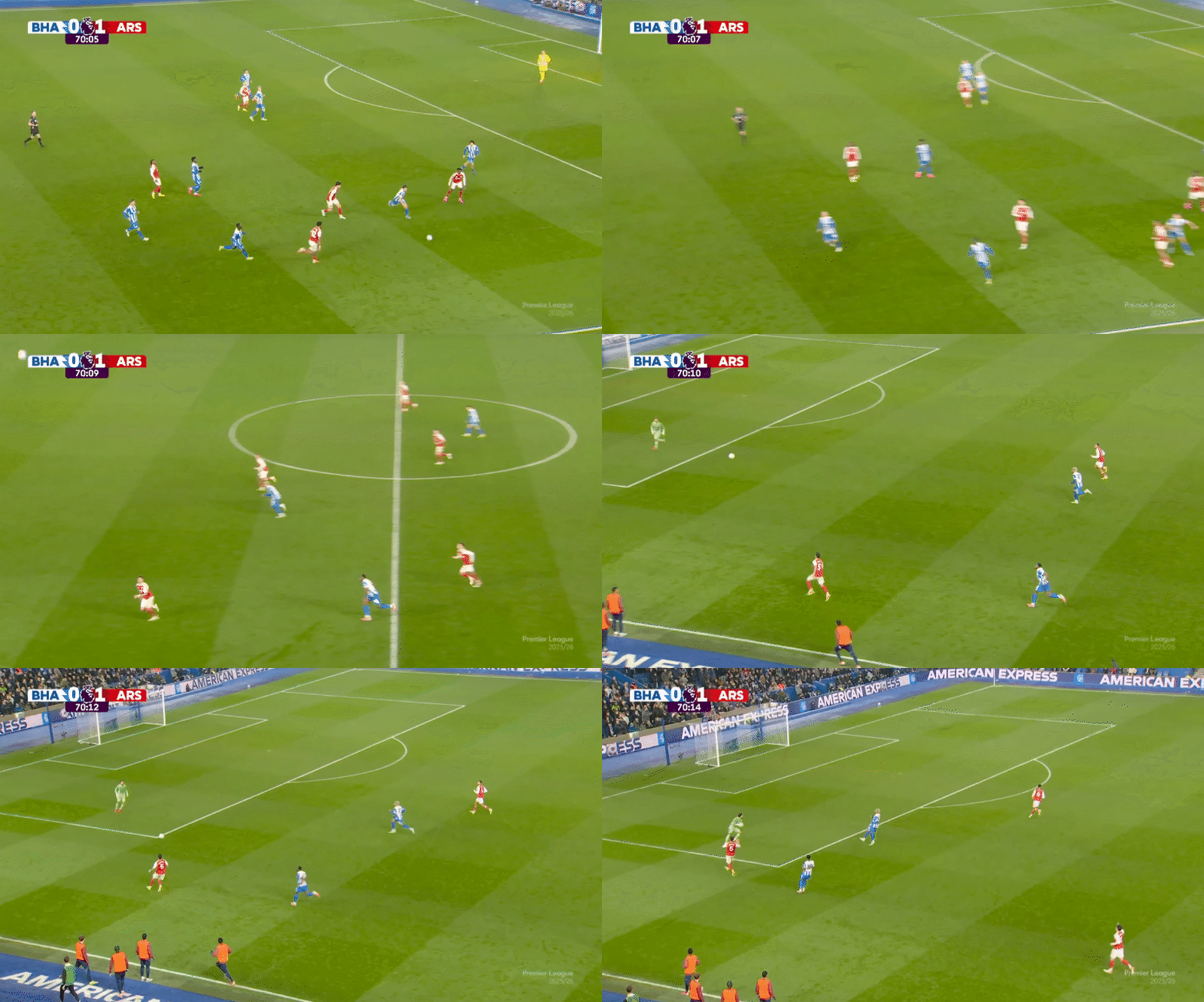
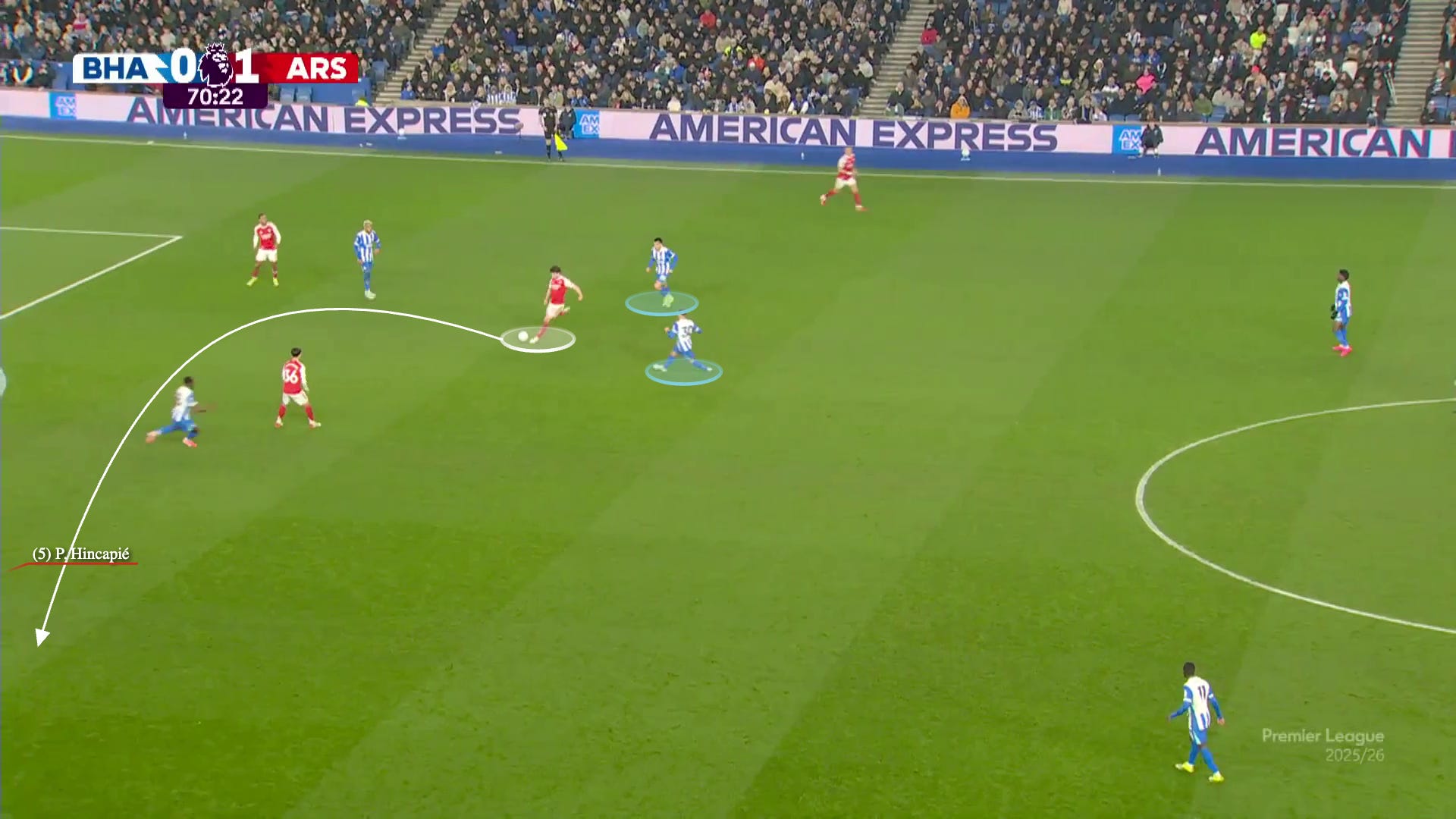
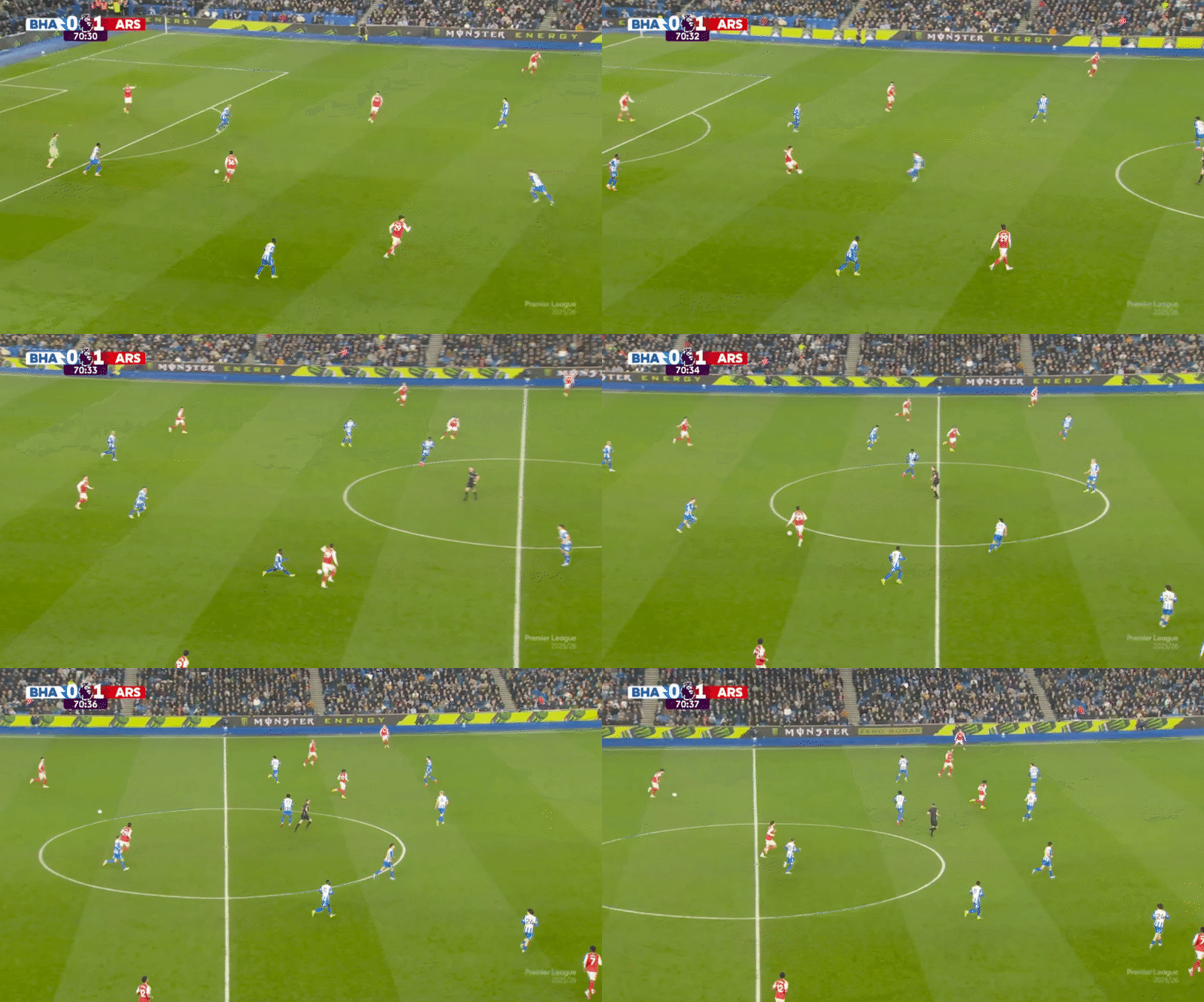
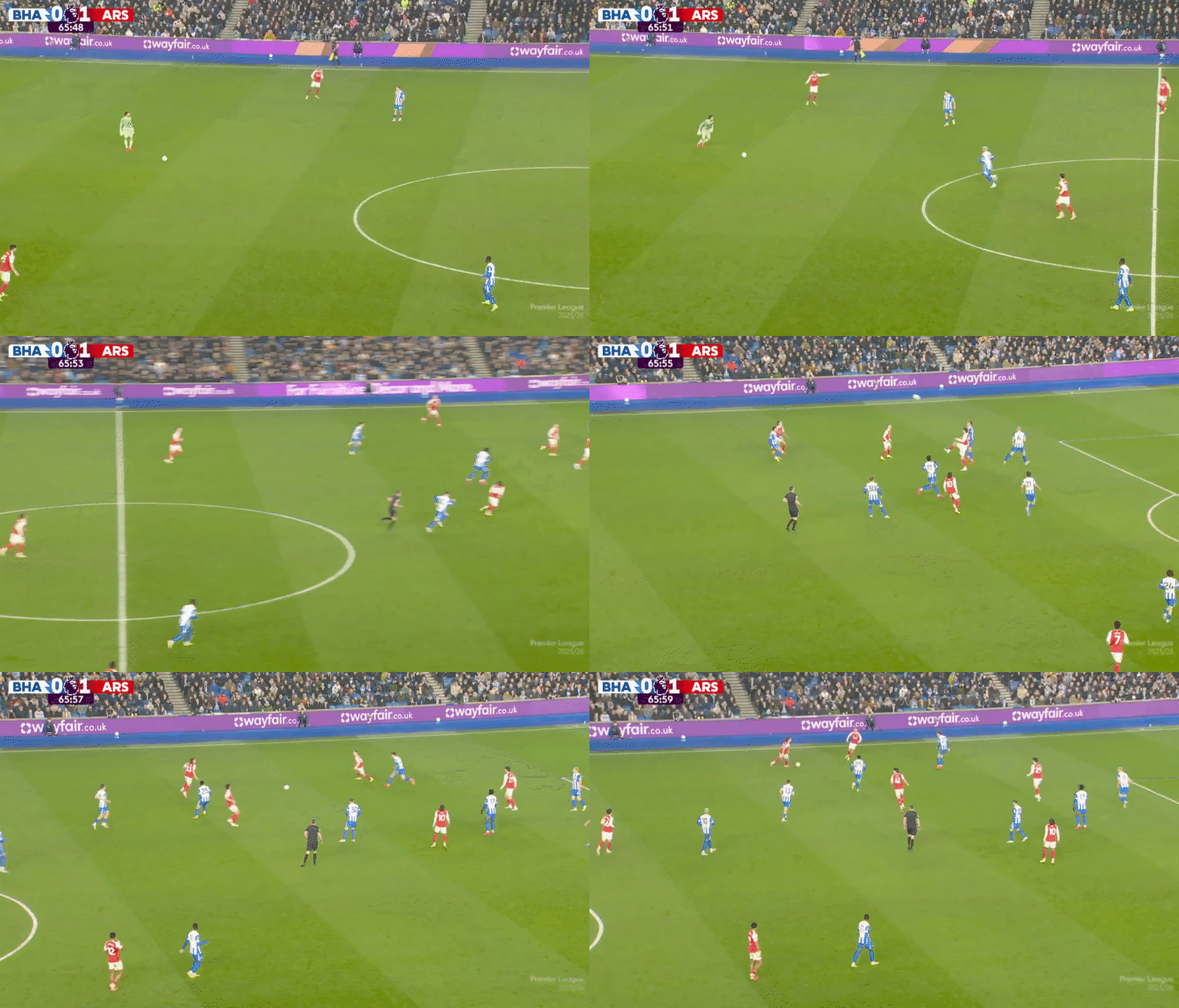
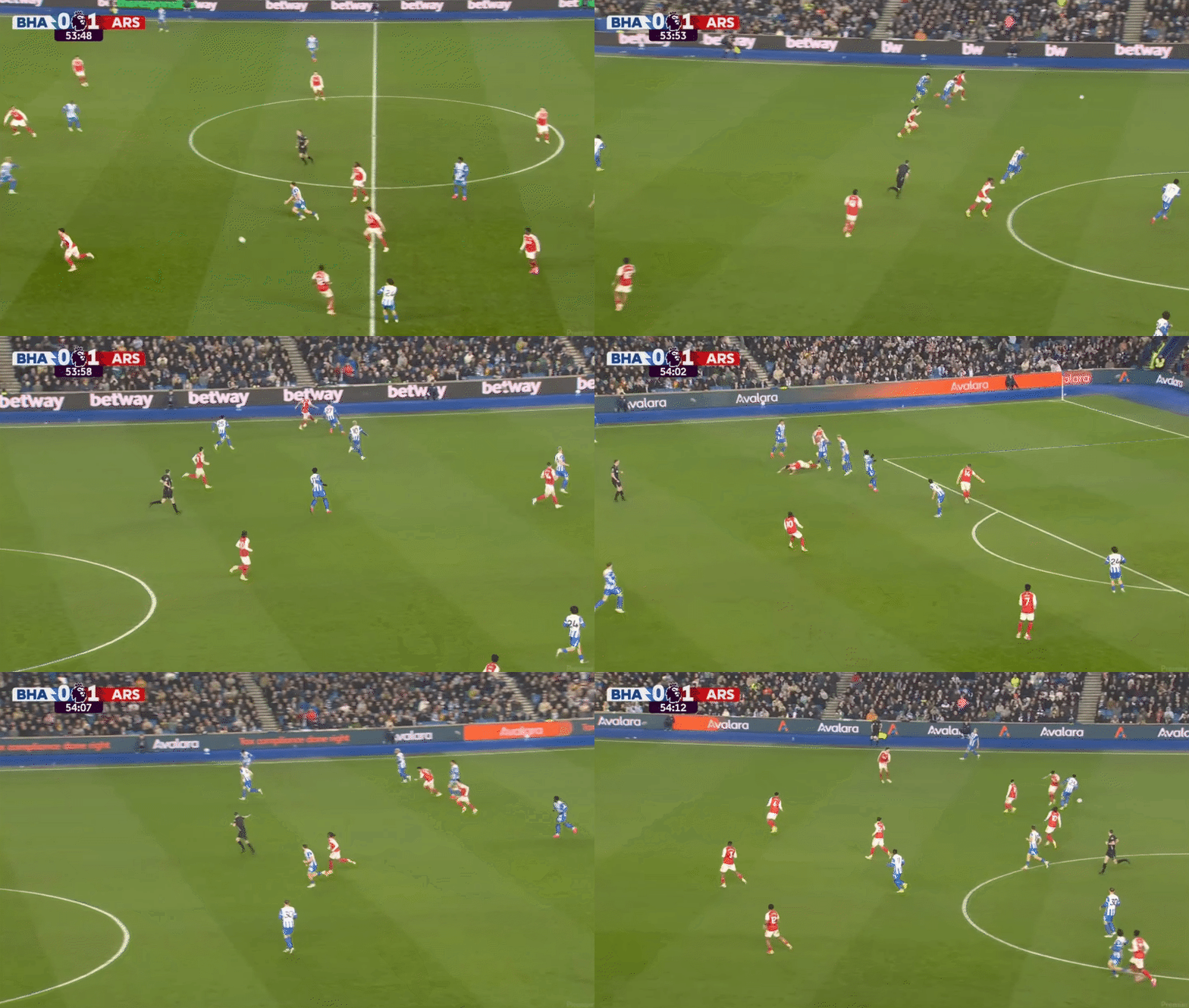
In the 70th minute at the Amex, that sweeping modern egg laid into the South Downs, the Seagulls gained possession and cleared it over the top. The ever-present Piero Hincapié was playing RCB for Arsenal, because of course he was, and headed it back to Raya so the Spaniard could fetch it with his mitts.
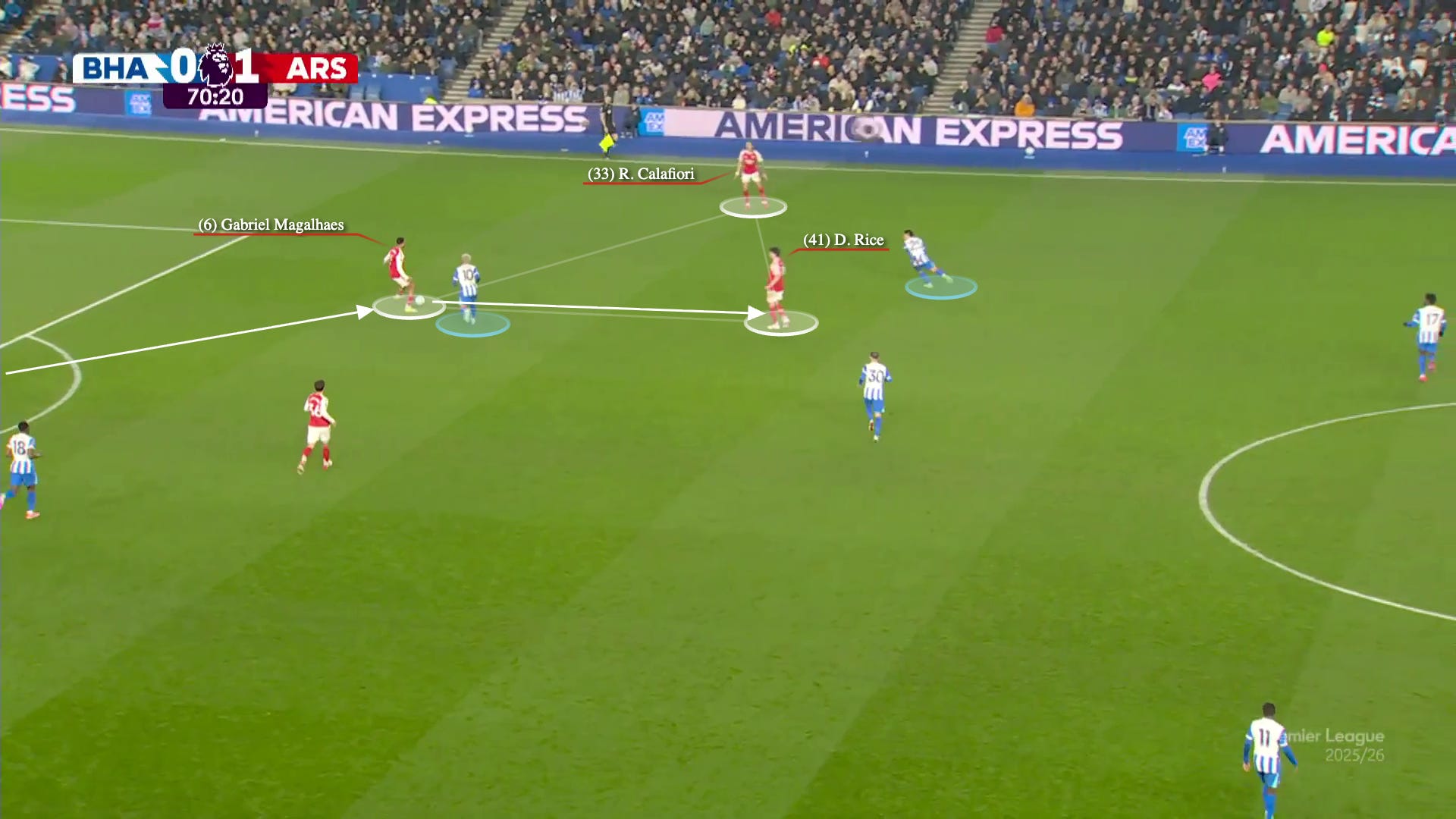
Raya, then, didn’t feel the need to play it back to where they got it. Instead, he threw it over to a left triangle made up of Gabriel, Calafiori, and Rice.
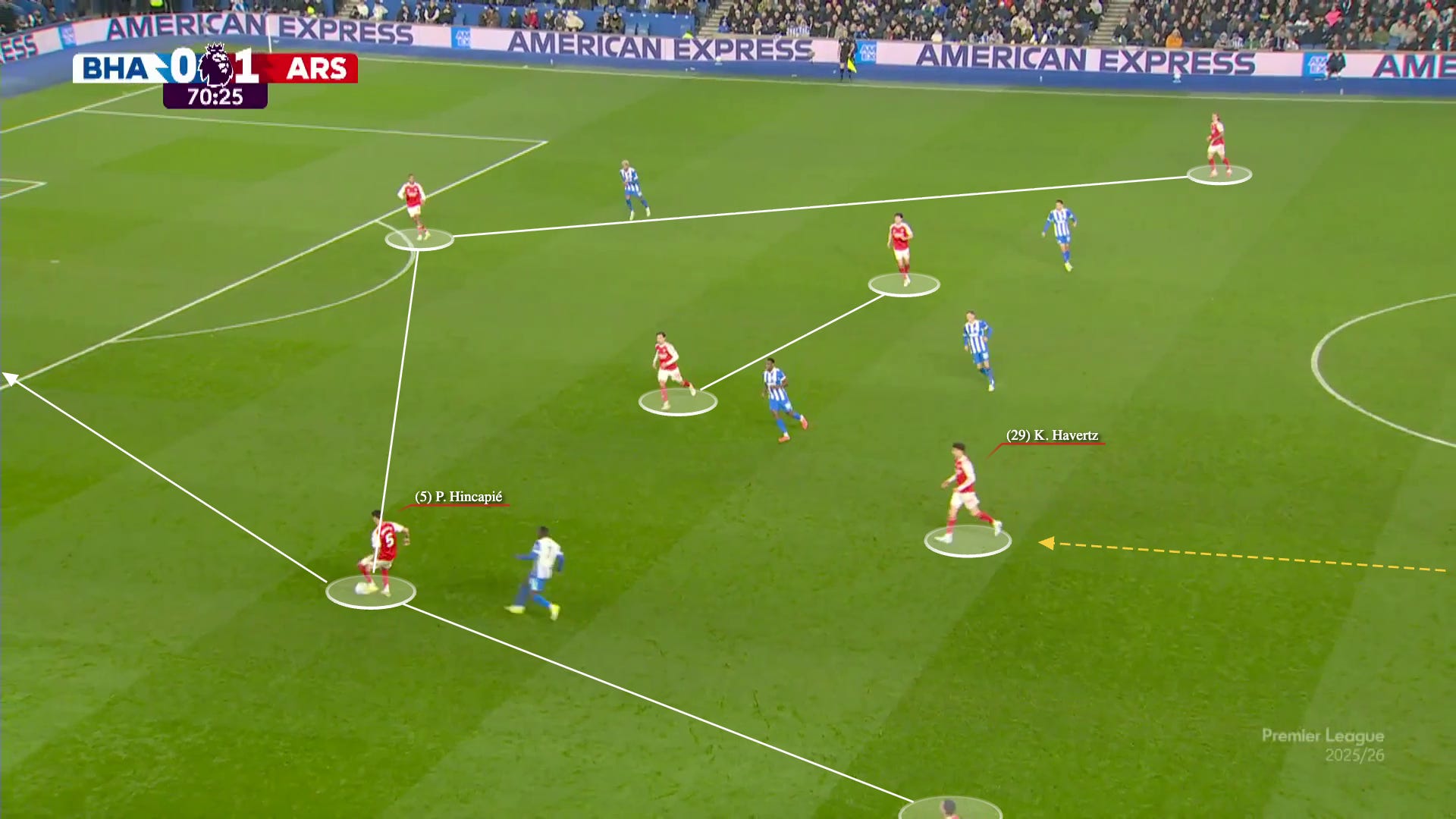
Coaches will tell you to look for overloads, but they don’t always tell you what actually constitutes an overload. Truth is, many situations are interstitial like this. It’s kind of a 3v3, kind of a 4v4, mostly a 3v2, depending on where you draw your box.
Rice then turns and does something that isn’t always advisable in build-up, because the range of outcomes widens. Instead of keeping it grounded, he lifts the ball over the press to switch it to Hincapié.
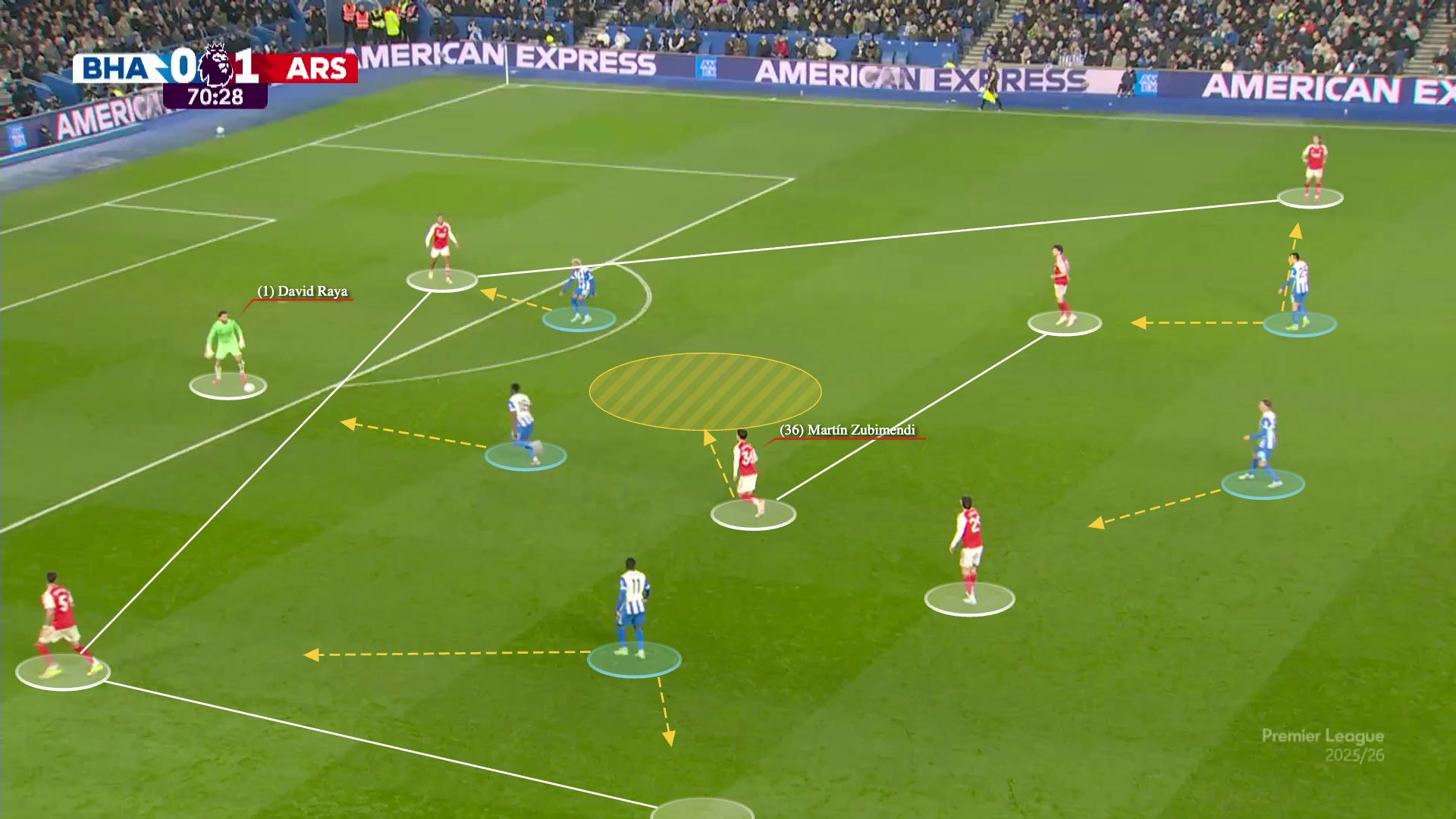
Hincapié again recycles it back to Raya. But there’s a difference now: Havertz drops from the #9 slot, and he isn’t followed. This means that Brighton are looking to keep numbers on the backline for now. As a byproduct, it will be easier to find a numerical advantage in the build-up phase.
If you count around, this is essentially an 8v5 now. Brighton’s two wide players are hybrid as they reset; nobody has fully followed Havertz, and Kai is feverishly pointing to the soft spot. Once Raya gains a commitment, it’s off to the races.
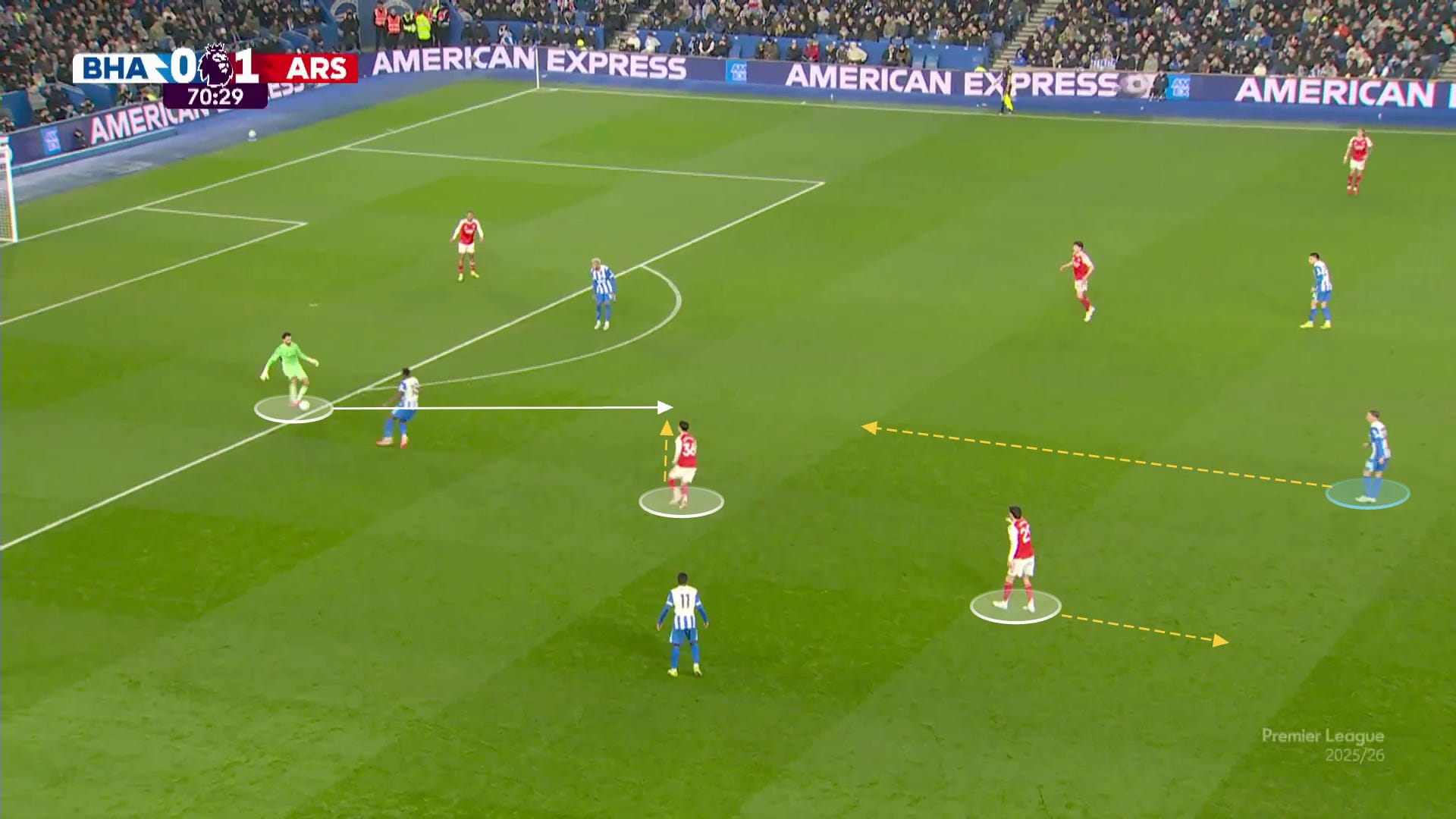
Because Welbeck has committed to Raya, Zubimendi can fall in behind him and demand that Pascal Groß jump up to meet him. This triggers Havertz to run away, giving Groß the impossible job of marking them both.
Arsenal broke the press, Brighton fell back and regrouped, and possession was sustained from there.
Among other things, this illustrates how backpassing and regrouping are more often signs of composure than of conservativeness. Hoofing, at least hoofing without the requisite talent or numerical advantage, is the easier, more ruffled alternative.
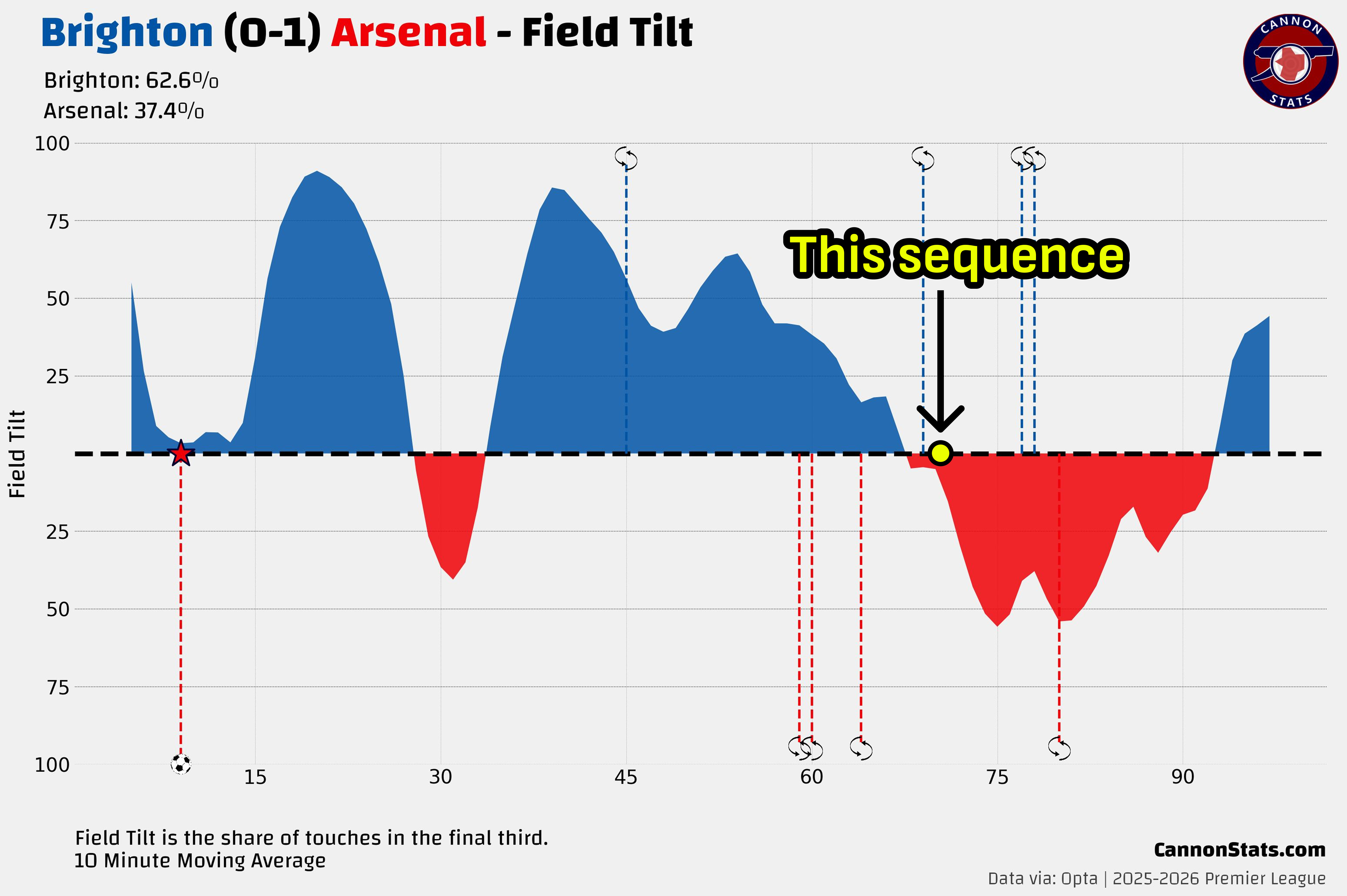
Such sequences reverberate. To prove my point, I will deface the Sistine Chapel (i.e., a Scott Willis graphic) to illustrate where that run of play took place.
Arsenal largely controlled things from that point forward, something they had trouble doing for most of the match. Per James Benge:
Brighton’s final shot of the game, per Opta, came with 68:28 on the clock. After that they had four touches in the box. Arsenal had nine in theirs.
Given our previous traumas, I didn’t give myself full permission to exhale.
But I was close.
So, yes, we know what those sequences should look like. And that situation gave a much-needed reminder of how capable this team can be at building up possessions like that. But we know too well that it hasn’t been the rule of late.
This has been more likely.
Oy.
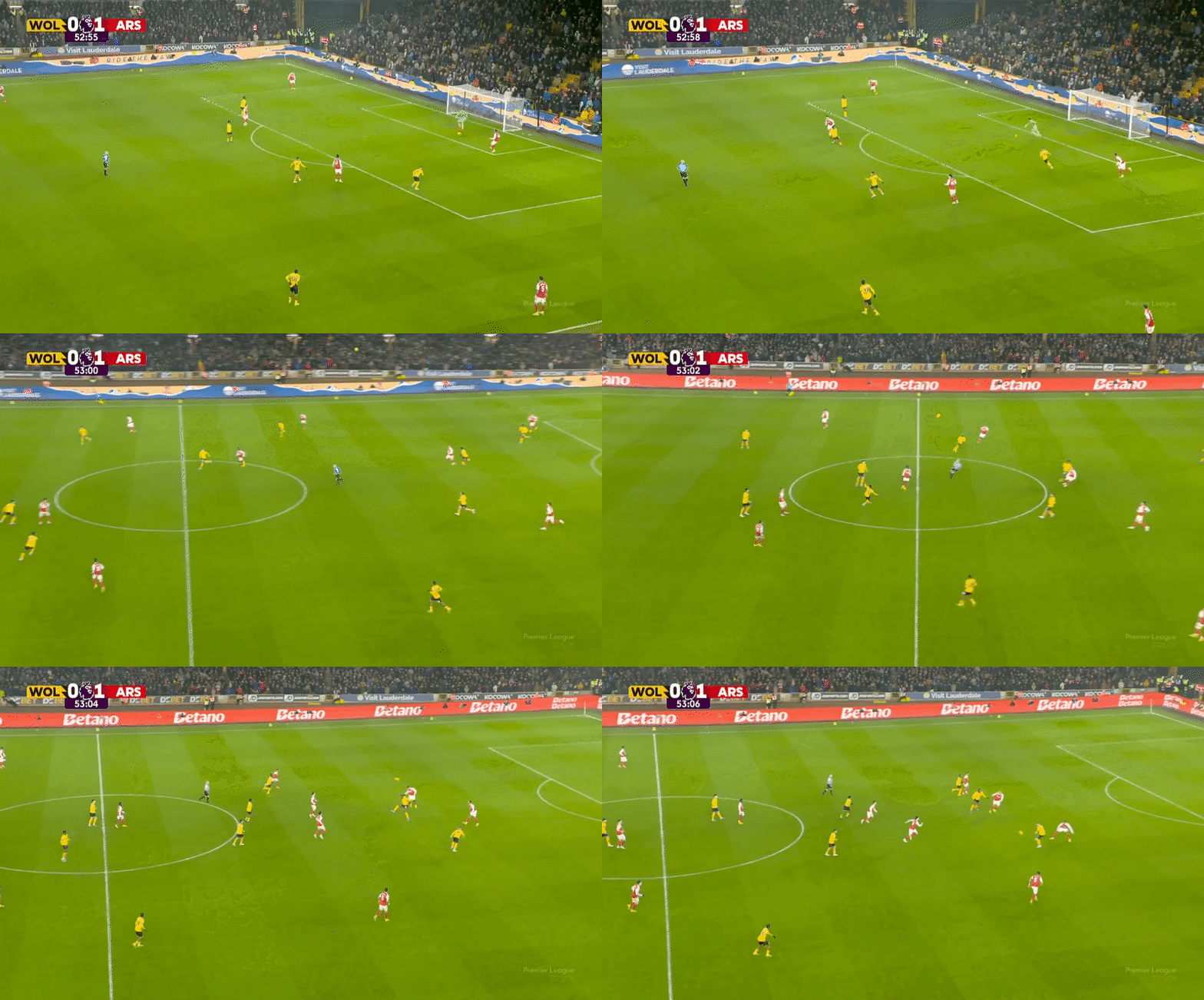
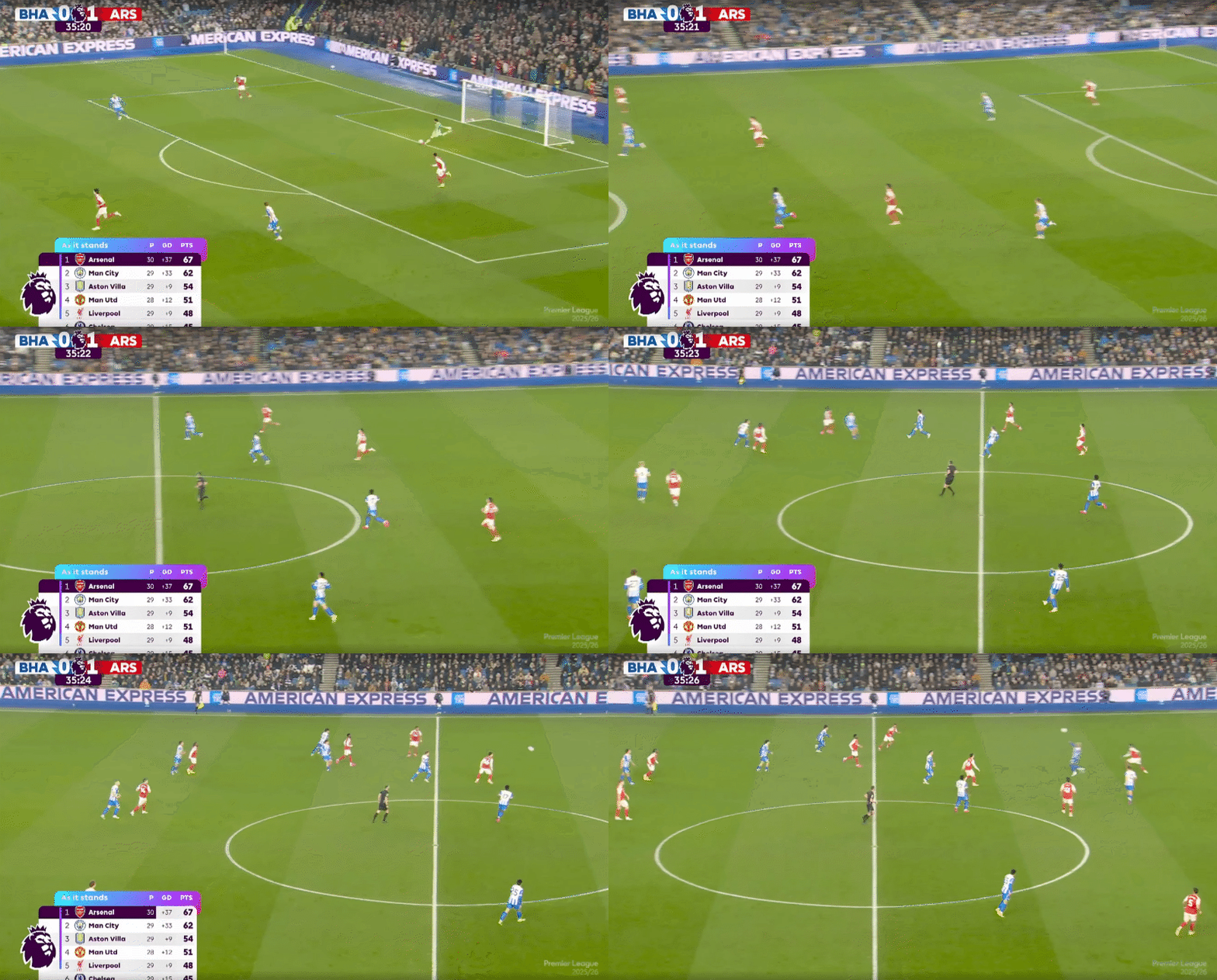
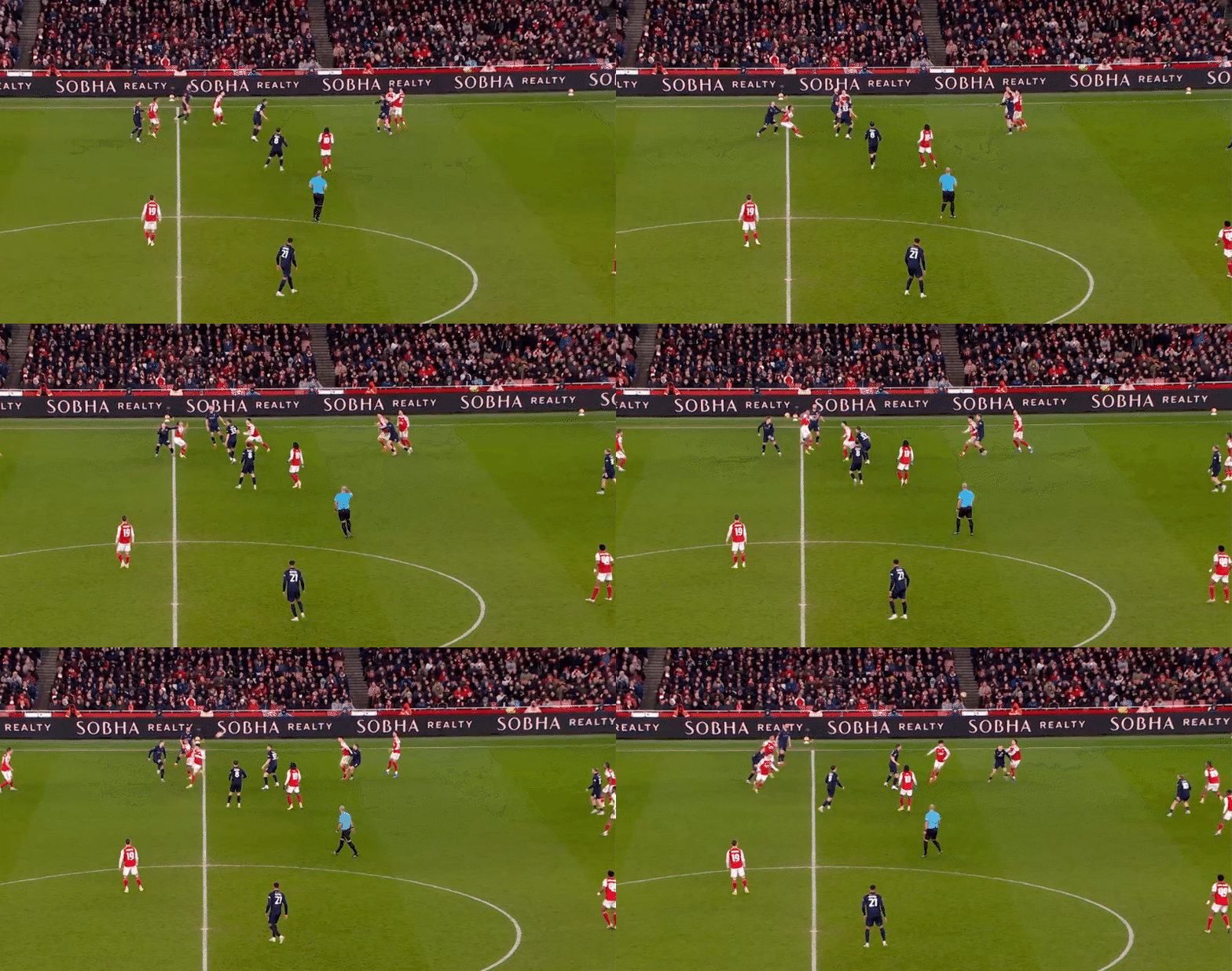
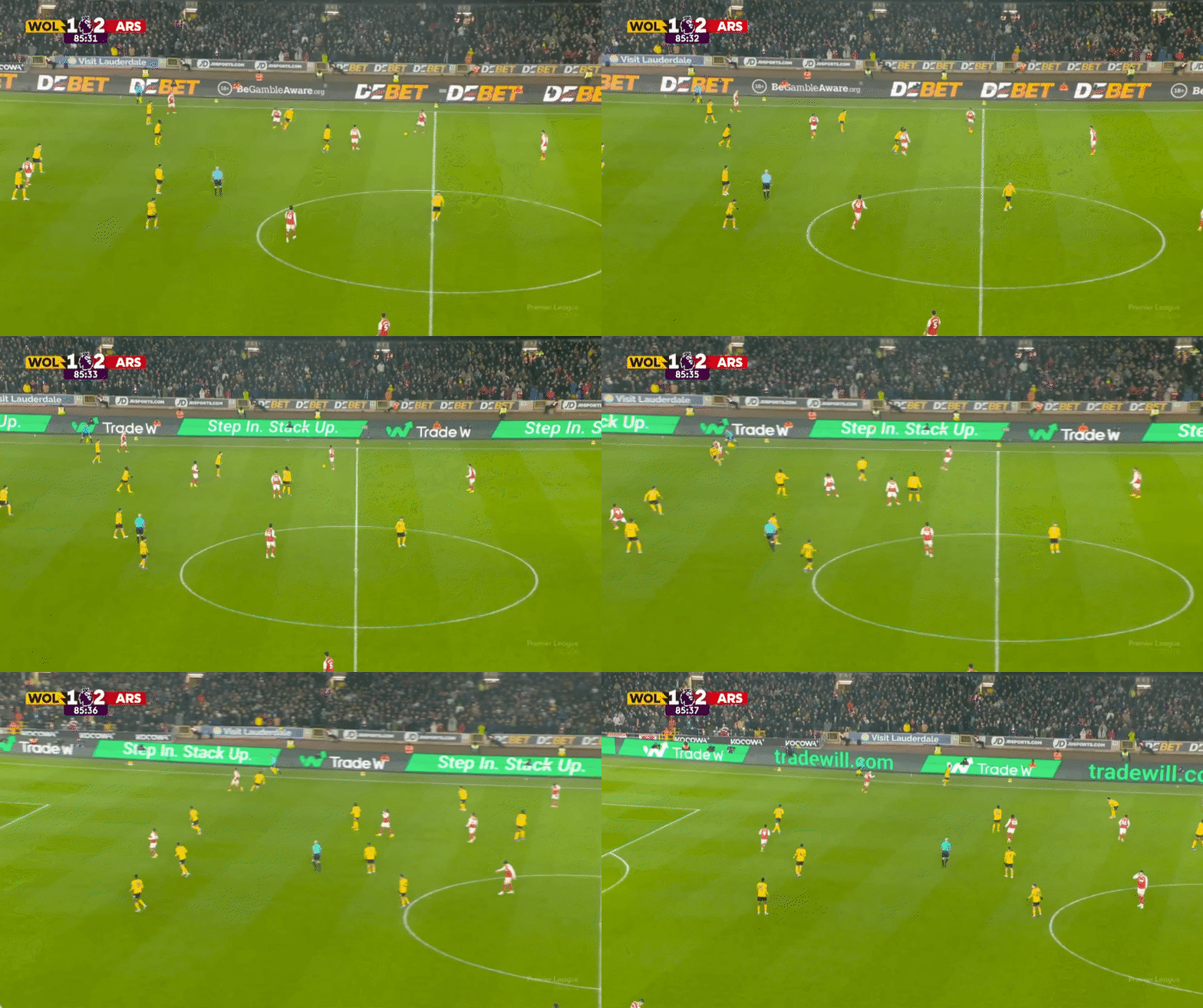
Wolves, the bottom dwellers of the league, were down. They committed their press forward, a man for every man. By our powers of deduction, we know that means the advantage is more likely to be long, so Raya does what he’s trained to do, and happily sends it over the top to their backline. Especially in today’s game, this is widely viewed as the correct decision.
While the numbers are fine, the delivery isn’t ideal, the jockeying is nonexistent, other players look 10% more tired than they did at the beginning of the season, the ball is lost, possession returns to the opponent, and we’re left wondering why we can’t (fucking) sustain a (fucking) attack (fucking).
This has been a familiar chorus since the beginning of the calendar year.
“It was a moment after another moment after another moment. Even though we scored the second goal, we never got the grip and dominance of the game. That’s the reality,” said Arteta after Wolves. “That’s credit, obviously, to Wolves. I don’t want to underestimate that, but I think we played a big part in that. As I said, it’s very basic things, very simple things, that today we did really wrong and that’s why we had the feeling, without really conceding much, but the moment is always the game open to anything that can happen.”
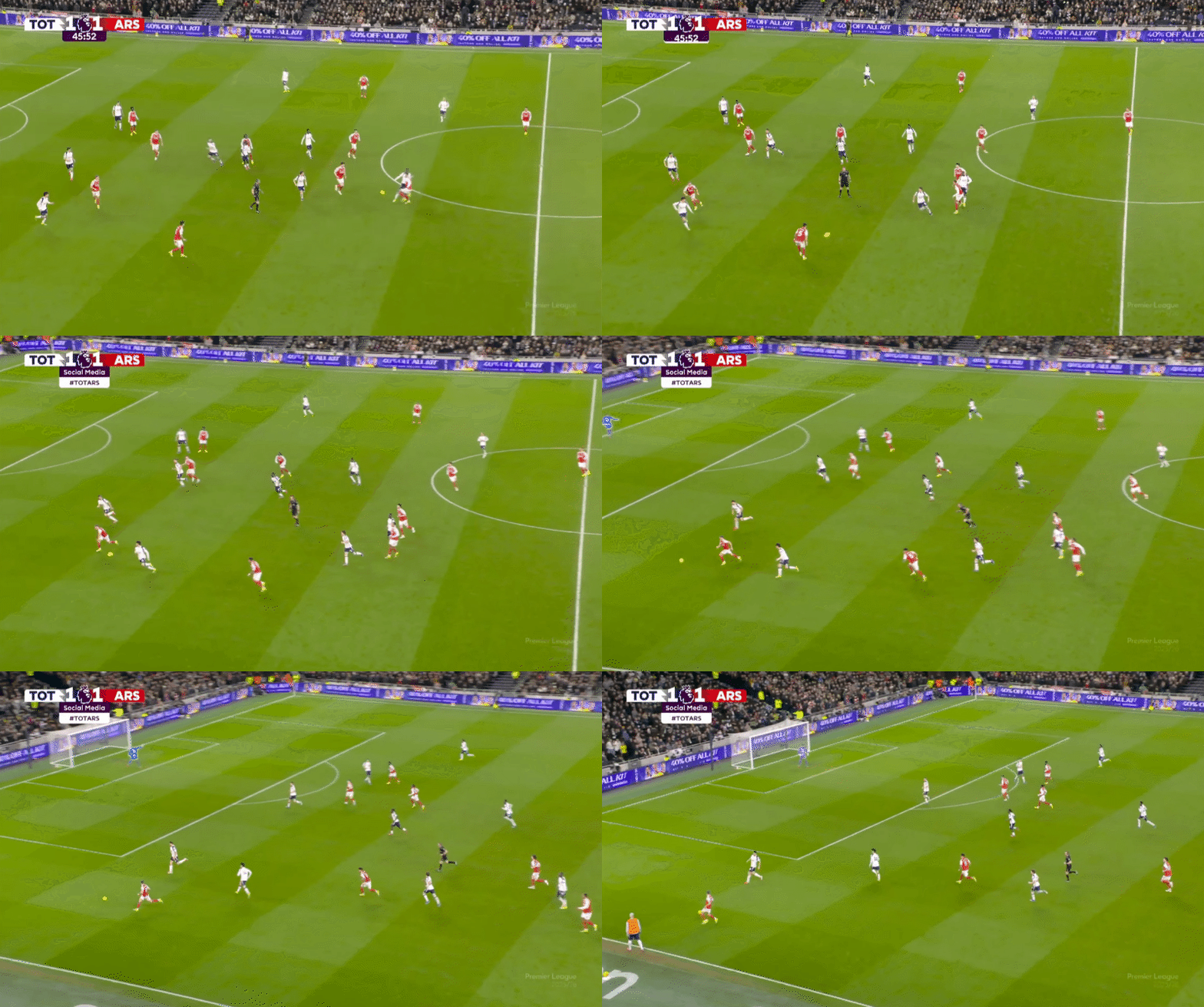
There was the Spurs drubbing, then, promptly, some familiar bobbles late against Chelsea. In another lovely Benge Factoid, he shared that after Pedro Neto’s red card, Arsenal completed 55 passes … but Chelsea completed 114. It never really felt like we had the man advantage.
“I think that was down to especially what happened certainly in the game as well and the lack of composure that we had in certain moments - probably our heart rate is a little bit too high in certain moments because we are trying to recover as well.”
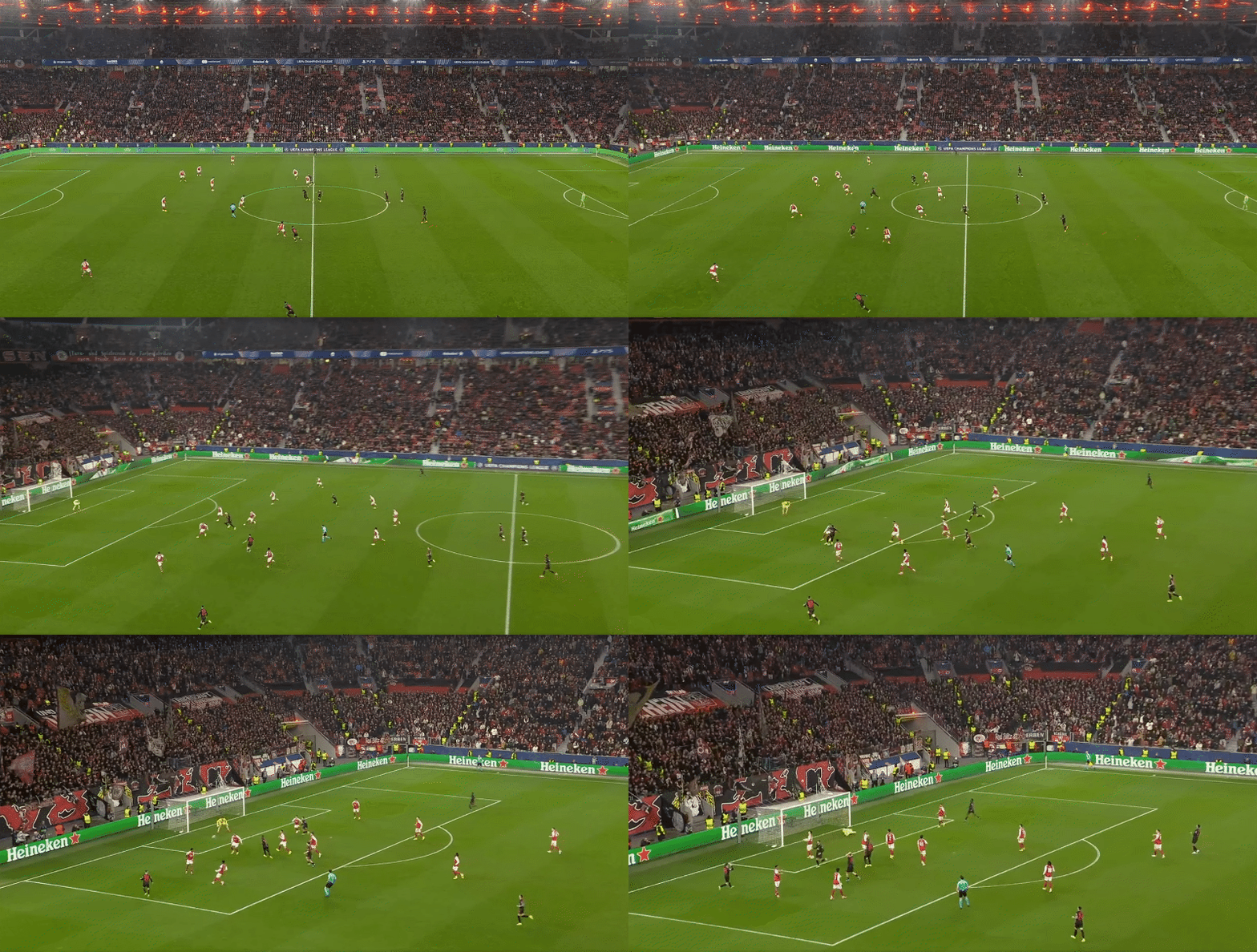
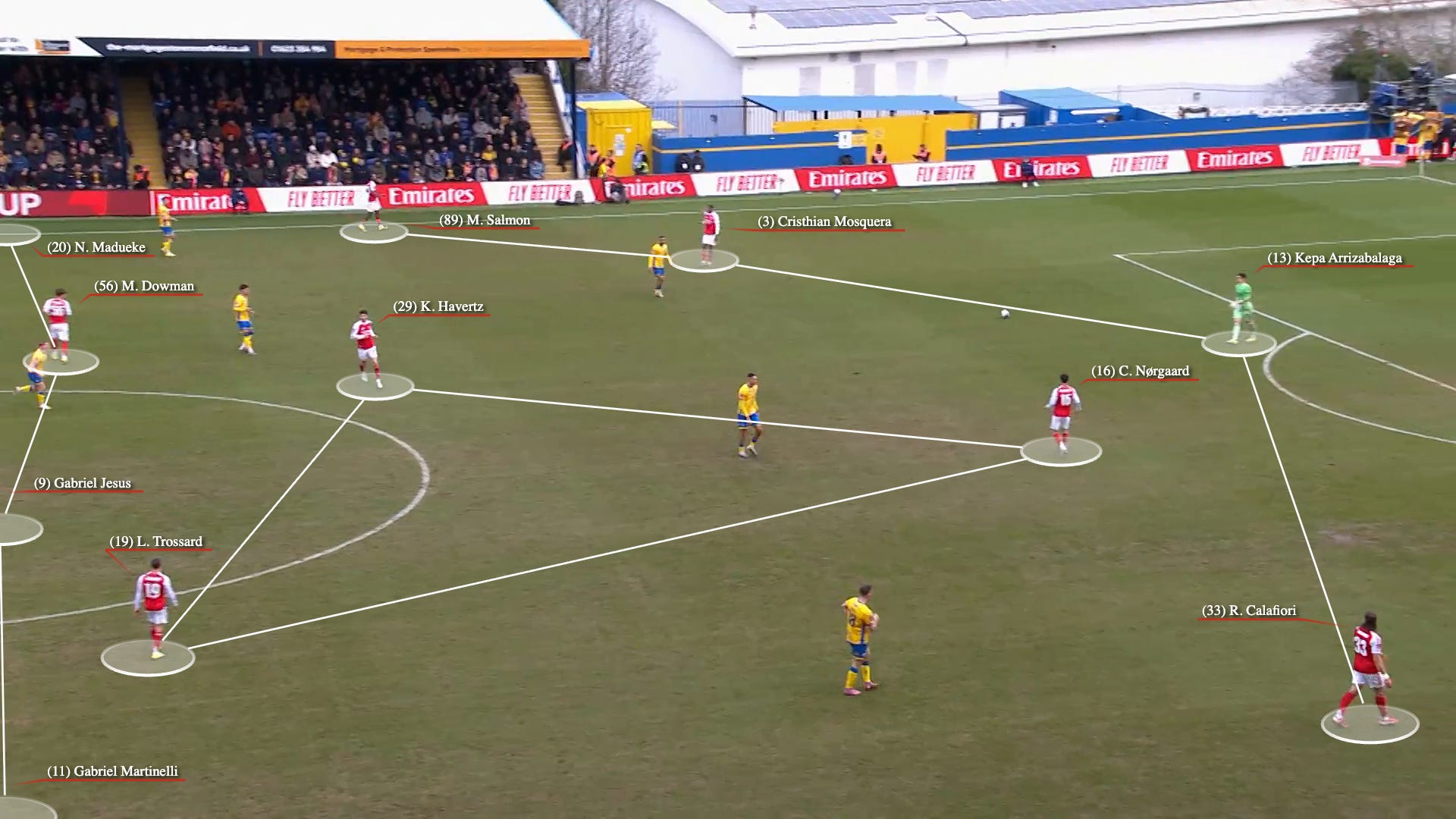
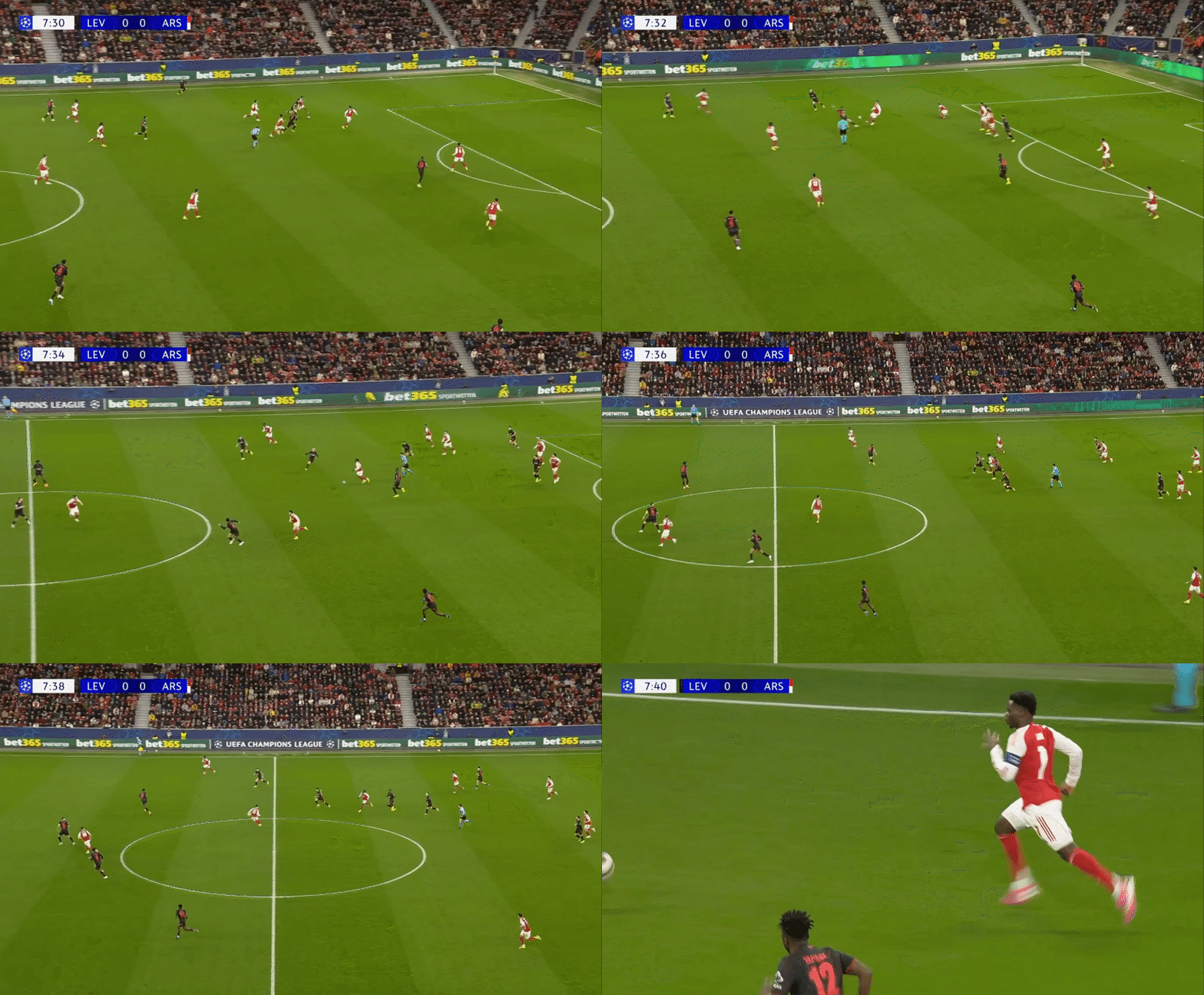
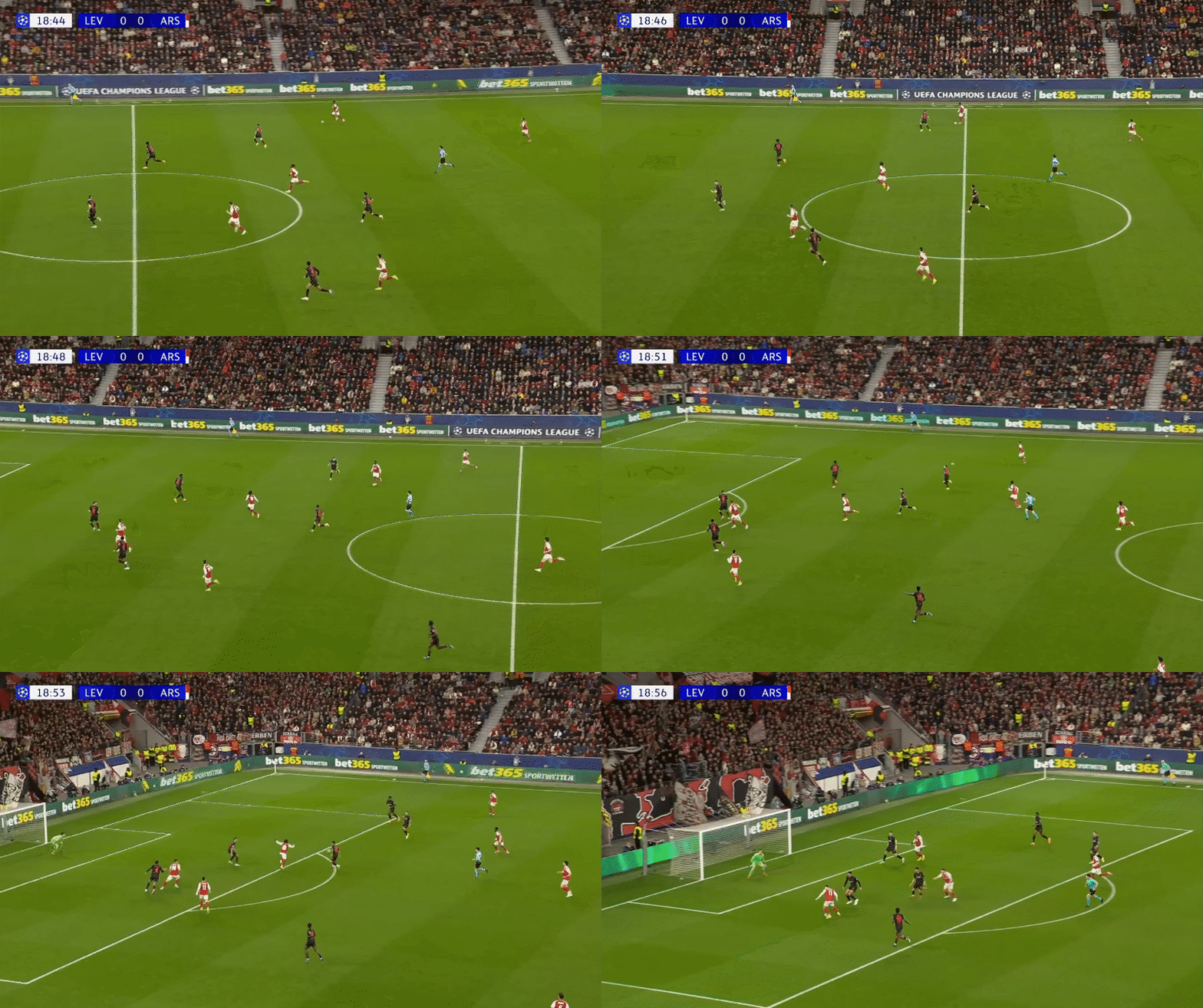
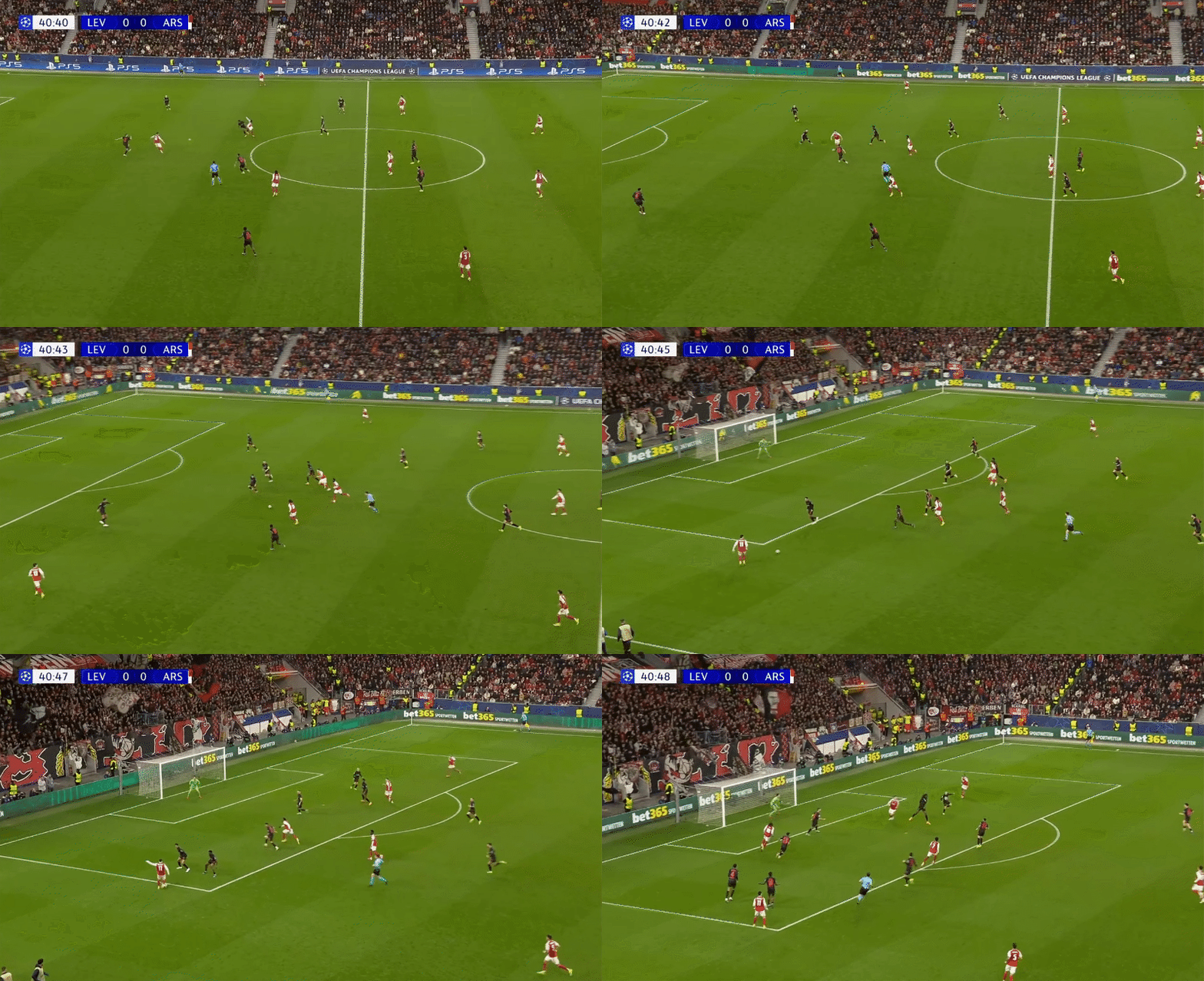
Mansfield was a thing to itself, then Leverkusen had some throughlines that we’ve seen before: conservatism in possession, some gaunt-looking play, and an opportunistic opponent goal.
Still, the amount of concern over all this can feel disproportionate, given the struggles of our rivals and where Arsenal continue to sit in the league and elsewhere. Across competitions, this same squad, the one causing all the handwringing, is unbeaten in twelve straight.
But it sure feels more complicated and anxious than that, and these issues of play-style and “dominance” keep bubbling up.
So maybe we’ve identified the wound. Stitching it is another matter.
👉 II. What to do when everybody knows everything
“In football, everything is complicated by the presence of the opposite team.” ―Jean-Paul Sartre (via Paul Grech)
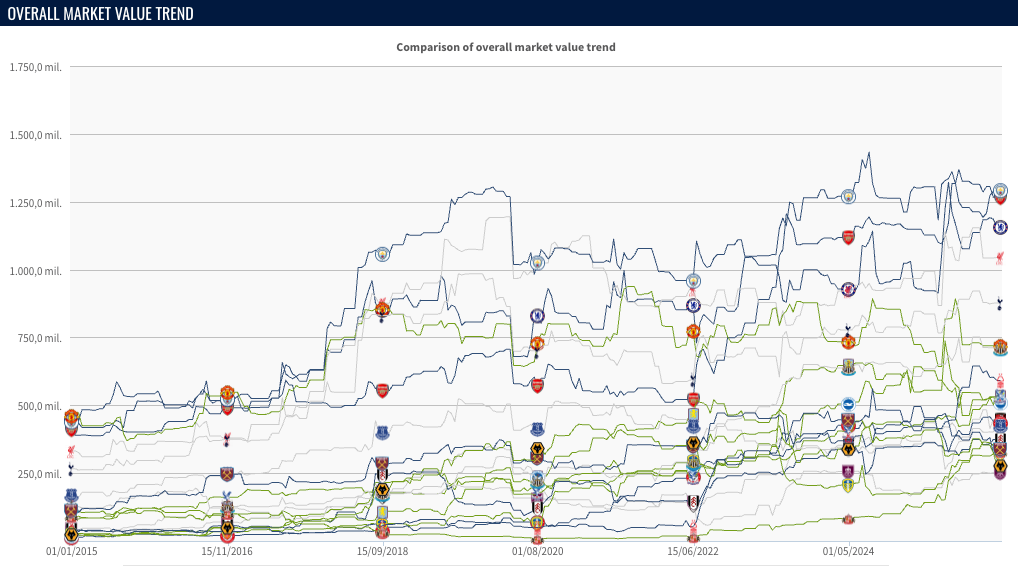
Let’s start with the fact that there is an unprecedented amount of money in the high-level game. The market value of the 20 Premier League squads is up 285% since 2015.
Source: Transfermarkt
With this influx, there is a torrent of downstream effects from the volume of data, analysts, and opposition prep that follows.
This desire (and ability) to research and limit opponent strengths may have even contributed to Thomas Frank’s demise.
Sources at Tottenham’s training ground told ESPN that players became surprised at the volume of work done on nullifying opponents in training, rather than focusing on developing their own style of play.
It’s a fitting portrait of a league that is drowning in talent and physicality and money, yet starved of spontaneity.
“He told us that he and his team watched all of Derby County's 51 games last season, so he broke it down into Derby in this instance, and was calling out into the room ‘pick a game, pick a game’ and they were all numbered on the wall chart that he had … He talked about 360 hours of research, four hours of analysis on each game from last season. This is an incredible level of preparation for each opponent and he made the point that watching training nobody could tell him anything he didn’t already know.”
Similar stories of Mourinho’s work in preparation are easy to remember. While it’s always existed, that level of detail was perhaps more concentrated in a few sickos then, and is more efficient and attainable now. Everybody is in on the act.
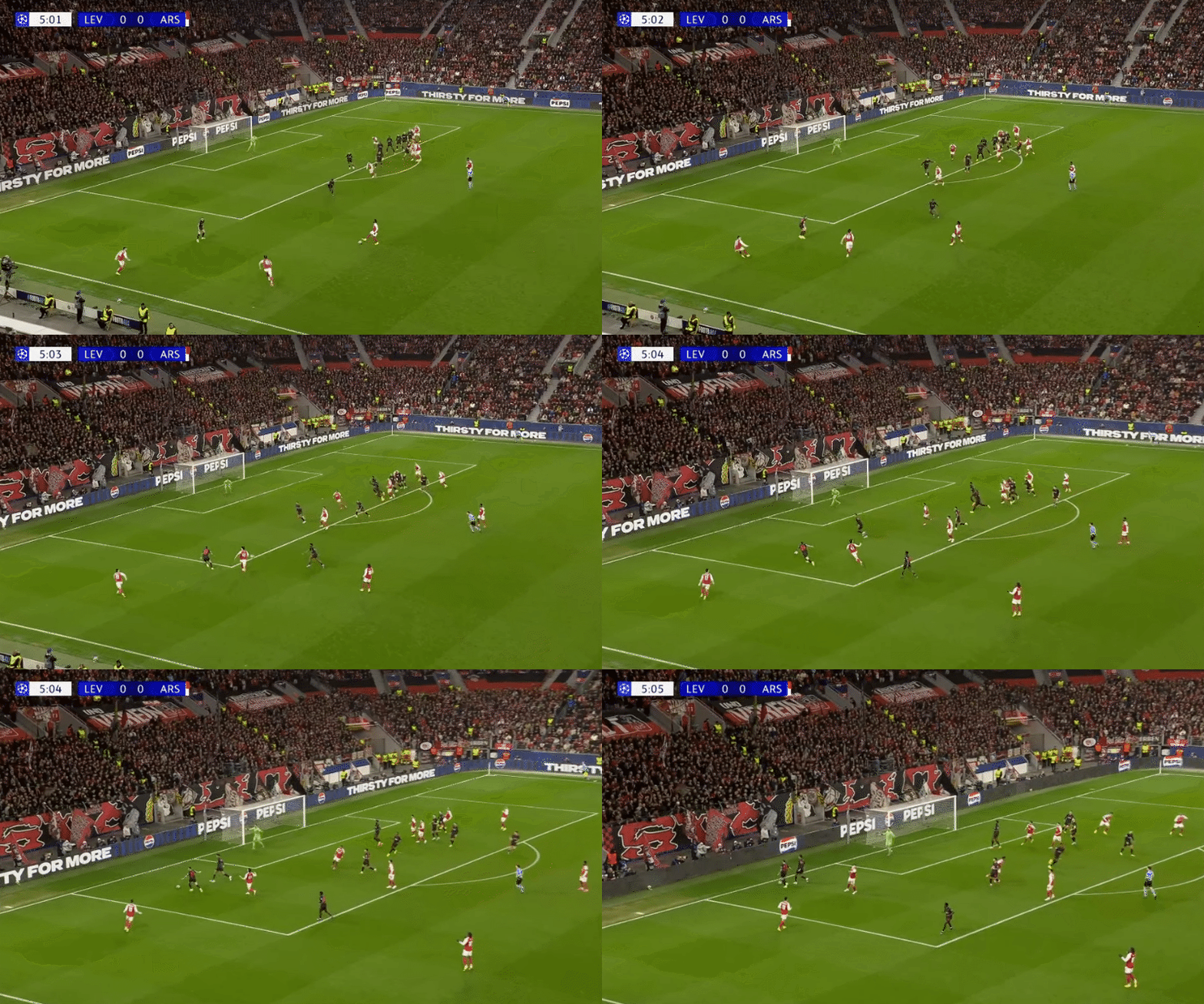
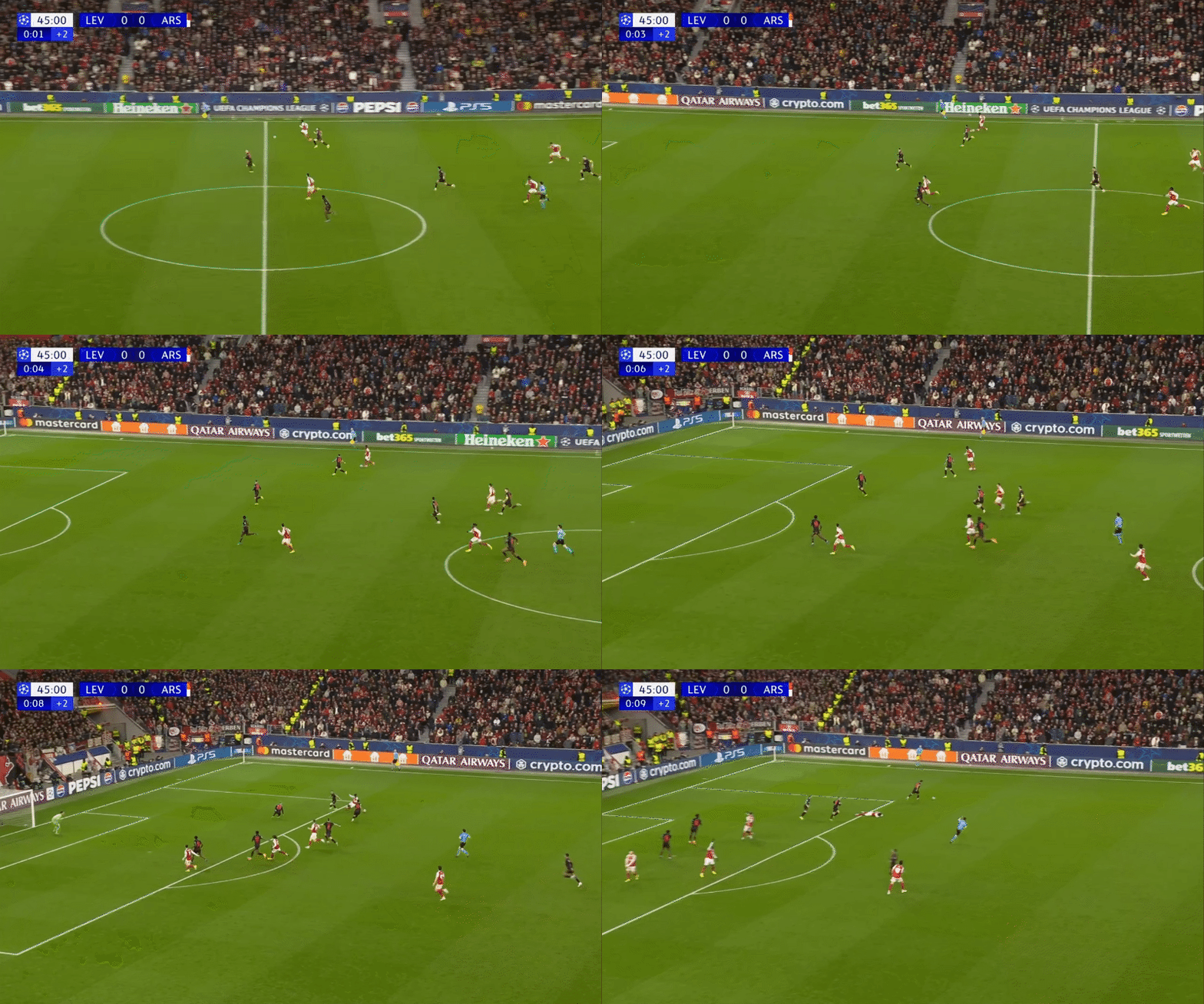
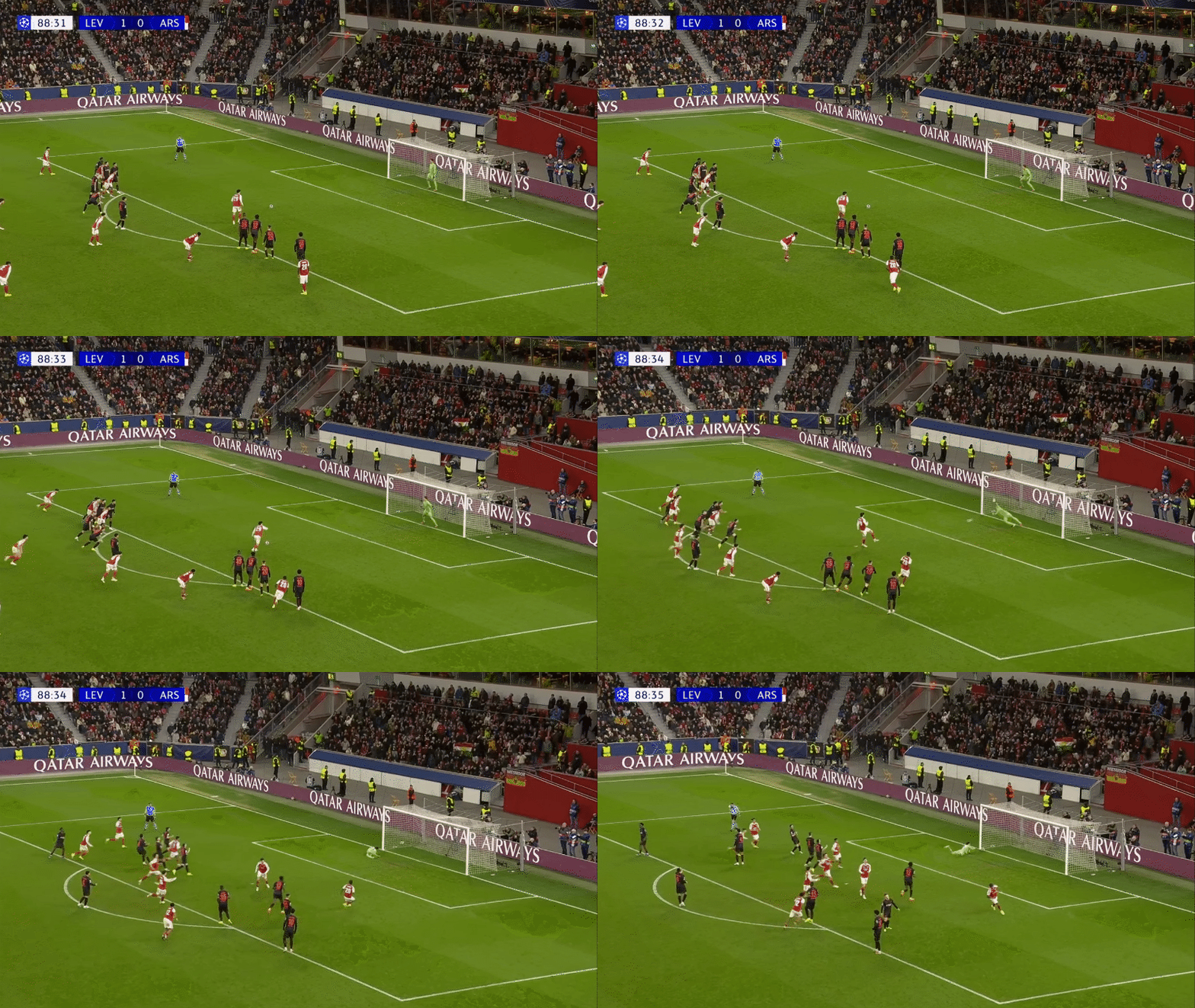
The Champions League knockouts still offer a partial antidote, as the game is more likely to tilt back in the direction of raw player quality and brilliance. But the level of maniacal nerdery is everywhere. Leverkusen’s coach Kasper Hjulmand proudly talked about the homework he did on Arsenal, particularly on kickoffs and set pieces, starting the second half in a way that led to the seal-breaker.
Not to be outdone, Arteta hammered home that his team was prepared for the kickoff routine.
“And the other one is us because we knew, we showed them three clips from last weekend in three different ways and we weren’t ready for it and we got caught.”
Balancing that amount of detail with a sense of freedom and proactiveness is a significant problem for the modern manager, especially when there’s little time to train. Eze singled it out when asked for the biggest adjustment when joining Arsenal.
“Probably the level of information around games. There’s a lot of detail that goes into how we approach a game and prepare for a game and it’s been a lot more than what I’m used to.”
(As an aside, the base level of tactical preparedness in the league is what makes some of the Cup setups so compelling to watch. It was unmooring and fun to watch Arteta put out an underdetailed, vibes-based back-three with six attackers against Mansfield.)
hits blunt once
Outside of the occasional Mansfield fever dream, things are still methodical. And my feeling is that this analytical bent is exacerbating some of the differences between game-states. In other words, teams prepare more precisely for specific situations, so the game changes more dramatically when those situations shift.
We still see this at the highest levels elsewhere. The well-prepared Leverkusen played great, and once they went ahead, they closed the shutters, logging 0 shots on target and 40% possession.
I asked an intl manager how they scout opponents/what they look for:
“First thing: write down their formations,” they said.
“Ok, in possession and out?” I replied.
“No — how they are set up when level, ahead or behind, and how they change.”
Teams quickly learn the limits of rolling up with the same gameplan regardless of the situation or opponent. Just ask Ange last year. Or Slot this year:
“I’m the same manager as last season. It’s so hard to create tempo in a game if the other team doesn’t want to have tempo,” Slot says. “It’s so hard to create so many chances in the current Premier League where everybody is so physical and has a certain playing style. Everybody is struggling with that and we are struggling with that as well. I would not deny that at all.”
This world makes pragmatists of us all.
While the feel and demands of a 0-0 scoreline in the first half were always different from a late-game at, say, 2-1, the difference seems to be getting more extreme. It’s a different sport based on the clock, so properly attuning your talents and approaches to different phases of the game feels increasingly important.
This, along with other factors (namely, fatigue, intensity, and more refined recruitment by the bottom-half), helps explain the caginess early in games and the explosion of goals late. Looking at the highest-level Champions League games, we still see the influence of the changing Premier League. Any realist must acknowledge that there’s a difference between getting kicked by Caicedo and Joelinton types once or twice when you’re rested and ready, versus facing their kind every week, from all angles, up and down the table. Arteta shared his perspective today.
“For me, Barcelona are the most exciting team in Europe in many moments the way they play, and they face one of the Premier League teams, Newcastle, who are exceptional in their intensity and the high pressure, everything man-to-man, a huge amount of tools, a really good team in transition and we saw a completely different game I’ve never seen Barcelona play and that’s a huge credit to Newcastle, but this is the league that we are playing in.”
But we must also balance that with the triumphs of PSG, Real Madrid, Bayern, and even Galatasaray this week. One can’t watch those performances, ones marked by bravado and worldies and front-footedness, without considering whether the Premier League is lost in its own sauce. At a certain level, everybody has analysts, but everybody does not have Kvara and Barcola and Doué and Dembelé.
After regaling journalists like Thornton with his sprawling tactical masterclass, Bielsa put a bow on his presentation:
“He closed it by saying he was stupid because he didn’t need all this information and then he got up and walked off.”
👉 III. What the numbers say
For our sake, the first thing I wanted to do was try to isolate intent.
When we zoom out, we get some clues.
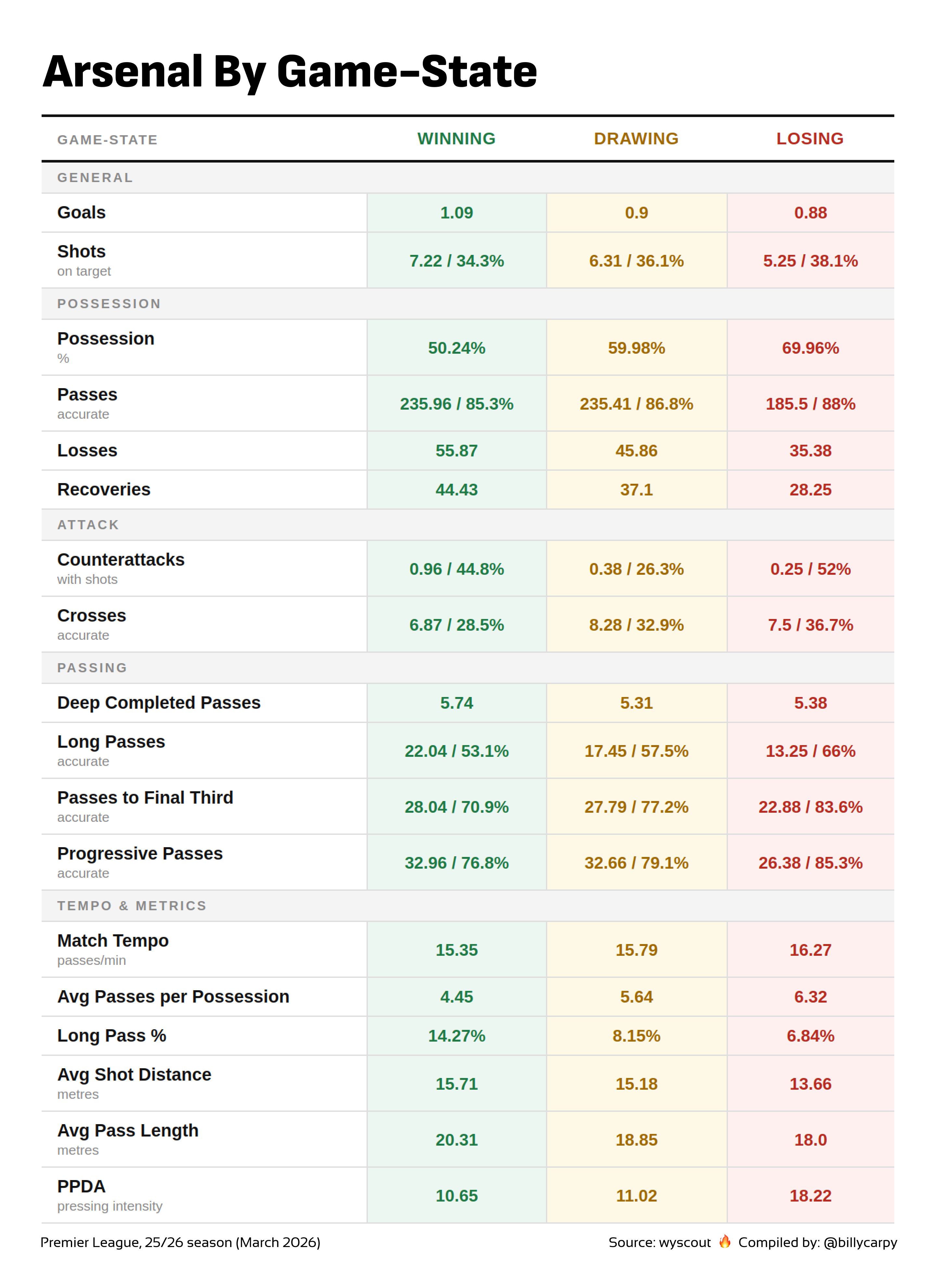
(This was pulled before Brighton, btw)
When Arsenal are ahead, a few things catch my eye:
Possession drops ten points from ~60% to ~50%. Remember, Arsenal aren’t the only team playing. The opponent has a say in this and will want to get on the ball more.
Arsenal cross less. This is one of those game-state changes that I fully endorse. If you set up for big, looping crosses from wide areas, there’s a good chance you’re hitting it out of your defensive cocoon. Those balls have a tendency to fall to the top of the box, where they can be countered quickly. Still, it does give you one less route to goal.
Progressive passes are slightly less accurate, and match tempo is very marginally slower, but nothing too significant. I wouldn’t read too much into that.
What is significant is the spike in long-balls. In an even game-state, Arsenal hit long-balls 8.15% of the time. While winning, that number jumps to 14.27%. That seems clearly intentional.
It’s not in that table, but your eyes don’t deceive you lately. In the second halves against Brighton, Chelsea, and Wolves, the average long-ball percentage was over 14%. In the second halves against Chelsea and Brighton, Arsenal could only muster 2.78 and 2.79 passes per possession, respectively.
There is also some other worthwhile context.
Arsenal are fairly easily the best second-half team in the league, believe it or not. That means the most goals (37), fewest goals against (14), and best goal differential (+23). The second-half goal differential is more than twice as good as the second-best team (Chelsea, at +11). Man City have generally struggled with late goals and goals from subs.
Arsenal are still the best team in the Premier League after taking a lead. That record so far is 20-3-1, averaging 2.63 points per match.
I’ve thought some of the away approaches were overly conservative. But on a points-per-match basis, Arsenal are top of the home table, and top of the away table.
Here’s an interesting one I stumbled across: Arsenal have been behind for 266 total minutes this year in the league. In those minutes, they’ve scored 7 out of 8 times; we saw that capacity again at Leverkusen. Meanwhile, David Raya has only faced two total shots on target this season while trailing in the league, both against Man City. That means that, apart from Man City, no team has logged a single shot on target against Arsenal while leading. It goes to show a) how little Arsenal have trailed this year, and b) how teams close up shop once they score.
And that brings us to our most important point, which is what I always fuckin’ say: yesterday’s price is not today’s price, and the opponent is never static. PPDA (Passes Allowed Per Defensive Action) measures how many passes an opponent can make before a team makes a defensive action in the advanced 60% of the pitch (so, the lower the number, the more aggressively a team presses, at least in theory). Relatedly, Arsenal face the lowest defensive lines in the league, and it’s especially true when the score is level.
When the score is even, Arsenal face a 20.85 PPDA, the most relaxed press in the league by a distance. When Arsenal are winning, that jumps up to 14.66. This, again, shows how differently teams play based on the scoreline. While I was writing this, The Athletic did a great job of covering how that alters the picture.
👉 IV. Raya bypassing the midfield
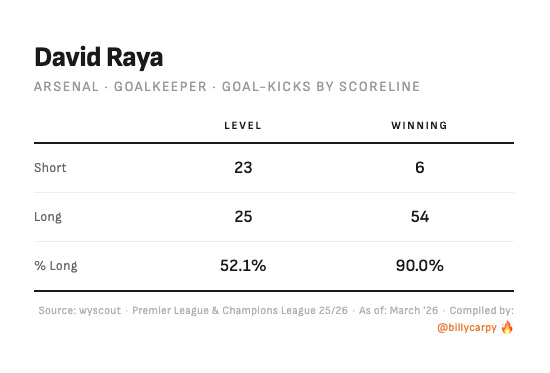
When I’m looking to understand Arteta’s intention on the pitch, my eyes usually drift to two players: Martin Ødegaard up front (pressing, attacking patterns, etc), and David Raya in back. Because Raya was a long-standing target who can put the ball anywhere, and usually has breaks in play to communicate and confirm before doing so, I have little reason to believe he often defies his manager’s wishes.
(Edit: It should be noted that those are seemingly goal-kicks directly attributed to Raya. I’m still trying to find the ones that get tapped over to him by the CB).
The intention behind this is understandable and not without value. The opponent is more likely to man-mark and come out of their trenches when down, committing players forward in the press, as we saw in the PPDA numbers. This will leave 1v1s along the backline, and the opportunity to win bouncing balls more easily. It also helps avoid costly mistakes in dangerous areas. At worst, it allows you to press on the other side.
The problem is also easy to understand. With Merino and Havertz out, and Gyökeres not sprinting away from his mark in channel runs, Arsenal have no qualitative advantage in these situations. You can generate a 1v1, but your player still has to win the 1v1, and so far, we’re not really doing it. As I wrote last time:
A target man is a warm blanket. You can build up with confidence knowing that if things get hairy, you’ve got a great option ahead. On the flipside, if you know a long-ball is likely to become a turnover, it can cause you to overthink and take unnecessary risks when deep.
Gyökeres’ pre-duel muscling has improved since we dissected it in full, and he had moments early against Leverkusen. But he’s still winning just over a quarter of his aerial duels, and often struggles to make it stick on the ground.
He’s looked best on first-touch, chancey flicks, which aren’t always easy to do from goal-kicks. This often leads to Raya popping it long to other options, who also don’t carry enough of an advantage in their duels. Do we really want our strategy for progression to be high balls to Saka, who doesn’t look at his physical best?
Martinelli and Madueke have more potential to unlock there, but it’s still a work in progress.
And Jesus, previously so scrappy and honey-badger-effective as a target up front, isn’t winning at the moment, either.
We can pull some advanced Gradient stats on this for our two most-played options at striker:
For Jesus, 68.3% of aerial duels are below expectation.
For Gyökeres, 61.9% of aerial duels are below expectation. Only 18.6% are above expectation, which is the third-lowest for players with 1000+ minutes.
In sum, Raya is going long when Arsenal are winning, and Arsenal’s current crop of forwards is giving the ball right back.
On that point, it’s hard to imagine a clearer impact than the subs that Arteta threw on against Brighton. Raya hung onto the ball until gaining a commitment forward from Rutter, then ripped it over to Havertz. Havertz didn’t even win the ball, but credibly contested it. Rice brought it down, then the two other subs (Calafiori and Trossard) controlled it, establishing possession for some of the first spells of the game.
Otherwise, it’s difficult if your striker isn’t winning by going up aerially or dropping low into build-up. One or the other has to happen.
If Havertz isn’t ready to start, it sure feels like Arsenal should continue to try and play out from the back with a little more volume. Hoofing it without an advantage aggravates the problem.
👉 V. I’m tired, boss
There is tactical strategy, or at least tactical comfort, in dropping back to a more constrained mid-block after achieving a lead. I am generally not opposed to the idea of scoring, defending a bit like Aston Villa, then subbing runners on (players like Martinelli and Gyökeres), winning the ball, and hitting them on the counter.
But some of the “finishers” have served as “starters” a bit too much this season, which can mess with the late-game dynamics. And there’s a real cost baked into the approach of giving up possession too much.
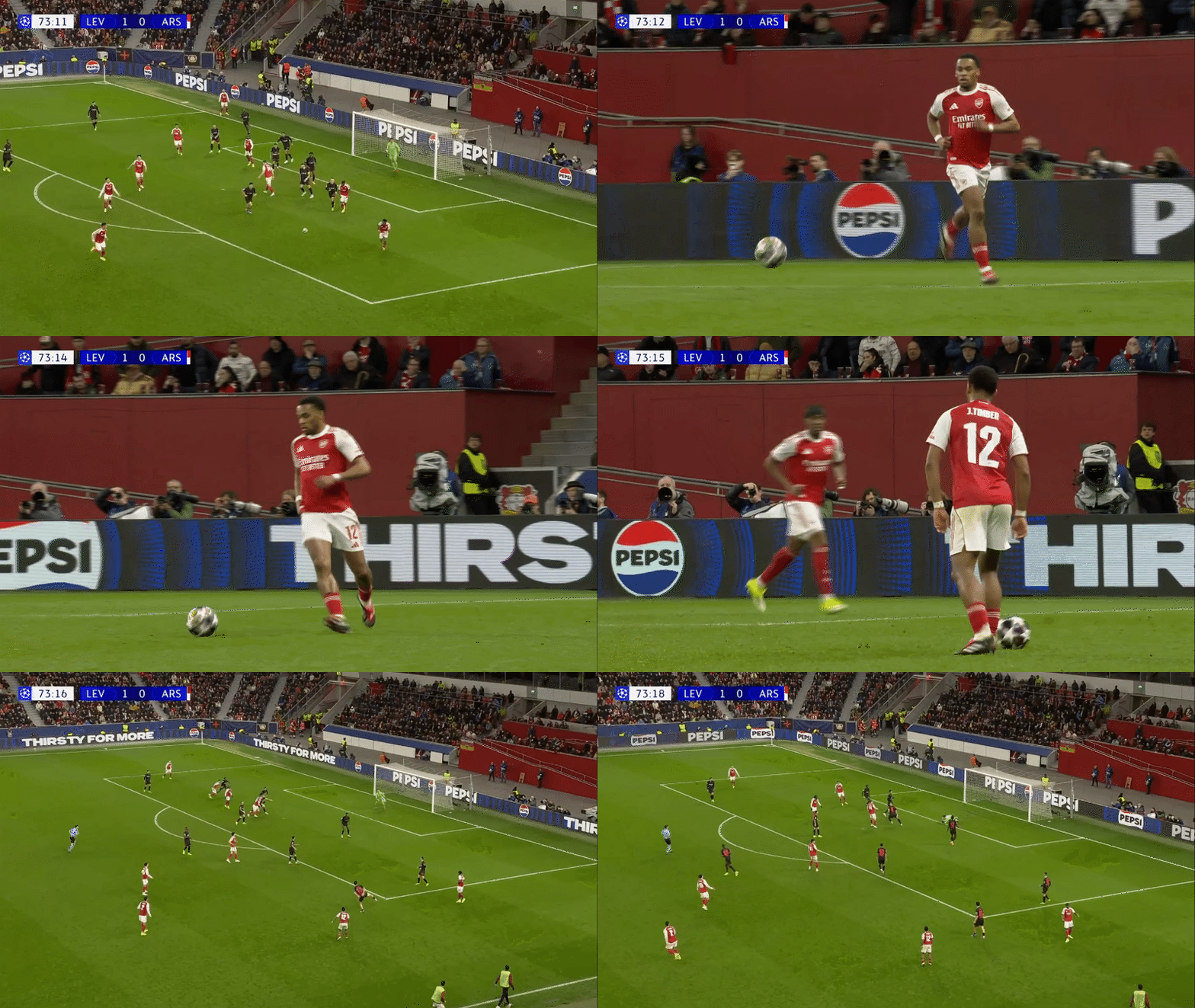
A few recent moments stick in my mind. They’re almost unexplainable outside of fatigue. The first was this weird, unpressured flip by Timber that landed out of play in the 86th minute to Wolves.
Another was this simple read, with Zubimendi drawing out the press to play wide to Gabriel, who will have a 2v1. For reasons unknown, Zoob hit it right back to Raya.
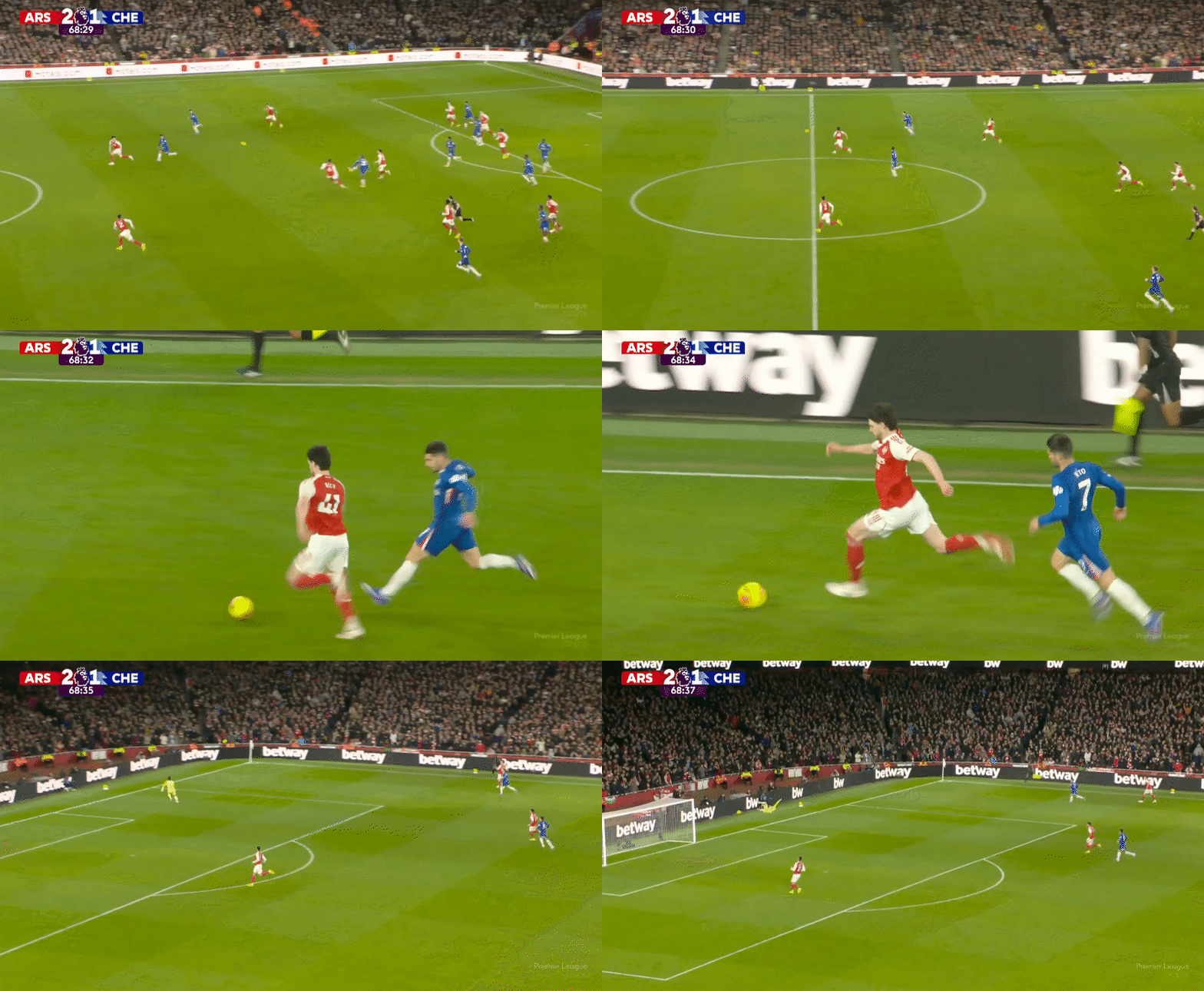
And the final one was this Rice recovery run, in which he won the spot before yeeting it over the byline for a corner. He was hobbling a bit after.
Players can overcome cardiovascular fatigue through force of will, but hitting a ball with some touch and technique is more rooted in biomechanical fact. In my view, the most heavily impacted player has been Timber, who can still work himself into good positions. His touches often look frayed from there.
It’s not abnormal to feel fatigue at this stage in the season. There is a likely culprit.
👉 VI. Why defending costs more
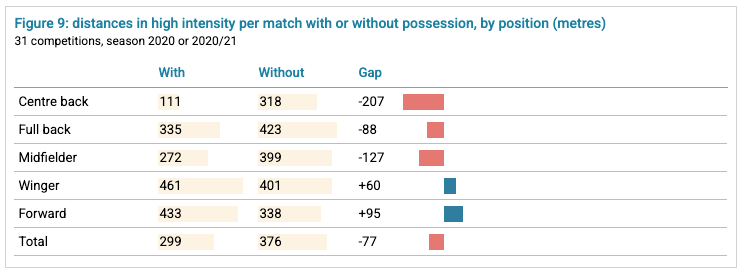
When you have the ball, the ball moves. When you don’t have the ball, you move.
Ball possession markedly affected physical intensity, with the rates of distance covered running (+31%), at high-speed (+30%) and in total (+7%) greater out than in possession.
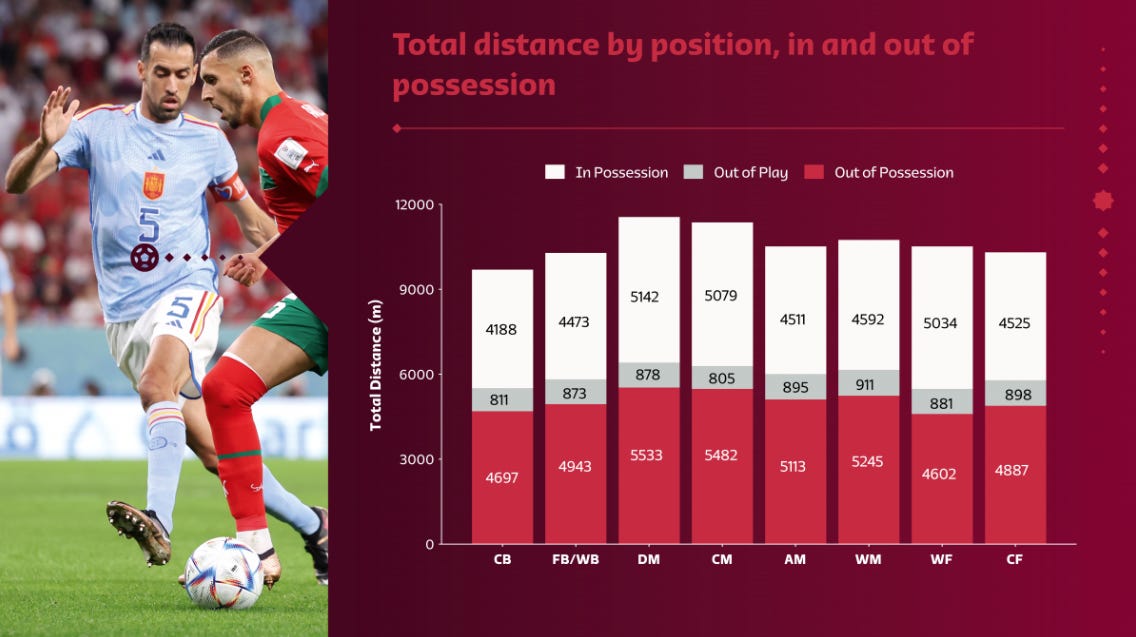
FIFA’s own World Cup physical data backs it up, with some other little nuggets, like this one: centre-backs and defensive midfielders do 70-85% of their sprinting without the ball.
Source: FIFA
The CIES Football Observatory found that while out of possession, high-intensity effort is spread almost evenly across the pitch, whereas in possession, it’s heavily concentrated on wingers and forwards.
Source: CIES
And in those tight scorelines (the 1-0s), your best players are on the pitch longer. So your starters play more minutes, they perform more high-intensity runs, and they accumulate more fatigue across a season. The Athletic flagged that no Premier League player has run more this season than Zubimendi.
So the tradeoff between defensive solidity and cumulative physical load is real. The question is whether a) we can keep the ball a bit more to lower the toll, b) bigger leads can be forged in the first half, allowing players to rest, c) there can be a bit more rotation in midfield, and d) players can fight through the asks of them.
👉 VII. What Zubimendi is actually doing
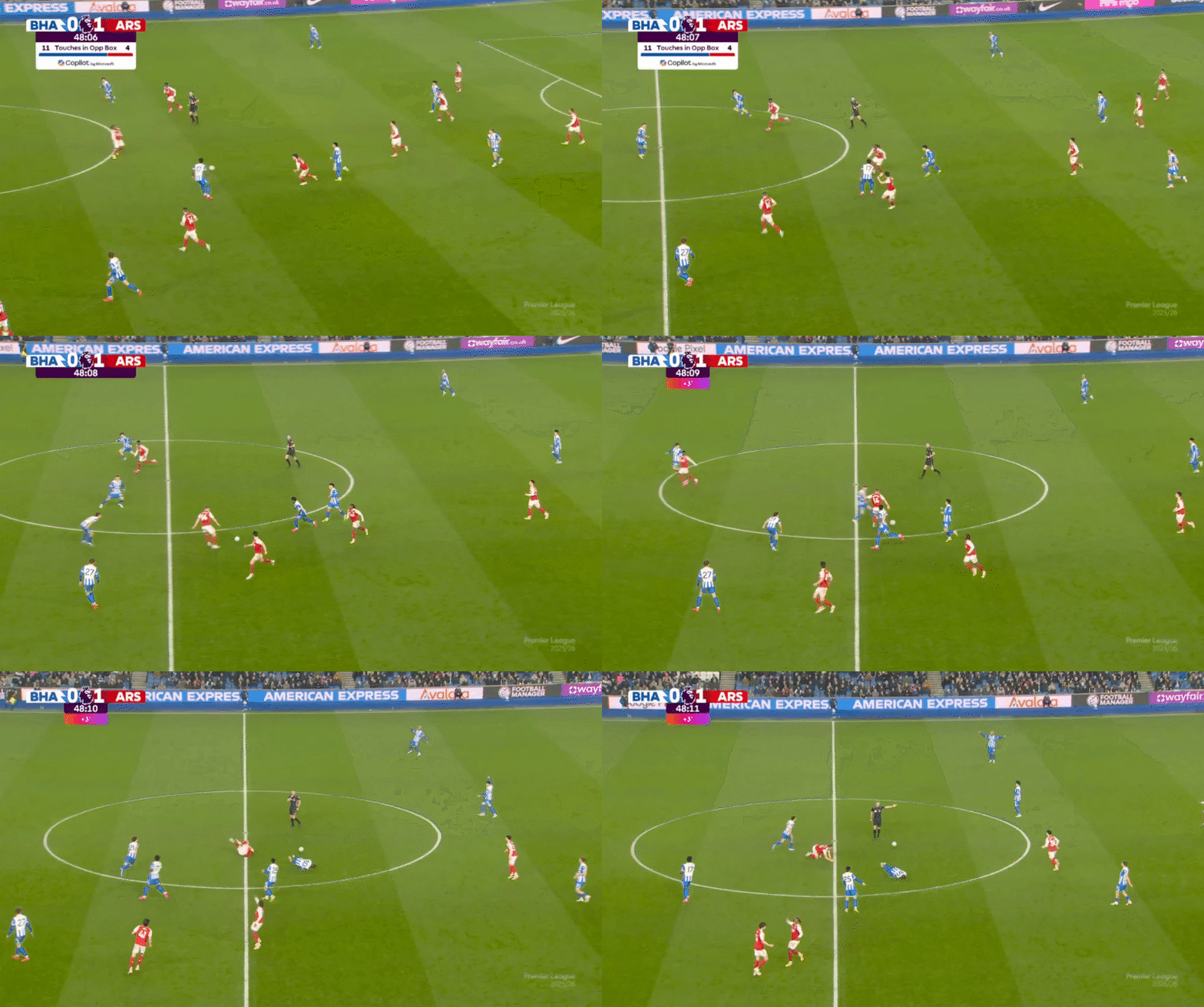
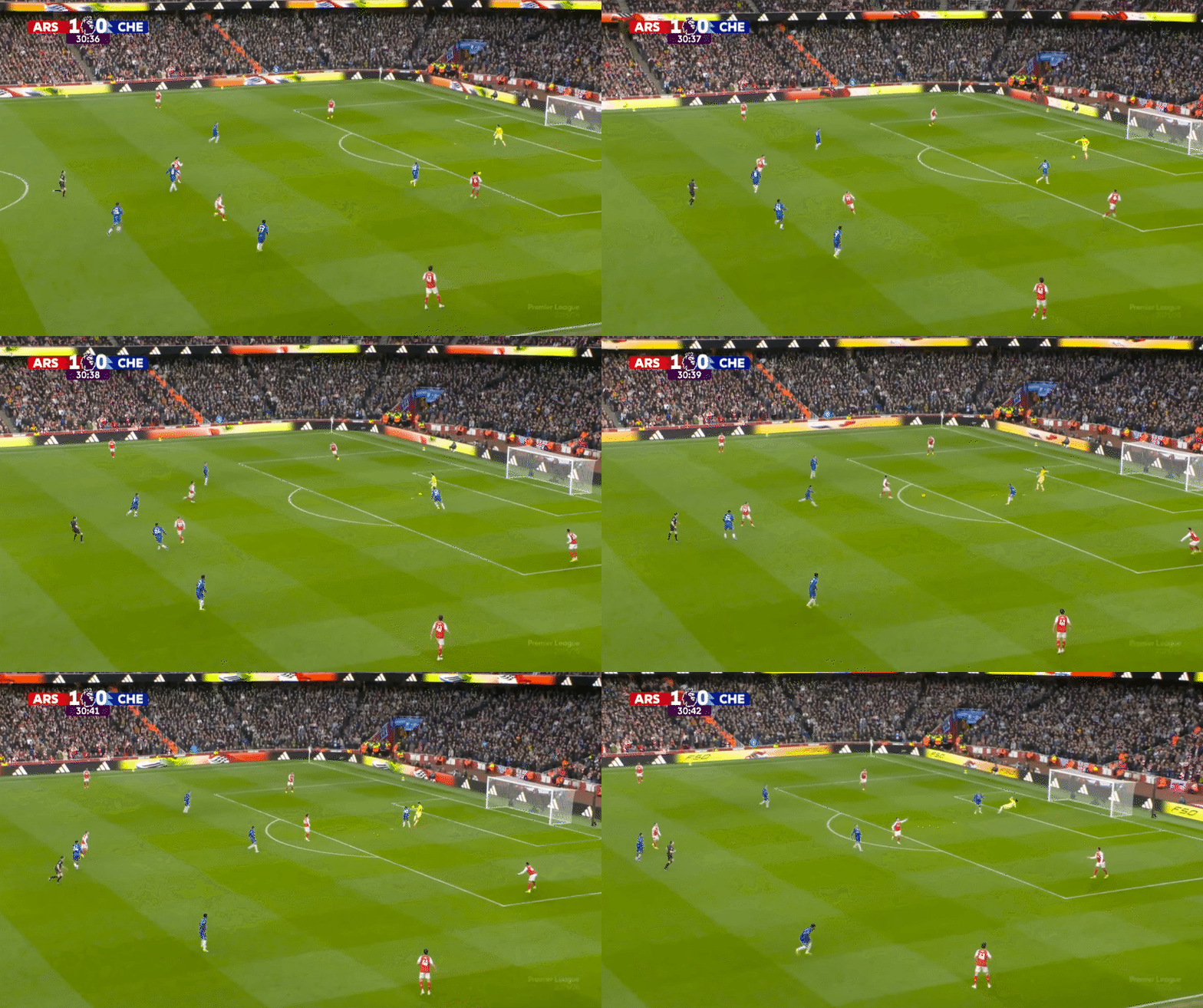
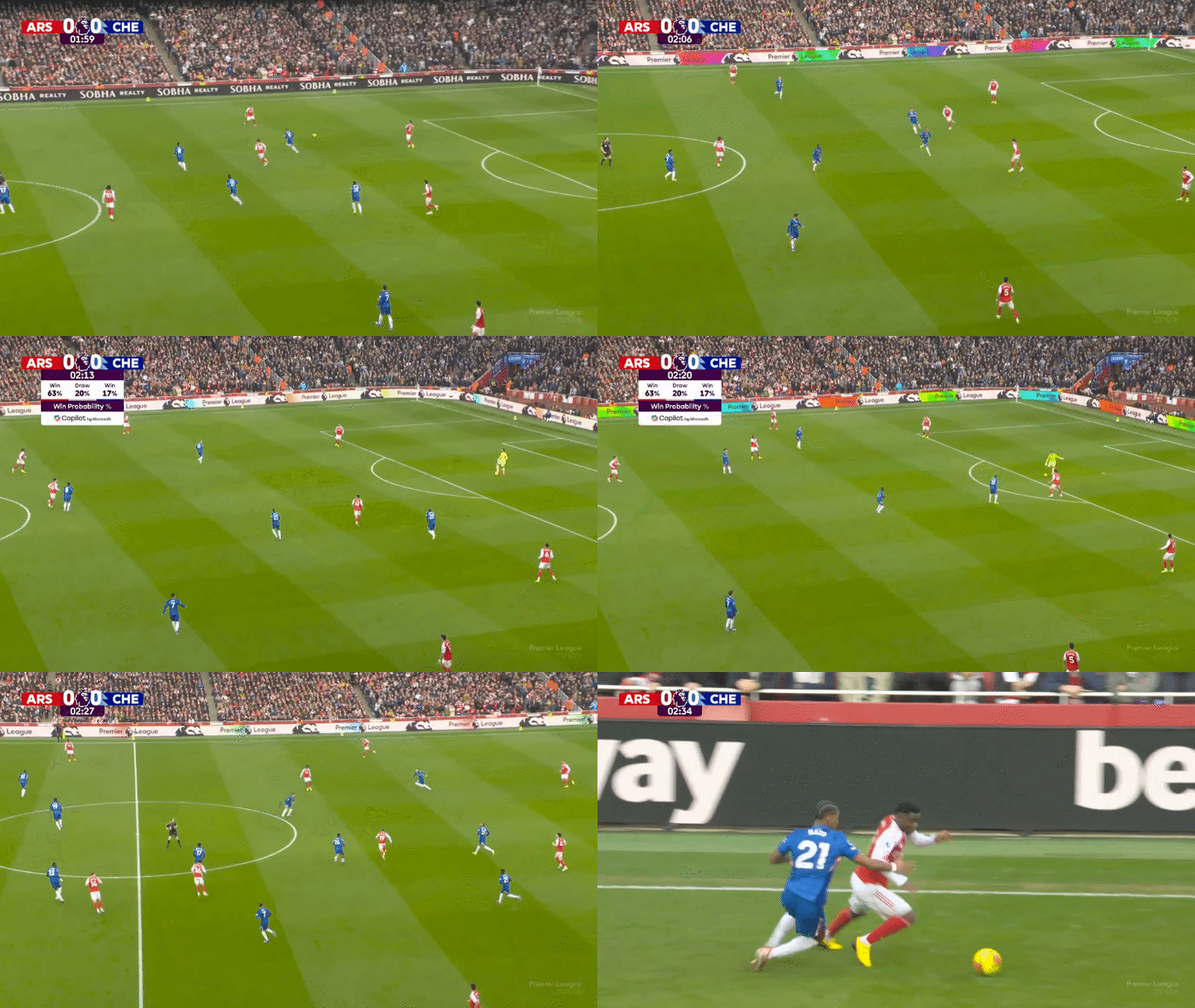
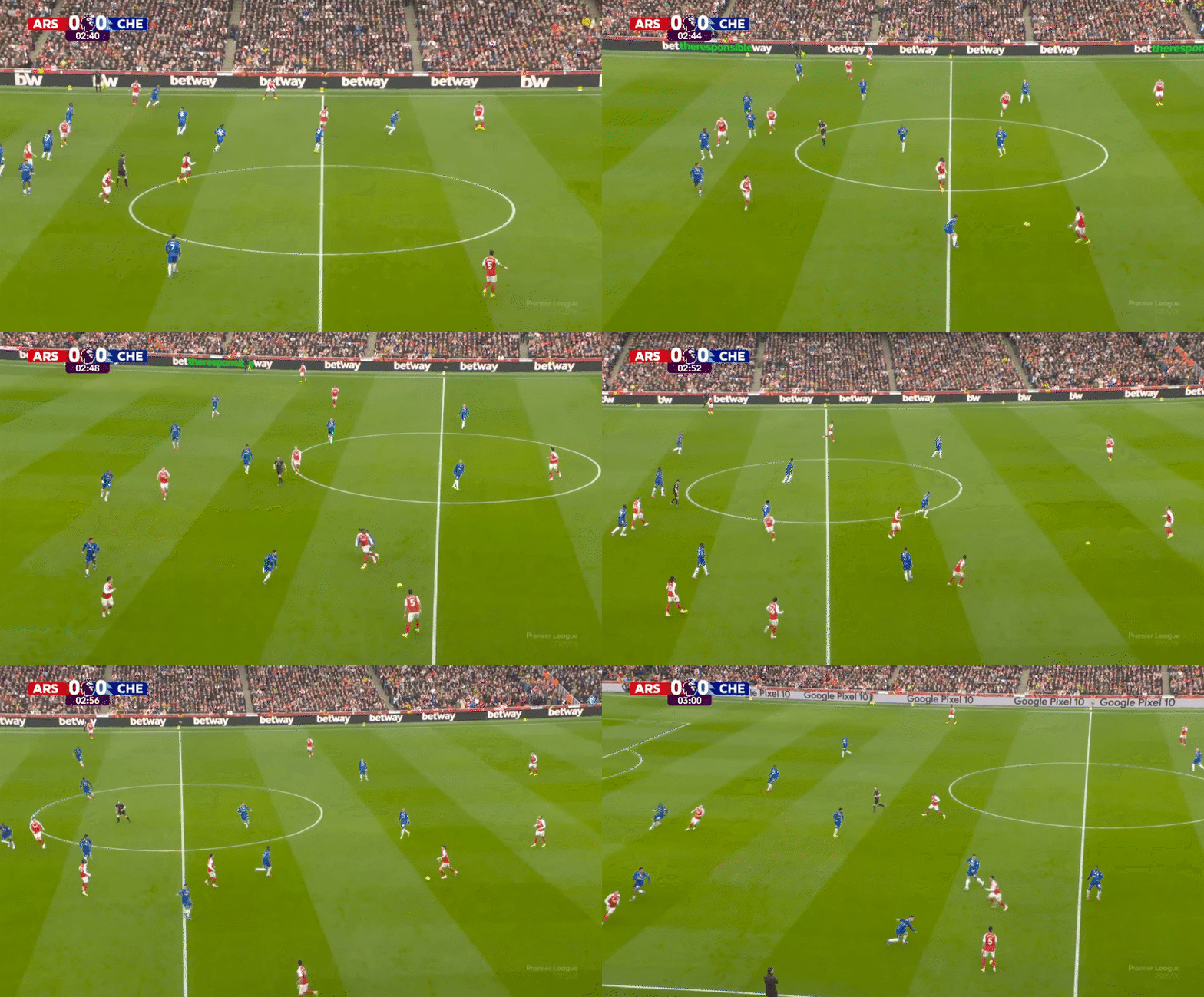
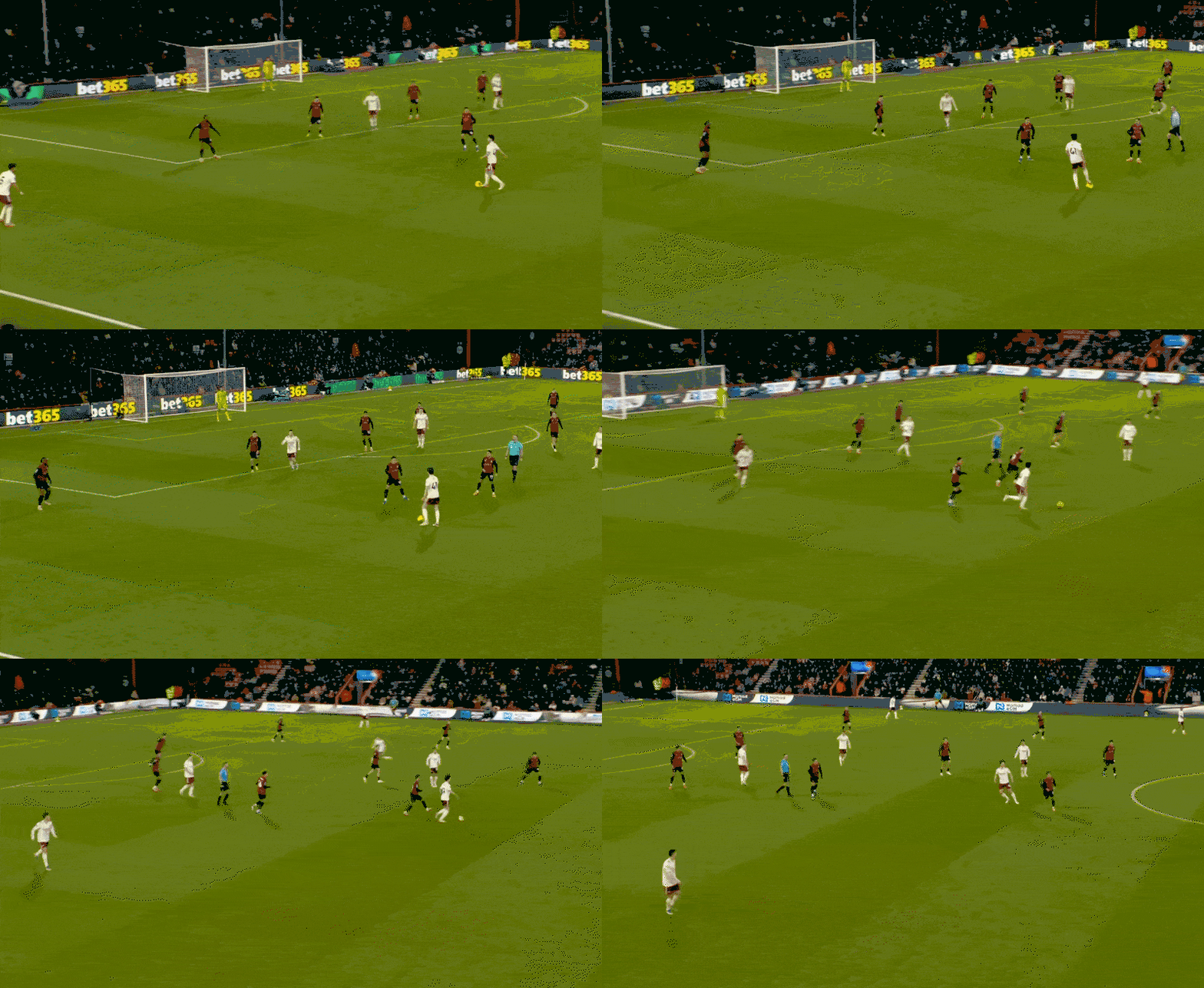
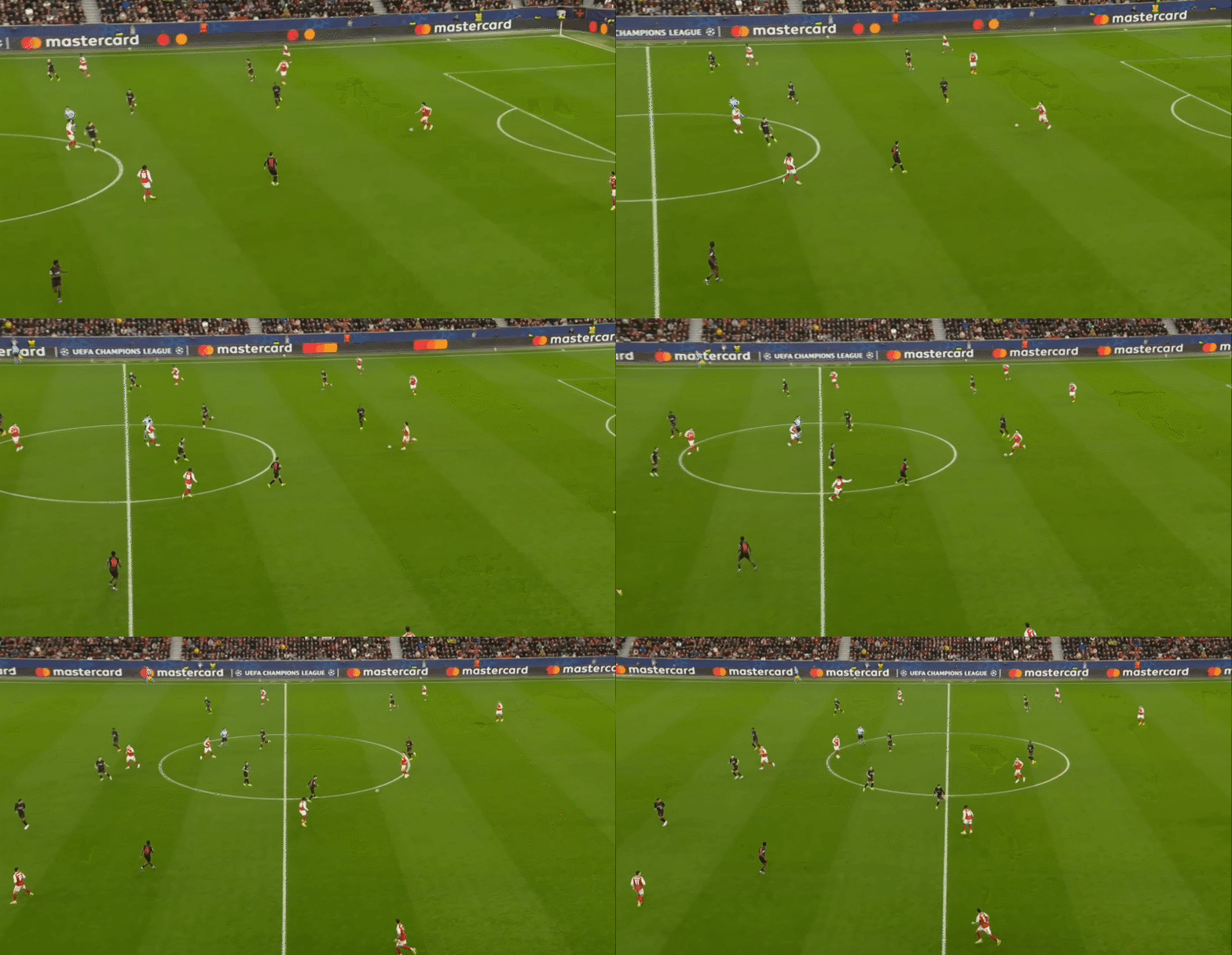
There’s another reason for fatigue. Here, I sped up a 10-second sequence of Arsenal build-up play. Watch Zubimendi throughout.
He wasn’t finished; I reached the file-size limit, which probably tells you something on its own. Over the next ten seconds, he kept rotating.
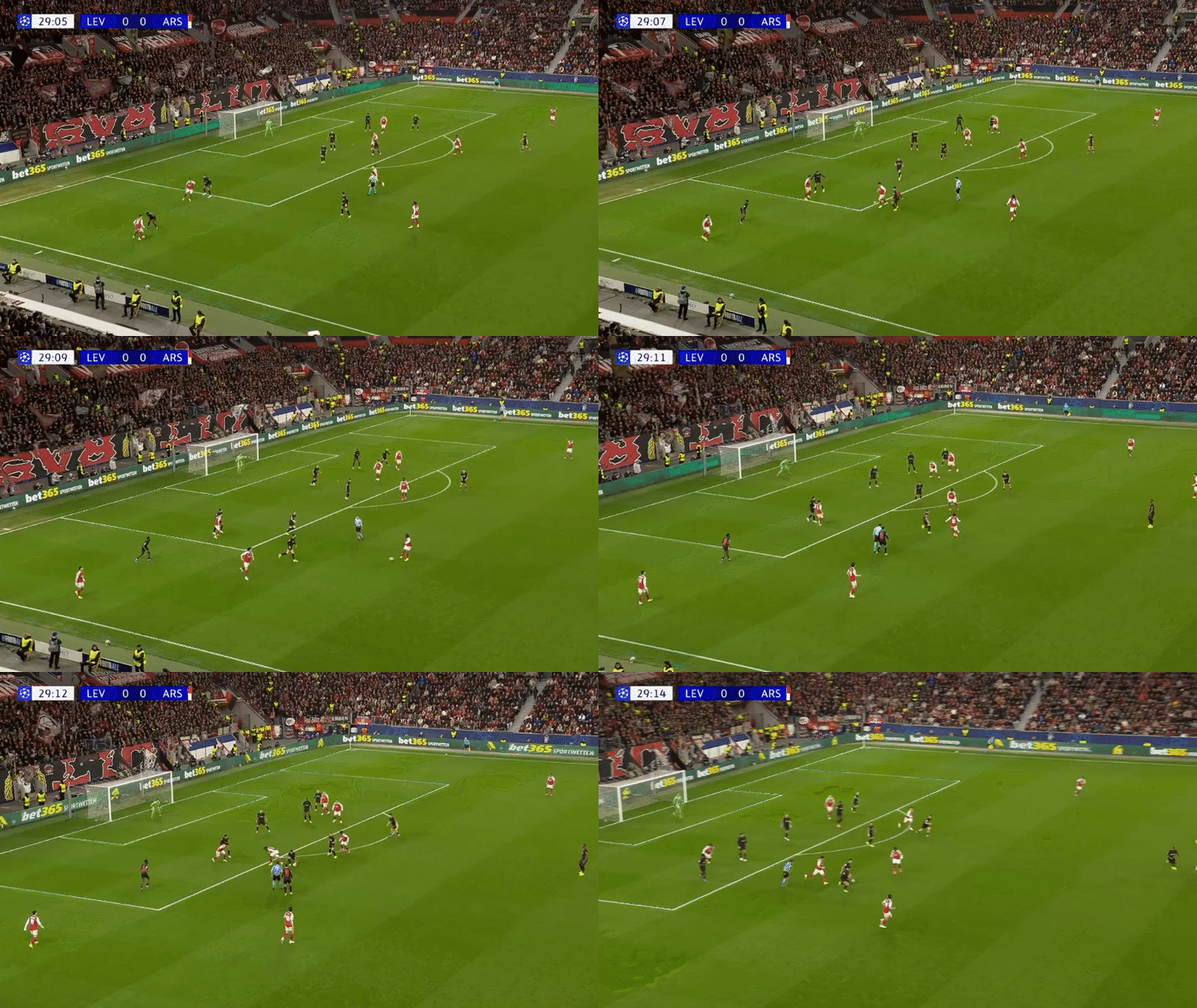
In that short time of looking to pull Chelsea out of shape, he fills zones typically associated with a #6, an LCM, a RCM, a LW, and more. Rodri, he is not.
Zubi is content in the 'cover shadow' dragging players around, creating space for others. Isn't a #6 who demands every single ball. It's not a knock
As a result, deep circulation is split between four different defenders, three midfielders, and a GK. The numbers get spread out; not a lot of stat-padding to be done
My only question with this signing is that I worry that a Rice/Zubimendi/Ødegaard midfield is a little light on indefensible killer balls, and am always hugely intrigued by Wharton types for that; Bruno Guimarães always struck me as the right balance, but alas, fuck Bruno Guimarães. Zubimendi doesn’t necessarily offer that on his own — he’s more about enabling others, drawing pressure, timing things right. I think an acquisition of his profile would raise the bar in another signing (say LW) to be able to provide some nasty crosses, or else we’re a little too reliant on Saka again.
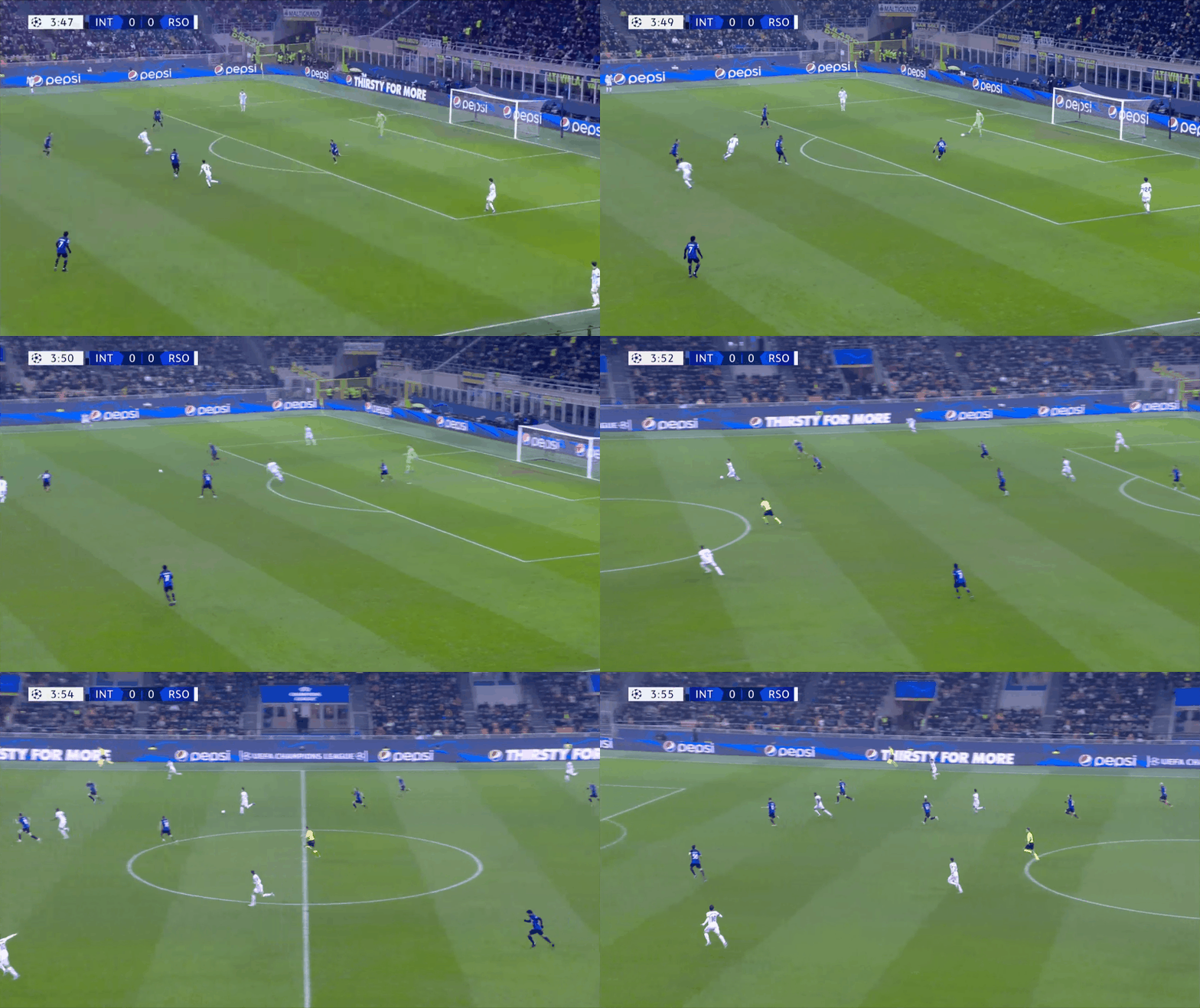
Here’s an example of how his focus is to “manipulate the press as much as possible,” and not “receive the ball from deep as much as possible.” After he’s joined in the pivot, he loops around, sees the jump by Barella, and then escapes behind him for a free carry.
Given how often he’s recovering possession or involved in duels, he tends to play off his first touch to keep things flowing or force the issue. That probably explains some of the pass accuracy dings you’ll see in the data, which is a common theme at Real Sociedad, but there is a risk of some bounciness settling in.
Something Arsenal supporters will like, and which became more clear as I watched the “deeper cuts” of his tape, is that he feels more aggressive (and less concerned with pure security) against overmatched sides, taking risks while trying to push forward for goals.
I like the idea of them switching and changing, as it’d offer Rice the opportunity to work a little more on the right: he can run and combine with Saka, freeing up his angles for three things: whipped, inswinging crosses; overlaps and cutbacks; and big cross-body shots like the one he scored against Newcastle. Zubimendi, then, has a lot of untapped potential to push forward on carries, setting up plays.
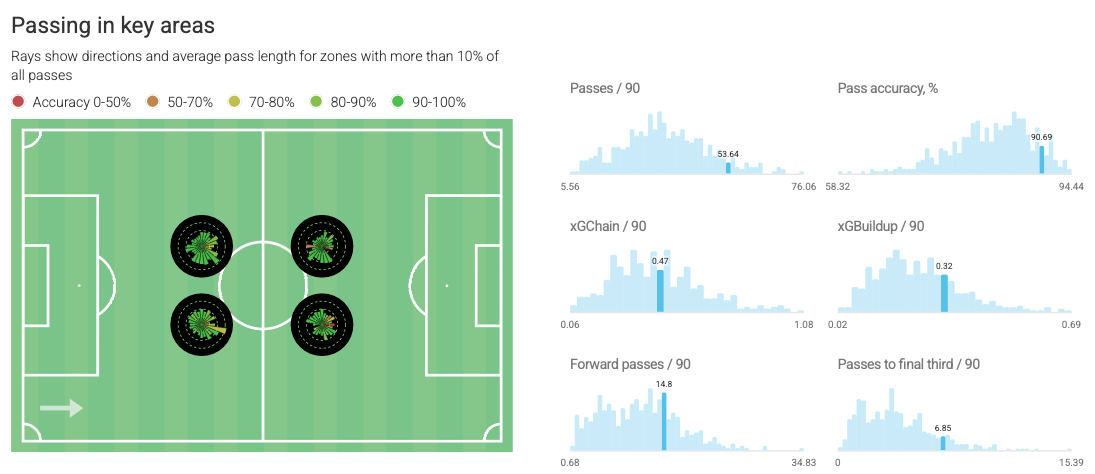
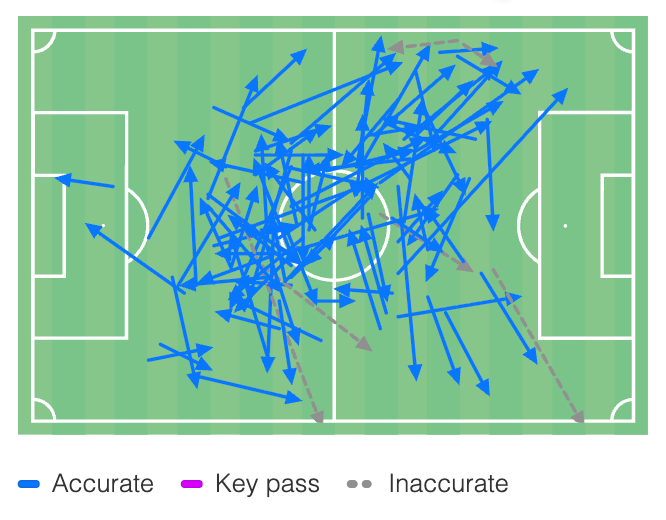
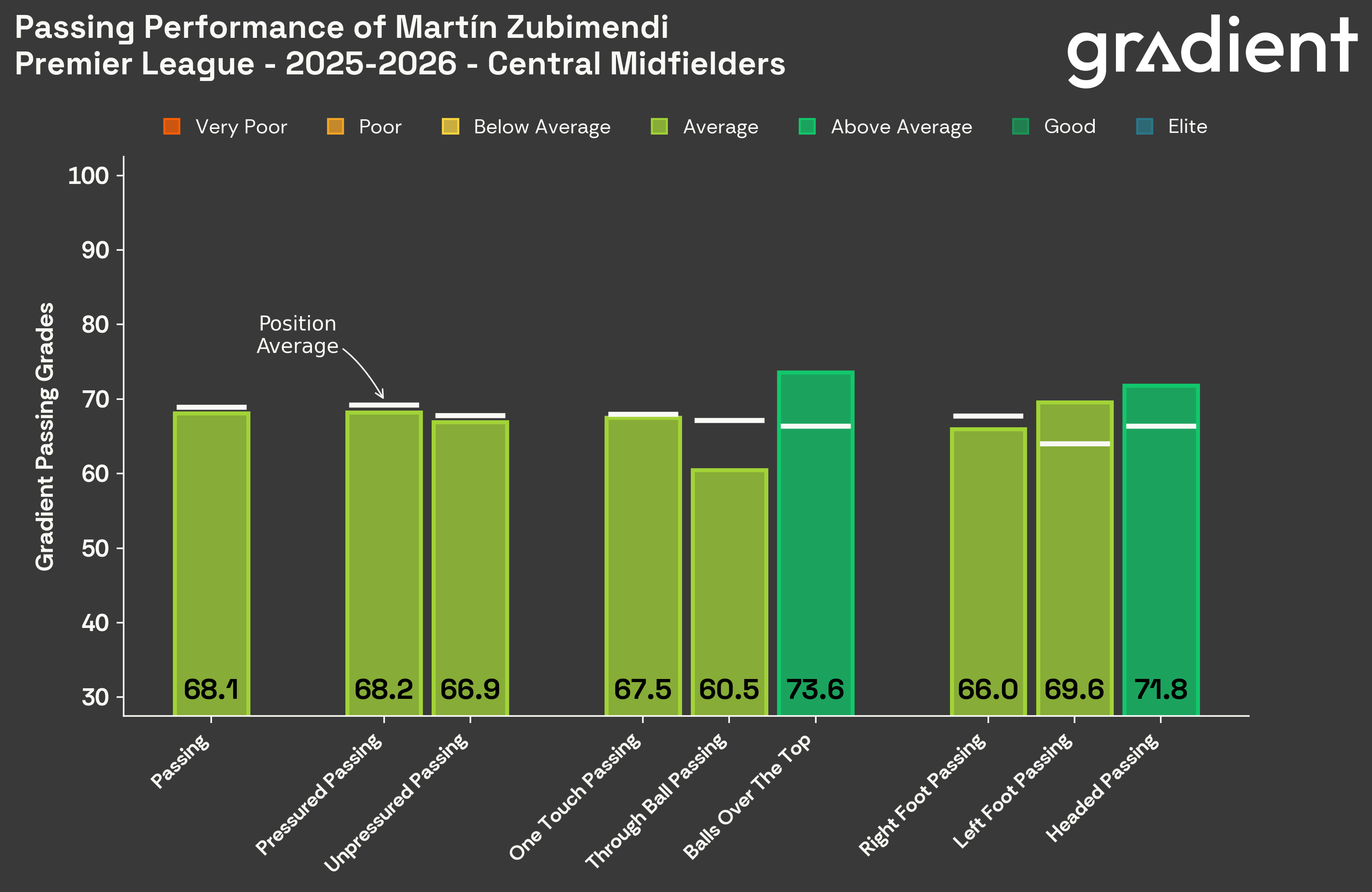
His passing has been clean, pragmatic, and somewhat measured from a volume standpoint.
Source: Wyscout
Zubimendi is yet to have an 80-pass game for Arsenal, something he’s known to do for Spain.
Zubimendi: 98/104 passing against Portugal
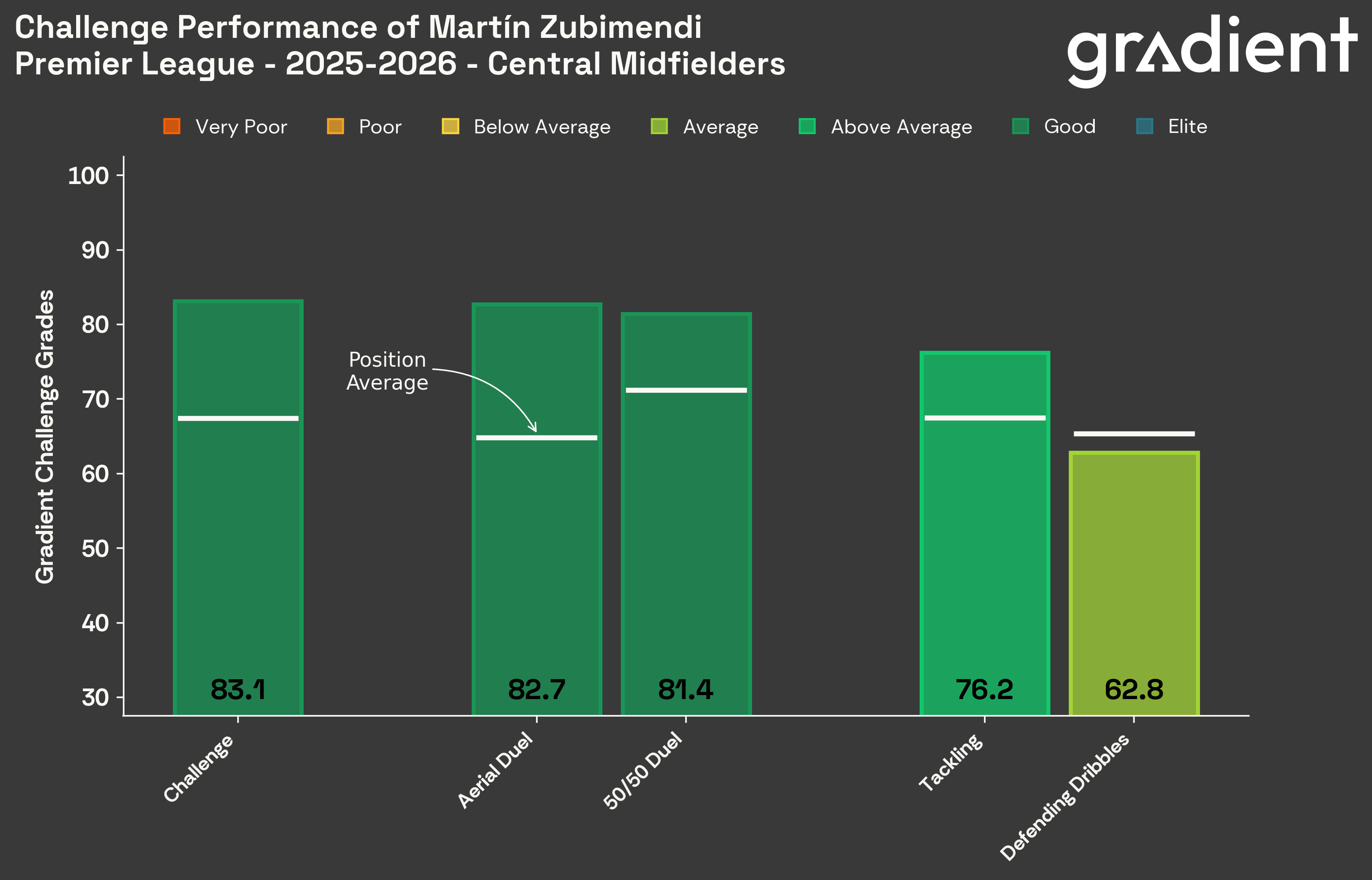
He has exceeded any expectations defensively. His reading of the game has perfectly scaled to the Premier League, and it’s worth reinforcing how rare it is for somebody to settle in as a possession player so quickly, while winning so much off the ball.
Source: Gradient
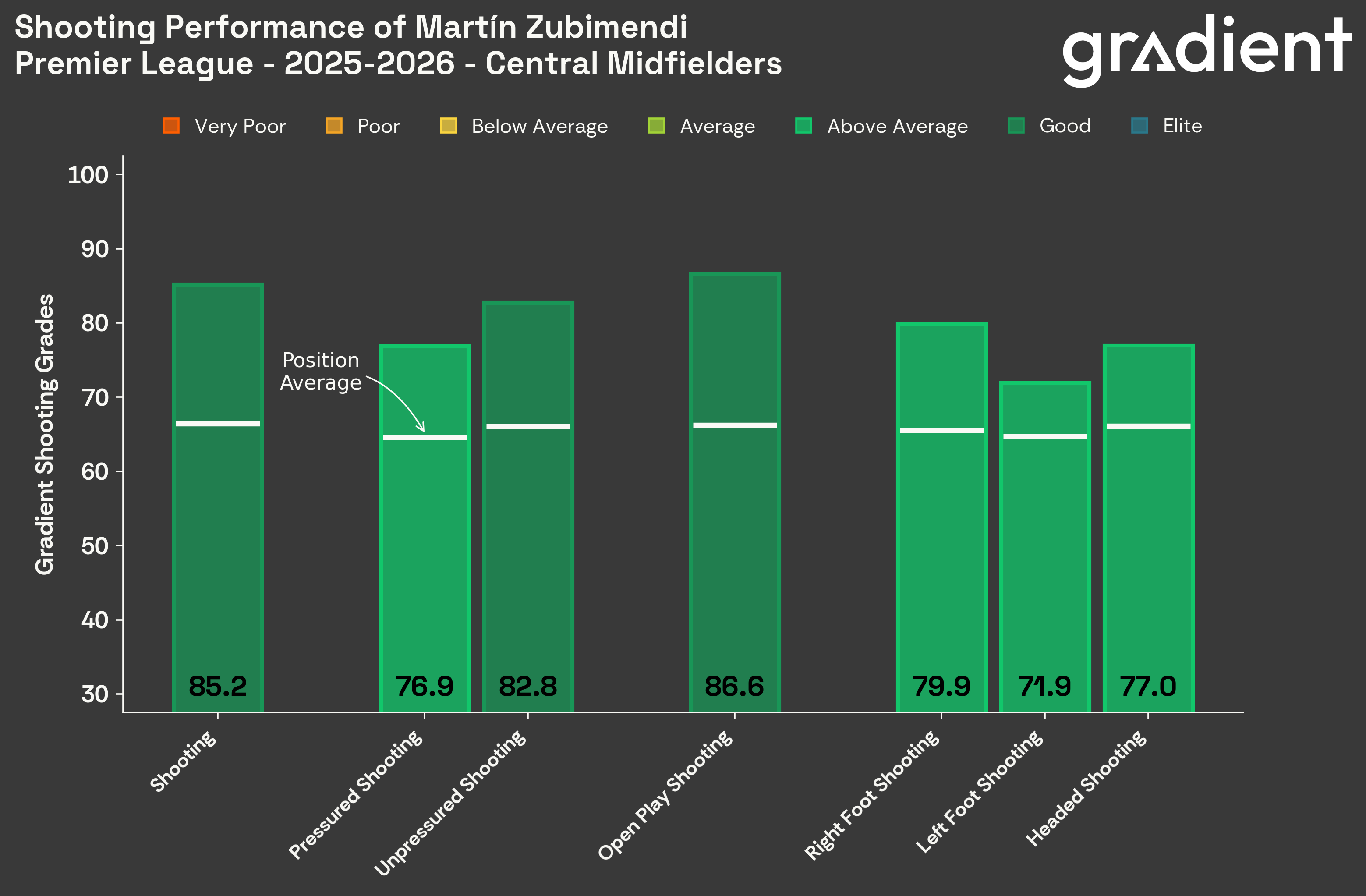
In terms of individual goal-threat, he’s also exceeded expectations.
Source: Gradient
But he has very much passed in a duo with Rice. As we saw, he’s usually trying to artfully move the block around for others, and we’ve rarely seen him switch into Jorginho Mode to take the bite out of a game. This puts his advanced passing metrics at the baseline.
Source: Gradient
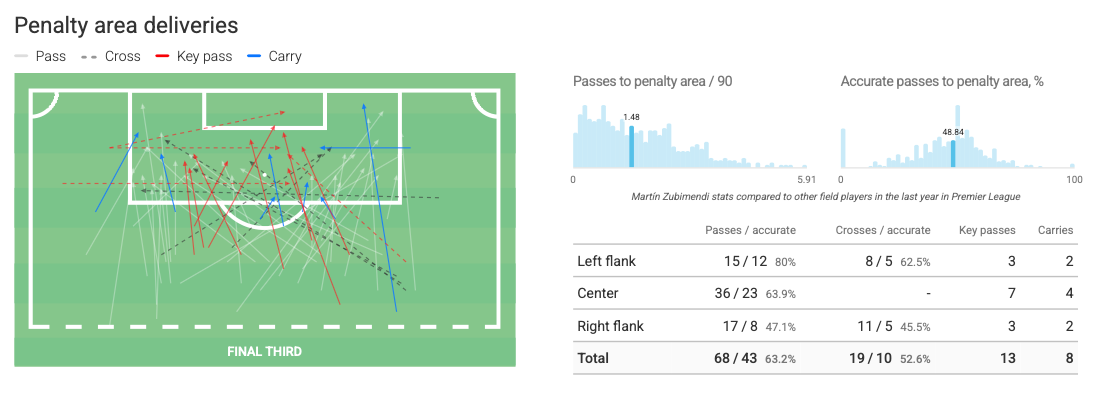
While he’s unlocked his potential as a goal-scorer, he hasn’t regularly delivered those final balls that turn calm moments into easy goals for the forwards. We’ve only seen flashes.
Source: Wyscout
Arsenal’s likely starting trio (Rice, Zubimendi, Ødegaard) can project like a more physical version of PSG’s flowing setup last year. But it should be said: whereas Zubimendi is yet to top 80 passes for Arsenal, his counterpart at PSG (Vitinha) averages 105.8 passes per 90, and it’s not surprising to see him with 120, 130, 140-pass games. There are league effects there, but also a difference in strategy and, likely, temperament and skillset.
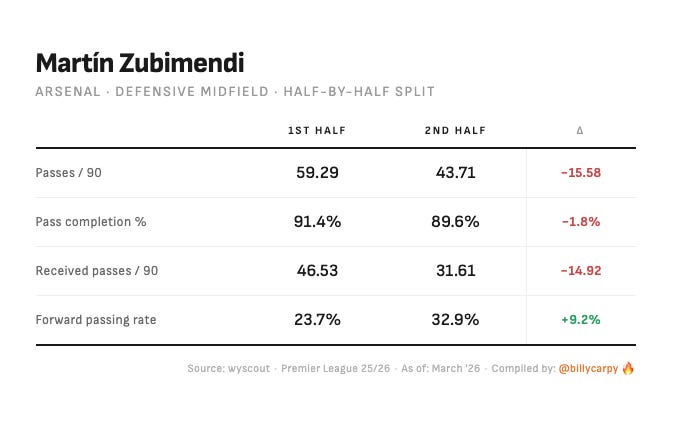
Crucially, his role is another thing that is affected by the timing and score of the game. In second halves, with the ball going long so often, and with Zubimendi not bringing a domineering, give-me-the-fucking-ball streak, he hasn’t been able to pull the possession strings to the same level.
He has shown an urgent vibe, slapping it on his first touch, hoping to keep the ball moving forward, or if nothing else, away from our goal.
It’s all understandable, but you’d like to see him toggle between modes as well. Some of this may come down to an adjustment period. A lot of this comes down to the team’s philosophy of attack.
👉 VIII. The pivot
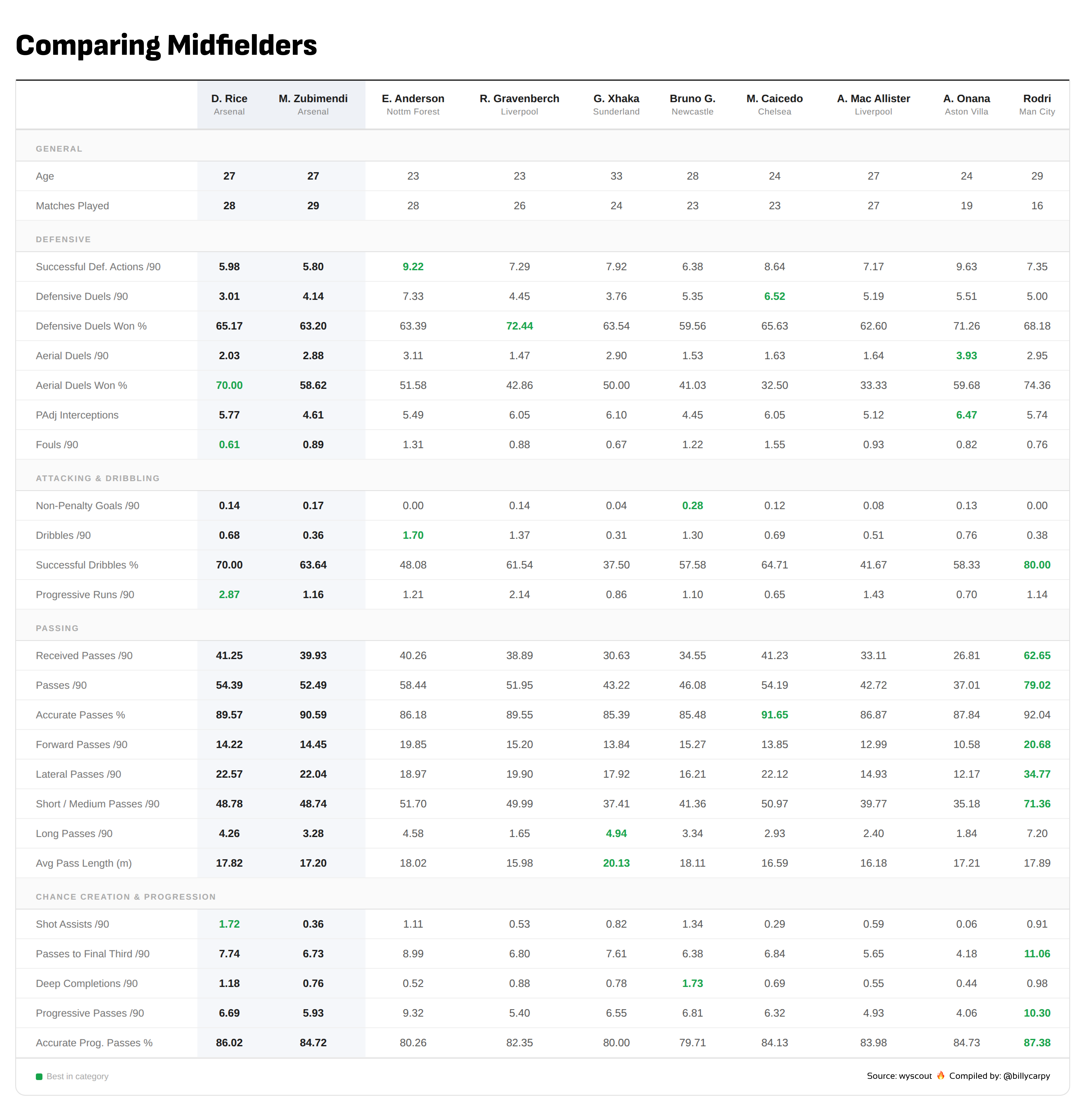
I’m not sure it was the most strategic grouping, but here are 10 good midfielders in the league.
There are a few takeaways:
A reminder not to look at the volume of defensive actions as a meaningful metric when thinking about individual quality.
Rodri is still quite good. This shows the degree to which he is taking responsibility and single-pivoting in an era when most are sharing responsibilities.
Rice and Zubimendi fare well against the league’s best. What you’ll notice is that other players have some more highs and lows, but Arsenal’s duo fare pretty well on everything.
Once a weakness, Rice has really cleaned up his aerial work: his 70% win rate is the highest in the sample. It’s another data point for how extreme he can be about removing weaknesses from his game. I used to watch some of his long-throws with a bemused look, and he’s recently been heaving them into the goalmouth.
I wondered if Zubimendi would be lower for “received passes,” but he comes out fine.
Zubimendi is second-highest for goals, and is low for shot assists.
At the same time, I spent a couple of hours poring through stats on the Gradient platform and taking notes, hoping to get a better sense of the nuances of Arsenal’s build-up play. It should be said, I wasn’t looking at this dispassionately, given recent attacking form. I wanted to be critical to see what can be improved.
Here are a few data points I found:
Arsenal currently have the sixth-most passes completed under pressure. The gulf is pretty large, though: Man City average 252.37/90 to Arsenal’s 186.31. My inkling is that Arsenal can usually handle passing through the press, but due to personnel limitations and fatigue, don’t proactively welcome it to the extent that a Rodri or Kroos-style team might.
Man City are 85.9% when passing under pressure, best in the league. Arsenal are fifth in the league, at 80.7% (after City, Chelsea, Villa, and Liverpool).
Arsenal are 10th in total line-breaking passes attempted (36.85/90). Arsenal are first in balls breaking the final line of pressure (3.23/90); they are 17th in success rate at breaking lines in the midfield (67.8%). Arsenal, to my eye, have kept the ball on the edge of the final third a bit more this year, and are good at those little slip passes that get players like Saka and Timber past the backline, but are not trying to push it through the opponent’s pivot.
A look at how Arsenal possessions break down:
30.4% through the left (19th-most). This matches the eye test. More on it later.
35.3% through the middle (5th-most). Probably better than you may think.
34.3% through the right (3rd-most). To be expected.
Arsenal have the highest percentage of touches facing the goal (49.6%), and the lowest percentage of touches received back to goal (18.8%).
Man City have 50+ more touches per 90 facing laterally, and carry the highest percentage of backward passes in the league (17.9%). Arsenal have the 17th-most backward passes (15.7%).
As far as risk goes, Arsenal are fairly low on miscontrols or failed passes. They are fairly high in through-balls and over-the-top balls, and low in switches (1.63/90).
Most notably, Arsenal have the sixth-fewest “passes below expectation,” but are down in 18th in “passes above expectation,” at 3%. Again, that’s something that may confirm our priors: many good and acceptable passes, not many mistakes, but not many KDB-style world-beaters, either.
“Yes [I think of them as a pair]. I mean, we always talk about these relationships and chemistry. There is one, and it’s very strong off the field as well. That makes what happens on the field very, very special.”
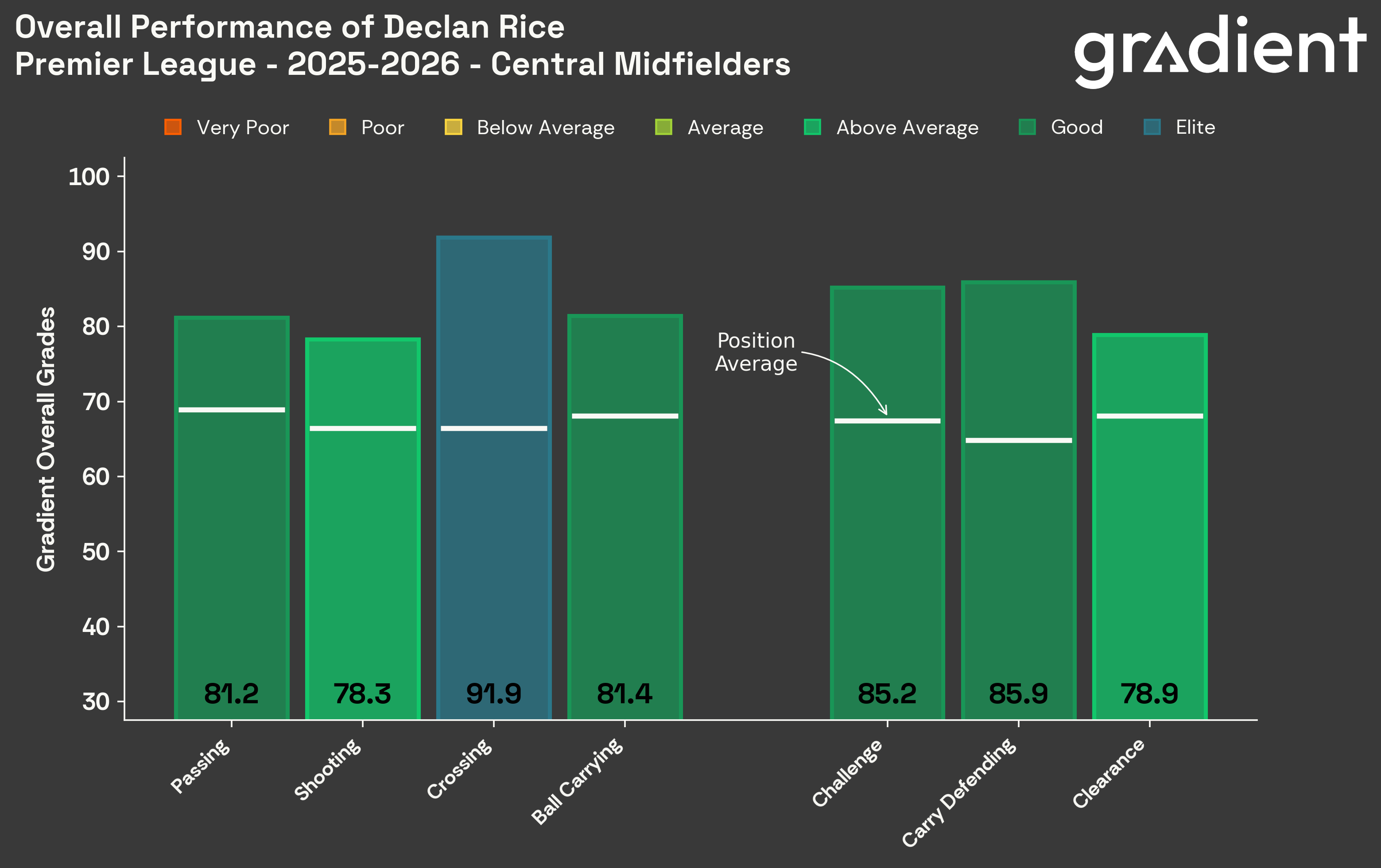
Rice devised a brilliant career plan that I can’t believe more players haven’t thought of. Why not just be good at everything?
Source: Gradient
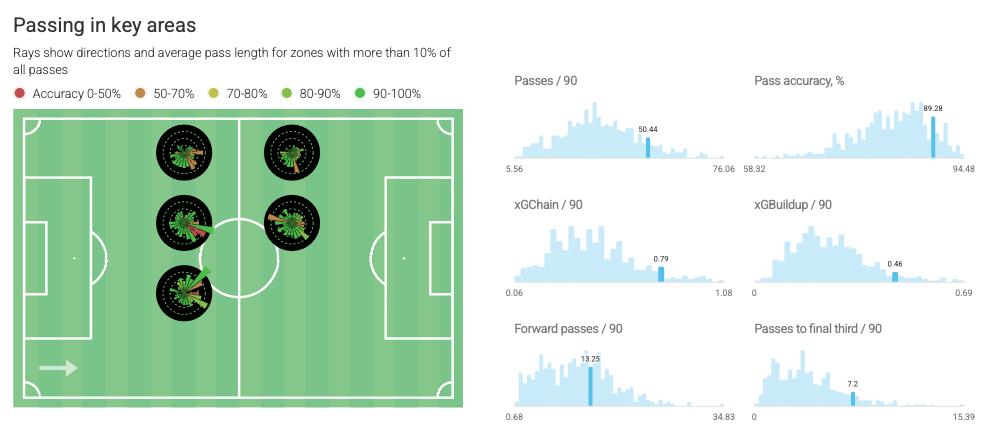
There isn’t much that is unexpected in his passing numbers. Everything has been comfortably above-average as he scales up his volume.
Source: Wyscout
There are a few interesting nuggets as you go through Rice’s year-over-year passing data:
His passing volume is up 29% year-over-year (41.95 to 54.03). Basically, his deeper role shows up in the numbers, and he’s inherited a good chunk of the touch count of Ødegaard and the previous pivot players. He’s receiving nine more passes per 90.
His passes to the final third are up 38% (from 5.55 to 7.68), but his accuracy is down a touch (from 82.7% to 80.5%). Little blips in accuracy don’t really matter that much on their own, but it’s worth observing.
I think he’s proven he can be a great, detailed ‘double-6’ while deep, and is a safe, retentive, and occasionally creative passer in open play. The growth areas are about what happens from there. Most interestingly:
His long passes are up 58% (from 2.73 to 4.3), but his success rate on those pings has really fallen off (from 63.8% to 51.5%). This aligns with what we’ve seen elsewhere. The team isn’t particularly successful as a long-ball threat in the league.
His through passes have also doubled (0.29 to 0.59), but the accuracy has fallen off (50% to 38.9%).
Likewise, his forward passes are up 34% (10.89 to 14.55), but the accuracy on those is also down significantly (83.5% to 76.7%).
He’s still a near-perfect back-passer and has made very few mistakes.
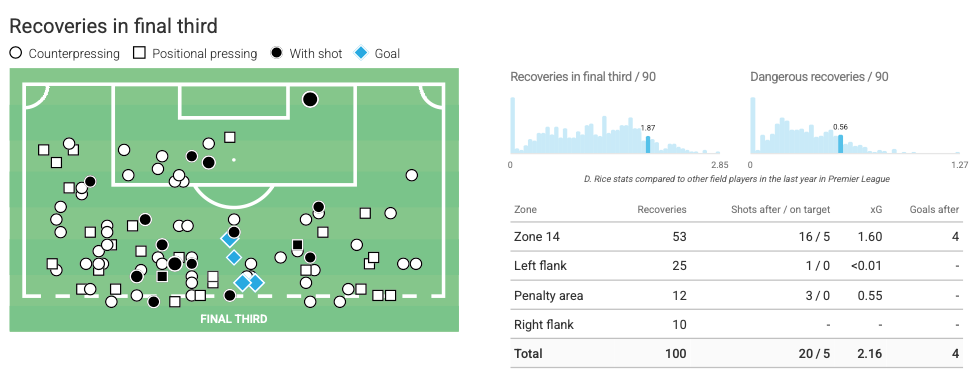
His work off the ball is looking better than ever.
Source: Wyscout
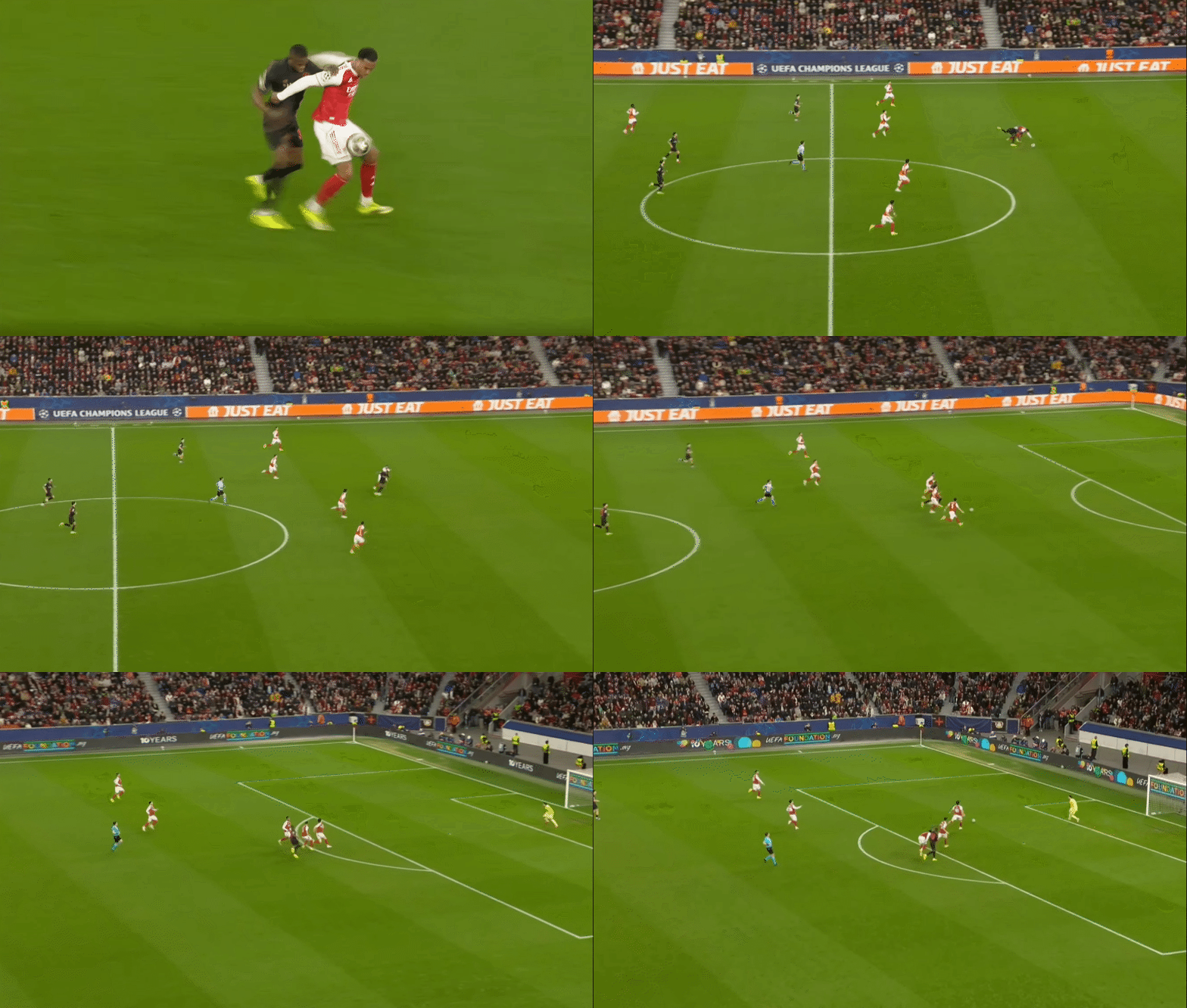
Here’s Rice and Hincapié competing for the hustle award.
Try as Rice might, Arsenal are still missing something.
👉 X. Eze and the Leverkusen setup
My last big piece, Triangles, was basically a big critique of Arsenal lineups. It covered how any starting eleven is a compilation of small relationships through the pitch, and how many Arsenal selections have been lacking in terms of their complementary characteristics. The TL;DR:
I’ve never wavered from my optimism about our chances for the big stuff this year. Arteta has generally rotated well, and I have few critiques of how the squad has been deployed in the cups or in the Champions League.
But I’ve also been frustrated with some setups and dynamics in the league, even when results eventually go our way. With returns from injury comes a bigger squad. With more options, we’re less resource-constrained, less obligated to do things just because they’re the only things available. It should make it easier to get it right, but it also makes it easier to get it wrong.
There have been times when I felt lost when the Premier League line-ups drop. Too often, they’re comprised of small clusters of players who don’t feel fully complementary, and who narrow the number of coherent arguments we have towards a goal. Gone are the days of simply hoping to see some players and hoping not to see some others. Now, we’re scanning for compatibility.
I spent particular time on lineups like the one against Bournemouth, in which “finishers” were deployed from the get-go, and Arsenal had trouble generating momentum earlier.
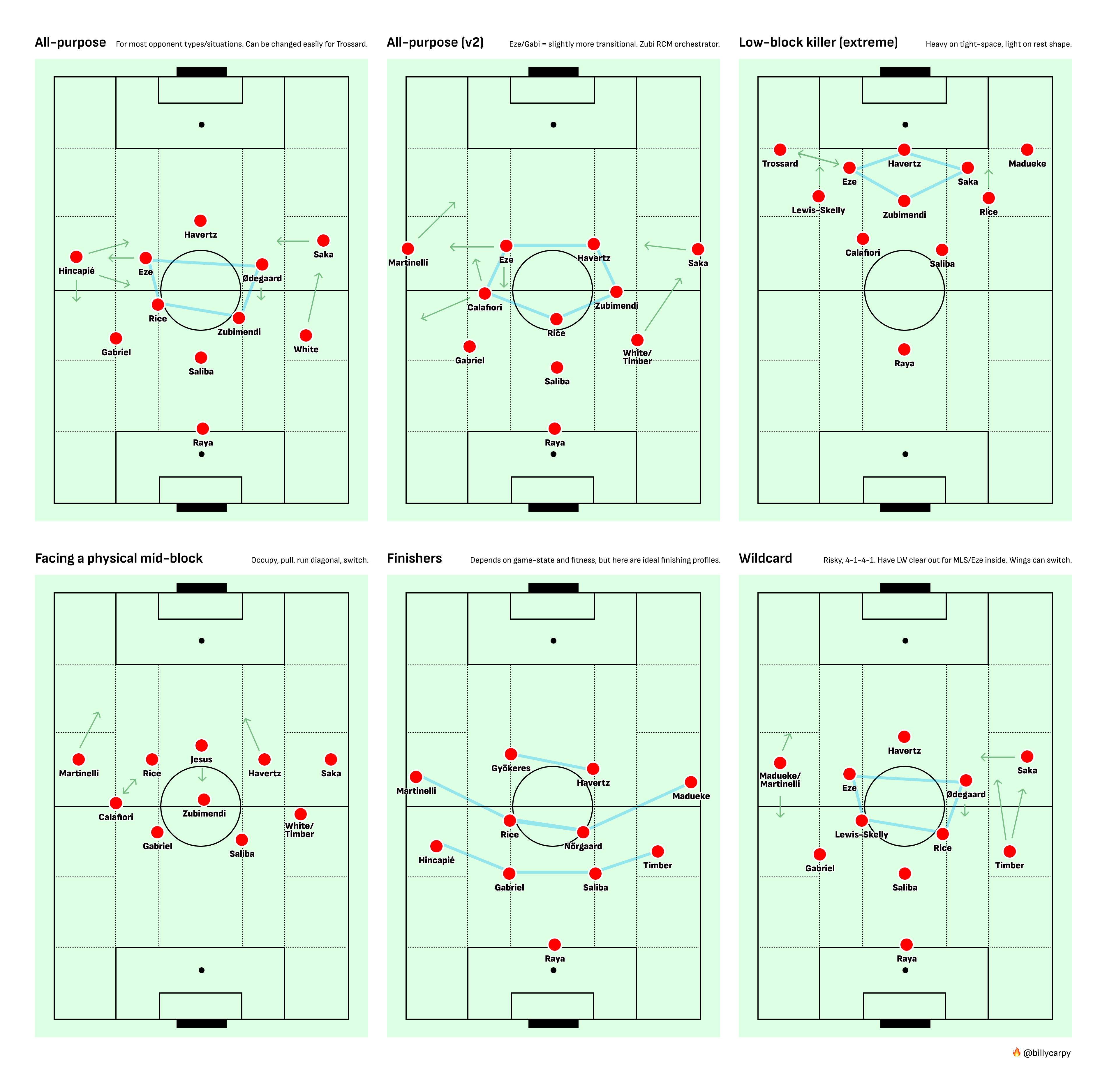
Here’s what I’ve been hoping to see.
It’s oversimplified, but in any outside trio, I’d like to see a few adjacent profiles:
(Below) An orchestrator: somebody who can dictate play and pick apart the opponent shape with passes.
(Beside) A dribbler: somebody who can drive at opponents and collapse the shape, starting a cascading effect.
(Beyond) A runner: somebody who can interpret space and pull it apart: “decompacting” the shape horizontally, diagonally, or vertically.
Ideally, a player has the flexibility to play multiple roles based on rotations.
Changes have been slow in coming. The next game saw a lineup against Wolves that had a lot of the characteristics I was worried about. The running trio of Martinelli/Rice/Hincapié on the left had individual moments but not regular dominance; the Martinelli/Gyökeres pairing in the frontline isn’t the right choice against a low-block. Those selection issues compound because you’re unable to push the advantage in the first half, and then you have the wrong profiles available in the second half. Arsenal ultimately gave up a two-goal lead.
The left trio, plus Gyökeres, was trotted out again at Brighton. It was the seventh game that Martinelli and Gyökeres had started together in the Premier League. In those games, they’ve combined for 0 goals and 0 assists, and Gyökeres is yet to have a single shot on target. Through 23 league starts, Gyökeres is still awaiting his first open-play goal in the first half.
These issues have led to some conservative first-half away performances in the league.
Brighton: 1 shot (1 on target)
Spurs: 12 shots (3 on target)
Wolves: 6 shots (3 on target)
Brentford: 1 shot (0 on target)
Leeds: 2 shots (2 on target)
Forest: 7 shots (0 on target)
Bournemouth: 5 shots (1 on target)
Everton: 6 shots (1 on target)
To help expand the advantages, here were some of the lineups I was pitching back then.
The familiar groupings were chosen against Leverkusen: Hincapié/Martinelli/Rice on the left, Gyökeres up front. In truth, I would have done something a bit different, but I wasn’t grumpy this time. For one, Martinelli and Gyökeres are better-suited to away days in the Champions League, especially against a side like Leverkusen, who are bound to have some of the ball. For another, that XI does run a lot, and it does have a good performance floor for a first leg. And finally, there were availability issues elsewhere, and the deployment of Eze has improved.
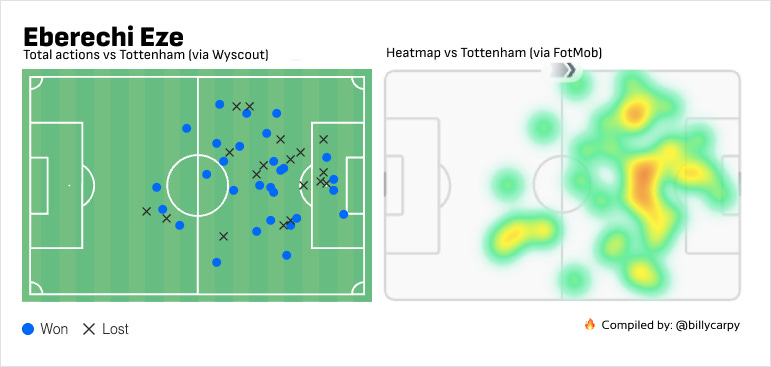
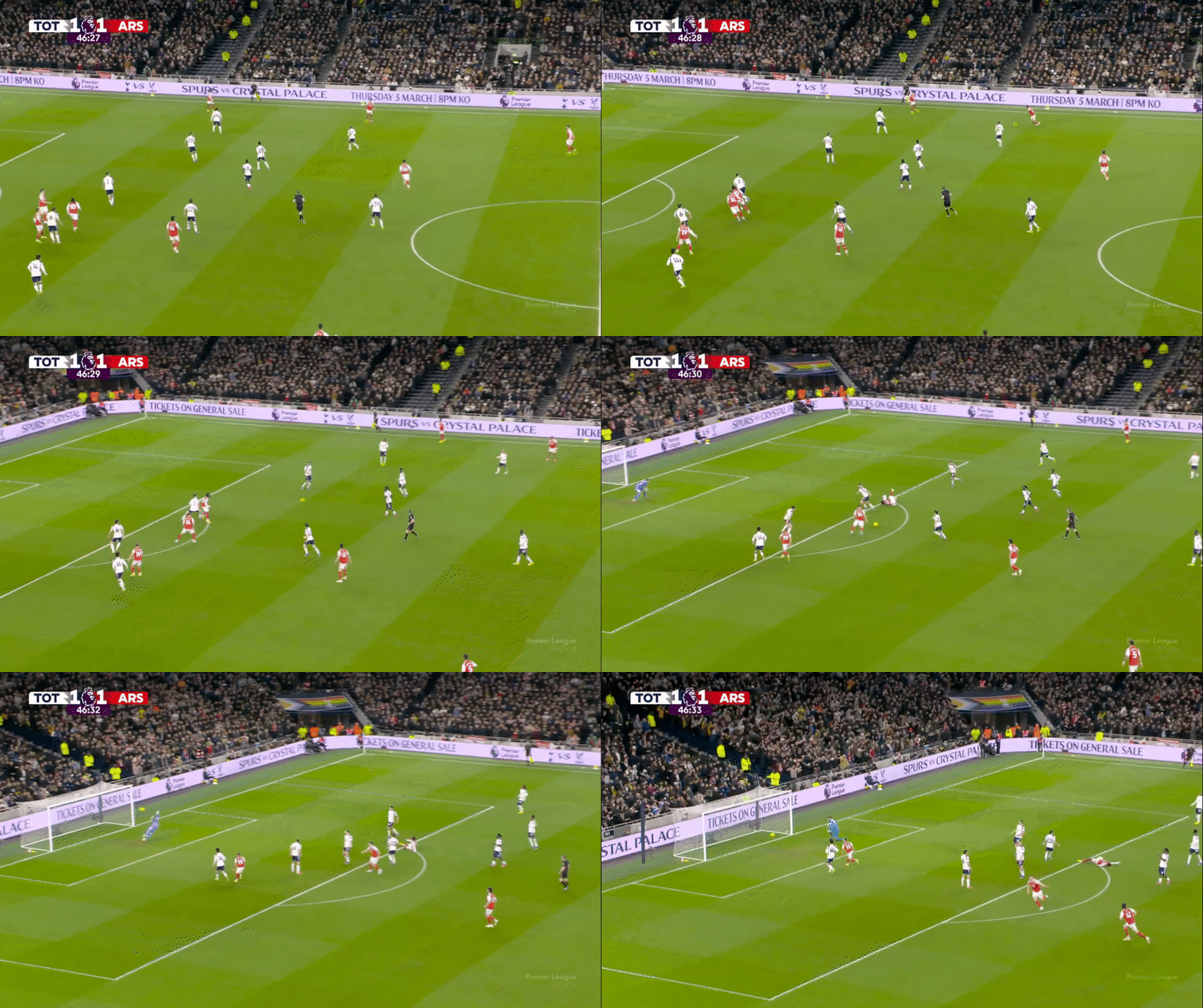
Eze has had a few too many games locked into the right pocket, playing like the lowest-touch version of Ødegaard imaginable. After his Spurs brace, Arteta said, “I start to understand how we’re going to get the best out of him now.” That showed up in his heatmap.
Those closely-knit central pairings can befuddle back-threes. It was so nice to get a couple of quintessential Gyökeres goals. They do hit different.
(Same goes for his penalties.)
Arteta expanded on platforming Eze before Brighton.
“He’s a player that needs a lot of movement around him to activate those spaces, to create a space for himself, and for him in order to be efficient in those spaces. But it’s certainly an option that we have in the team.”
Against Leverkusen, it wasn’t all perfect. These kinds of rotations don’t look fully complementary. All dribblers on the right, all runners on the left.
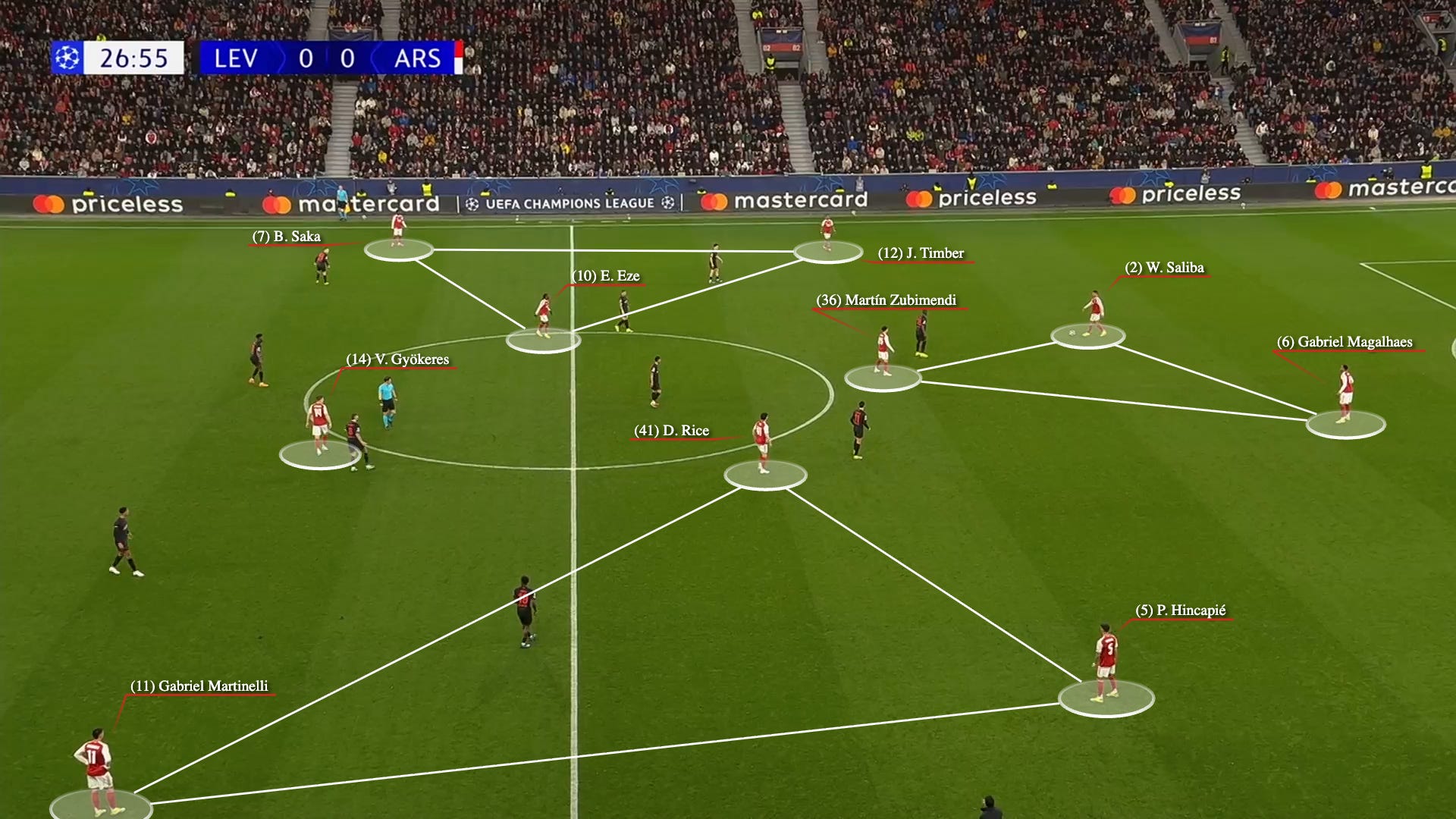
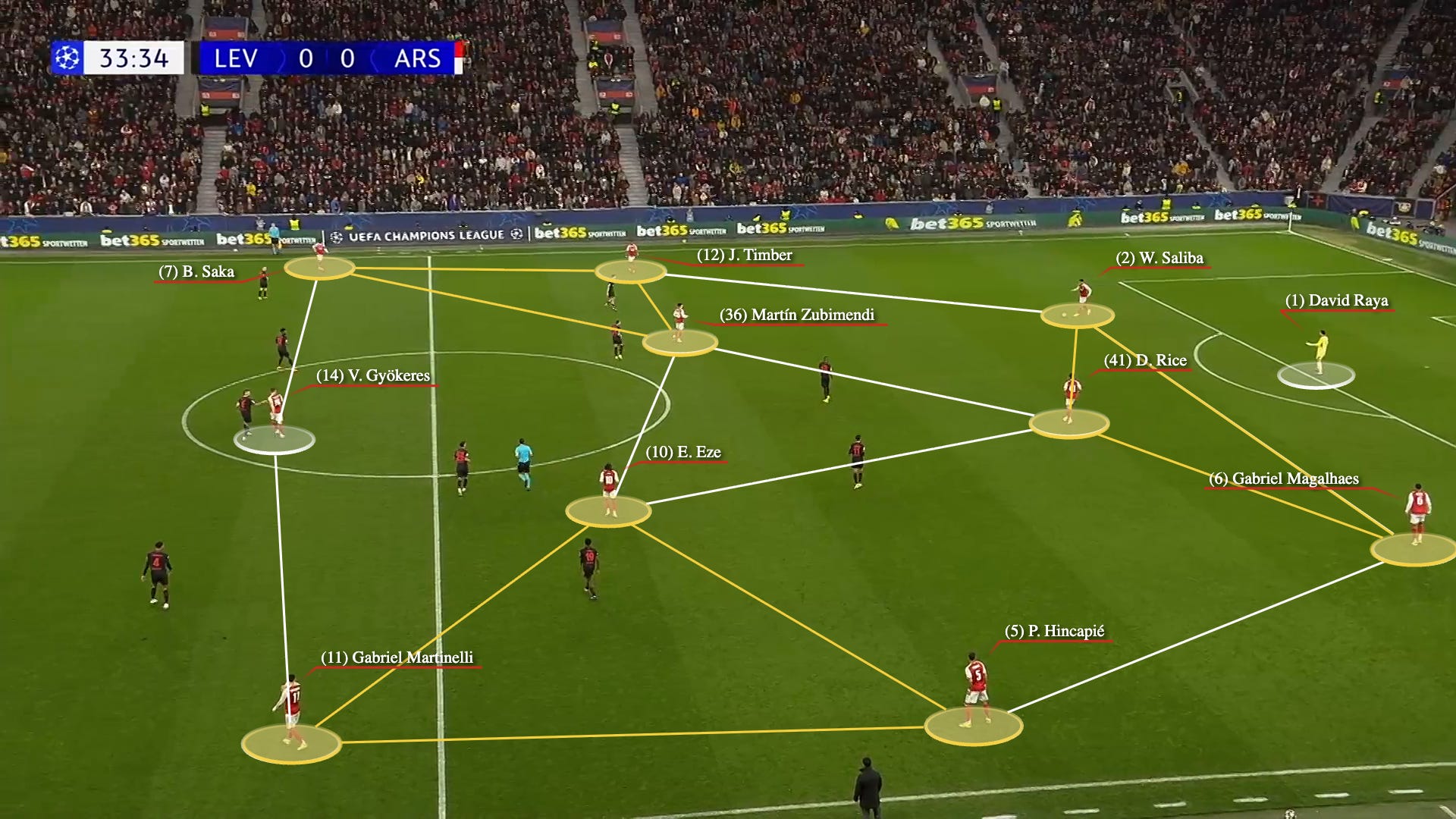
But what was seen much more often, which I like plenty, is this: Rice driving from deep, Hincapié running up, Martinelli going in and out, and most importantly, Eze available in the pocket on the left, and Zubimendi available in the pocket on the right.
The shape often wound up looking like this, which I have very few complaints about.
These are promising outlines. There’s enough safety in the back for the occasion, plenty of runners, and complementary profiles on paper. As I wrote in Triangles:
In the meantime: a Rice / Zubimendi / Eze midfield is also quite balanced. The issue is how we’ve been using them. We should seriously consider Rice and/or Zubimendi in the right midfield role. Zubimendi can replicate much of Ødegaard’s orchestration. As needed, Rice could play a more aggressive, Henderson-style advanced role, especially on underlaps.
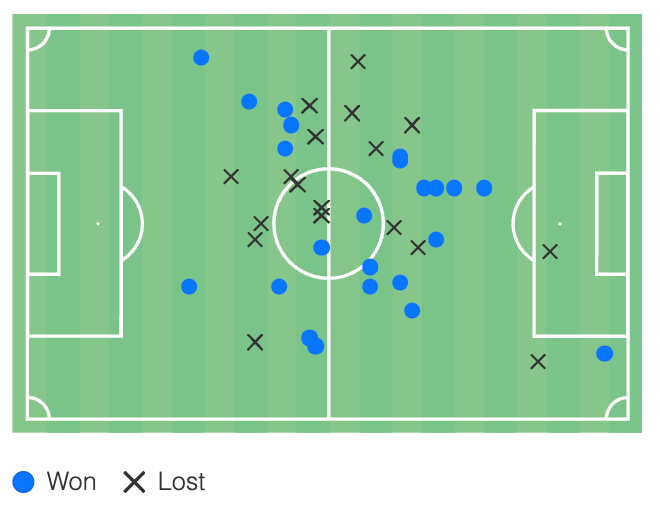
Eze’s action map looked good, aside from receiving in Zone-14 a bit more.
Eze total actions vs Leverkusen (source: Wyscout)
I don’t think this was one of those games with dynamics that were fundamentally off. I didn’t even mind the patience: you don’t want to rush up to a back-five and beat your head against the wall. And it’s an away first leg, of course.
There were good little moments like this.
It’s great to have Eze as a resource on transitions, as he can usually figure something out. Timber has been great at pounding in those diagonals, as he did against Spurs, and it’s great to get Martinelli running like that in the Champions League.
This was another transition that nearly turned into a goal. Timber again hit that diagonal ball through, which Eze dummied, Gyökeres laid off, and Martinelli hit off the crossbar.
Through the middle, there were some snappy moments.
Why didn’t it turn into more?
To my eyes, there were some speed issues and occasionally funky groupings of players. But mostly, it was about individual performances, timing, and rhythm. It was just a little tired and sloppy.
Martinelli stopped his run here.
The timing for moves like this was just a bit off.
And Saka was simply losing his battles.
About a month ago, I did a deep-dive on Saka’s play and found that concerns over his performances were massively overblown. He was playing great, unlucky with assist variance, but sublime at everything else, except for missing shots. I do think he’s #actually struggled more lately. It’s OK. He’s looked good in the #10, and it’s why we have Madueke.
For Timber, aside from those great diagonals, we saw some tired whacks.
…and a missed header here.
People are understandably wary about our best chances being shipped to our full-backs, but look above. It’s not luck or tactical happenstance on Timber’s part: he gets into those spots, and that’s a huge part of the battle. It’s a bit like imagining Fabio Vieira being able to whip balls in from the spots that Ødegaard gets free in. That’s well and good, but he wasn’t getting into those spots.
So it was all that … and Leverkusen played quite well. I’m not sure I have more analysis.
If Ødegaard works an opponent by weaving, ducking and diving and landing lots of jabs to the abdomen, then Eze is your uppercut guy.
Jabs and uppercuts; that seems apt. And maybe the problem is that you need a few jabs to open up the opportunity for an uppercut. Those jabs, particularly from deep, have been few and far between.
The simple reality is that Arsenal are a deeper squad than last year, have more legs to throw on late, more ability to rest players and compete across fronts, and better defenders overall. I also think that much of the tactical intention has improved, especially given the realities of the day. But Arsenal have taken a step back as a passing team.
It’s not terribly difficult to deduce why:
First, the full-backs. For fitness or preference, Hincapié has gotten the call over Calafiori and Lewis-Skelly. Timber, previously a massive-volume buildup CB at Ajax, was a bit behind White as a combining attacking force, and has gotten more harried as the season has gone on. He’s still getting in good positions and deleting wingers from existence.
Per Gradient, Ødegaard graded out as the best passer in the league among attacking midfielders and wingers last season. This was widely seen as a down year for him.
This year, the top line-breakers have been Ødegaard (4.6/90), Zubimendi (4.32/90), Saliba (4.06/90), Rice (3.57/90), and Mosquera (2.95/90). There aren’t a lot of line-breakers coming from full-backs or players who have filled in for Ødegaard. Saliba, we should remember, has also missed some annoyingly big games.
Ødegaard is also statistically (and actually) our best player at breaking multiple lines, and breaking the midfield lines. Our second-best player at breaking the midfield line is Merino, also out.
A few positions have taken a step back. Gradient’s league-wide rankings are rough viewing, take them as you will, and tell an important story. Gabriel Magalhães, Martinelli, Madueke, and Gyökeres are all near the very bottom of their respective positions for passing and passing under pressure right now.
There’s also a receiver issue. Arsenal have the second-lowest cutback success rate in the league (26.3%), only above Burnley. I think many of those passes look plenty “on.”
I don’t see a massive quality difference in the passing analytics of Zubimendi and last year’s sixes. They got on the ball more, but weren’t at their best, especially when under pressure. I do miss those 80-touch Jorginho games, though, and think Zubimendi is capable of tilting more in that direction.
My synopsis here is simple: more technicians need to hit the pitch.
👉 XII. Hincapié and the left
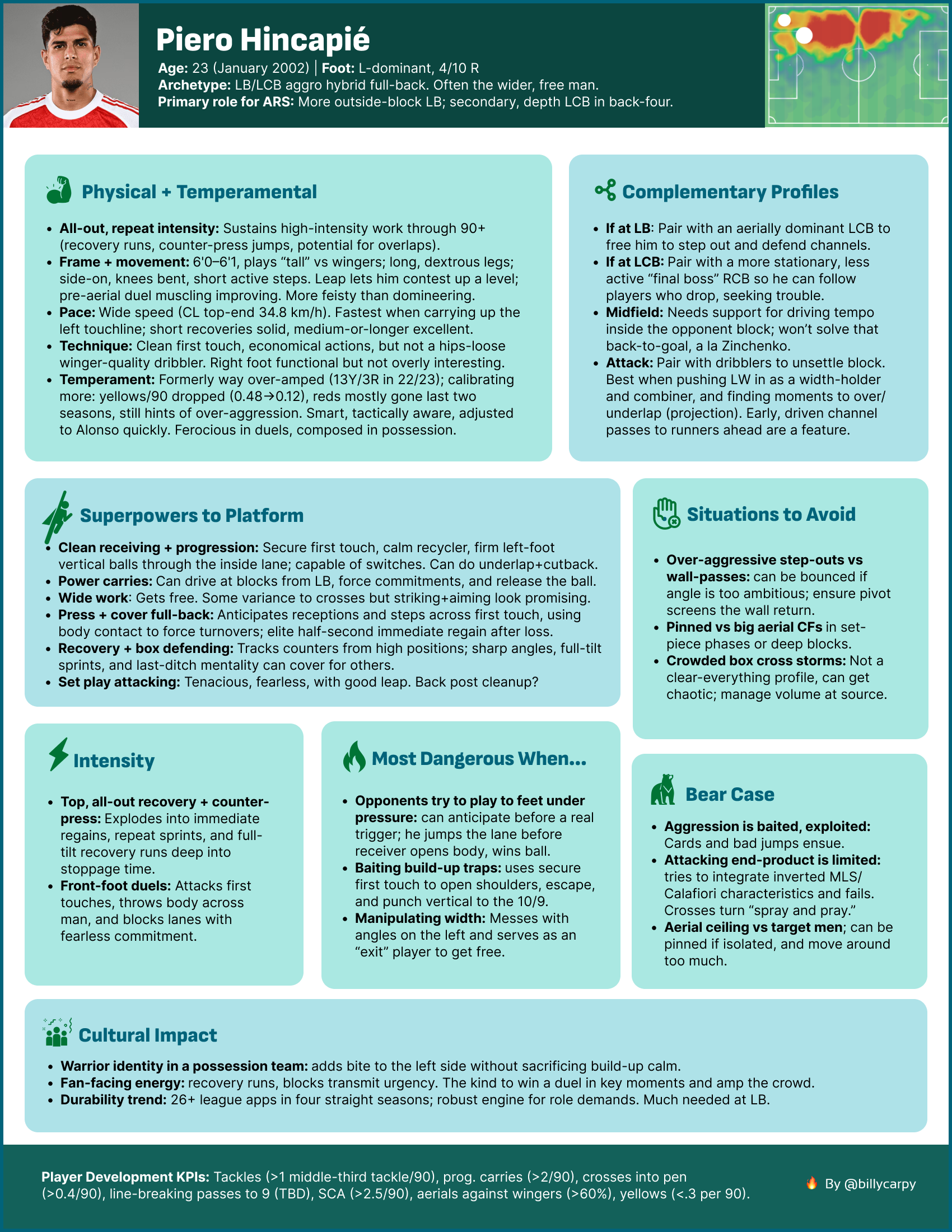
Hincapié has been brute-forcing his way into the left-back spot.
Here was the one-pager from before his league debut.
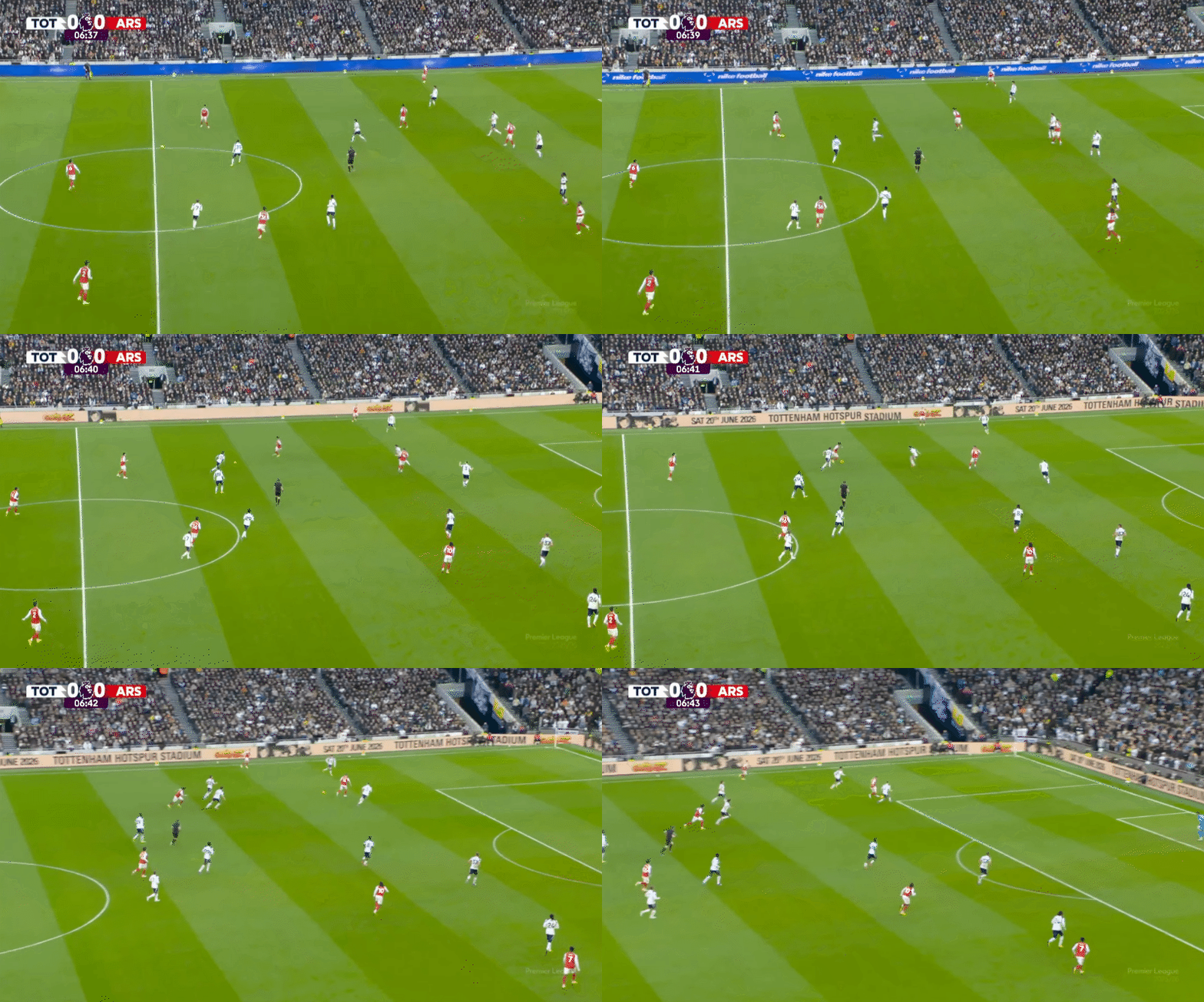
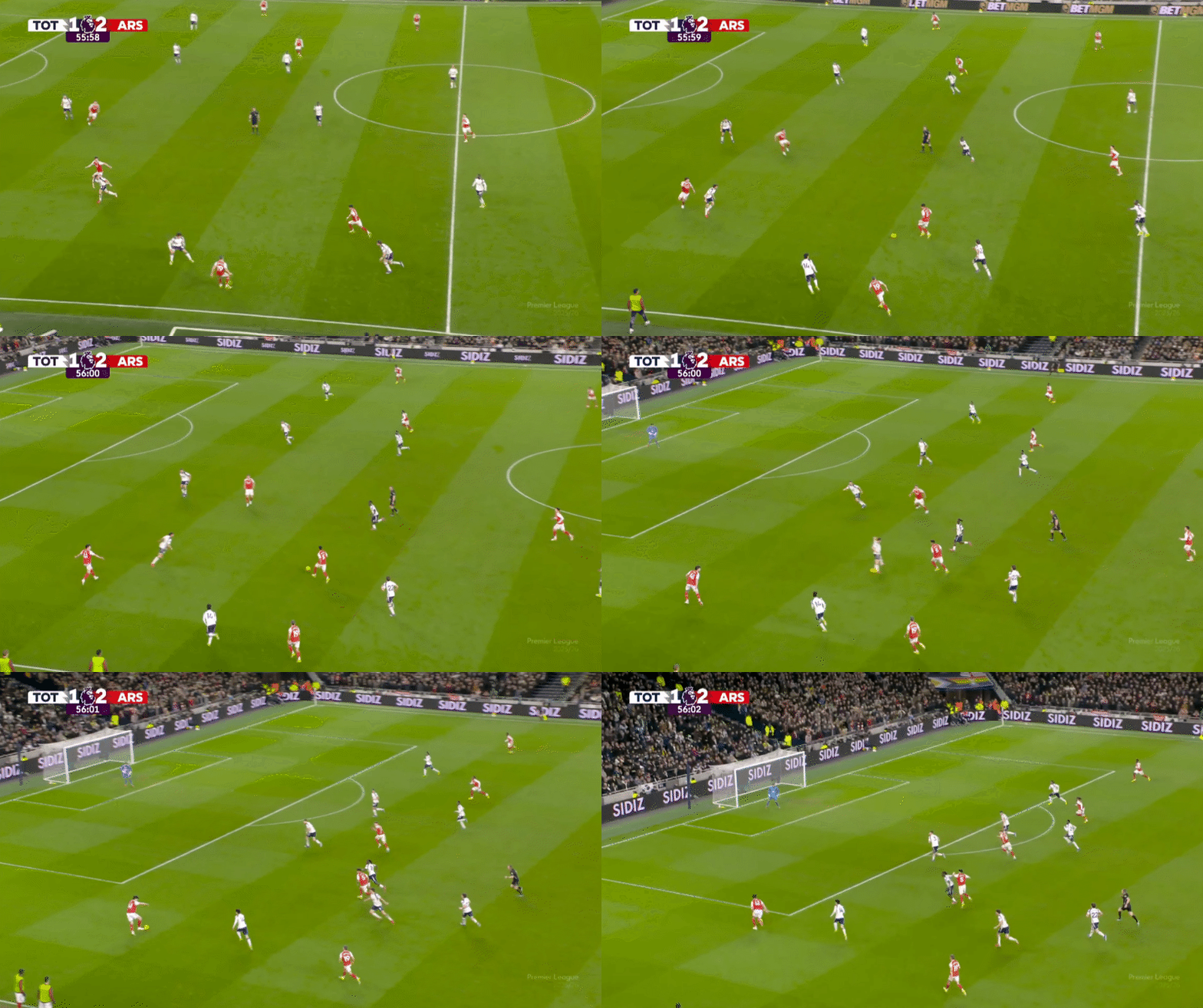
It can be exhausting just to watch him. Here are twenty sped-up seconds in the life of the Ecuadorian.
I’ve noticed him doing a lot of good things with his body orientation.
Here, he wins the spot, lets it run across, forces out the wide CB, and meets the ball on time. Against a back-three, this has the added bonus of emptying out the middle. A single control touch would kill this move.
Here, he doesn’t swivel his head or give away that he’s looking to release Rice. He fully sells the inside carry to gain the commitment.
And here are the good hips. When you get fired a ball like this, it’s hard to swivel enough and get touch on the release. But he’d already scanned Trossard’s position and just opened up.
He’s not a dribbler, but he’s also more interesting than a Hustle Chad. He’s got a good relationship with the ball, especially with first touches.
Still, a lot of that impact is still in progress, and I’m not sure his best use is sticking him to the inside of Martinelli. If you’re wondering why he’s been chosen over the likes of Lewis-Skelly, there were clues in this Arteta conference.
“Before, when you used to do a game plan and you just invert a full-back and bring an extra player in midfield, or a false-nine, opponents are finished, big overload, 4v3 inside, 2v1 inside, time on the ball, so dominant, 70-80% of possession, the other opponent, two counter-attacks, set-pieces, the game is done. Now, teams are adapting.”
It sounds like he believes a fluid midfield double-pivot is the best response to the rise of man-marking, which “un-inverts” the full-back and keeps them wider, which also gives them longer transitional runs. That tilts his equation toward Hincapié.
I’m not 100% sold on that in all situations, and yes, I think Lewis-Skelly’s skillset is well-suited for the floating “double-6” thing that Rice and Zubimendi are doing. It may just take some time to get there.
(Health permitting, my choice is still generally Calafiori, especially in small-space games).
🔥 Final thoughts
For all the consternation, not least of which by me, Arsenal have so far been the best in the world at navigating this moment. It is the highest-floor squad in an age where the strength of that floor is constantly battered and tested. An eighth-place Everton knocks next. It’s hard to point to any Arsenal player right now and say they’re at their best, but the results are still flowing, mostly.
There has been stubborn perseverance, but also, a compounding loop. When certain first-half groupings start, the lead isn’t as wide as it could otherwise be, which leads to starters falling back and defending more often, which leads to fatigue, which leads to worse passing, which leads to long-balls, and repeat. Ødegaard and Havertz will help if able, but the solution is always the Injured Guy, and things can be improved elsewhere. Zubimendi can rack up more touches, and more technicians can hit the pitch, more often, and earlier, and in more complementary triangles. Arsenal need to reclaim our passing bona fides.
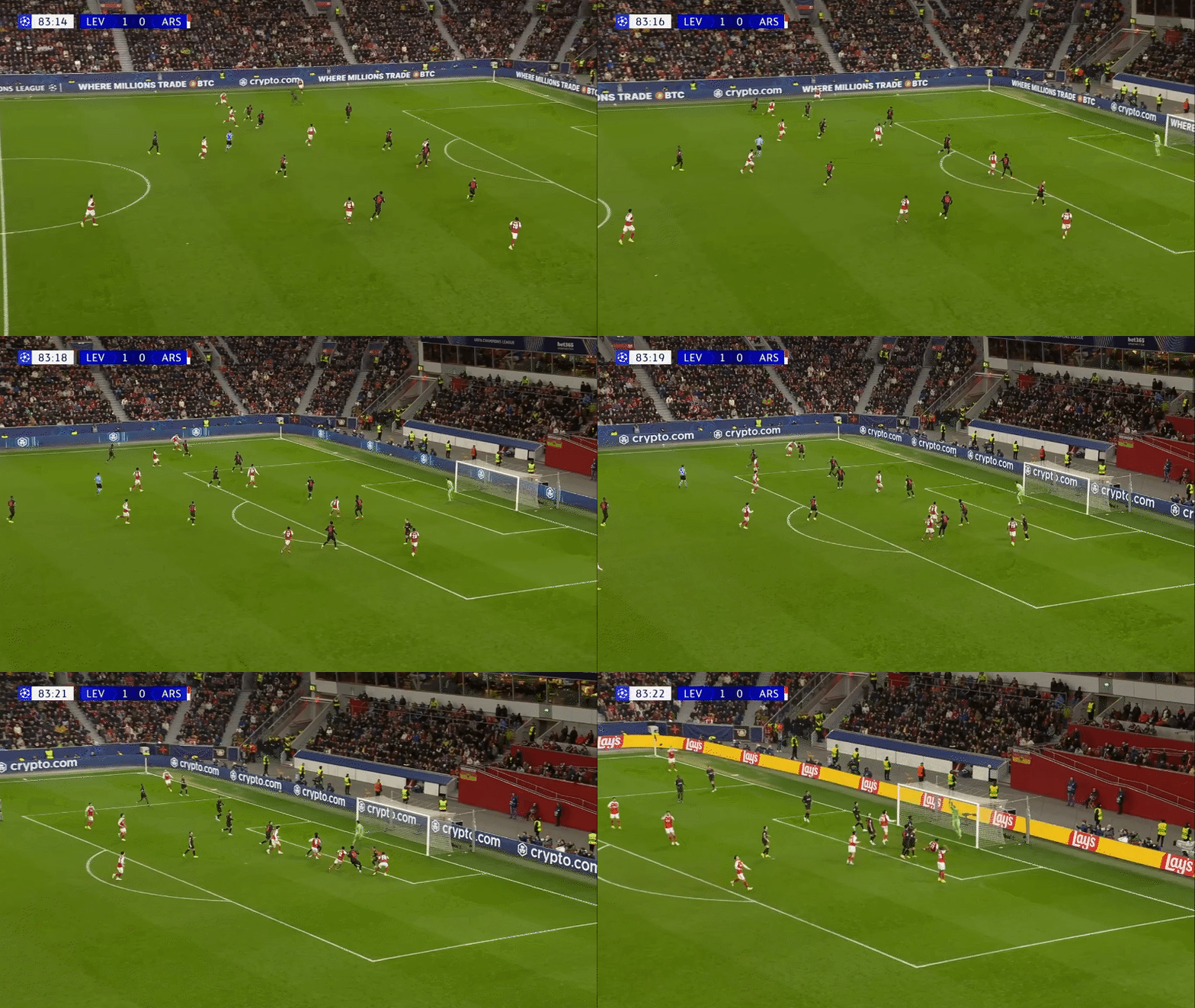
I don’t know about you, but this was my most stressful moment in a minute.
We’re lucky to live with this tension. We’re lucky to be sprawled behind the couch in positions our bodies have never quite experienced before, too anxious to watch. We’re lucky to be fighting on this many fronts at once. And oh, I almost forgot: we’re lucky to have Max Dowman.
It’s art, it’s science, it’s pseudoscience, it’s competition, it’s disorder, and it’s luck. Arteta was cuttingly straightforward when asked about play style.
“It’s playing the best football that you possibly can and the game demands to give you the best possibility to win the game and that's it.”
In his final analysis of those detective tales, Raymond Chandler said their proper backdrop is “not a fragrant world, but the one we live in.”
Then, he offered his conclusion on what makes such a story compelling.
All this still is not quite enough. In everything that can be called art there is a quality of redemption. It may be pure tragedy, if it is high tragedy, and it may be pity and irony, and it may be the raucous laughter of the strong man. But down these mean streets a man must go who is not himself mean, who is neither tarnished nor afraid.
Billy's BBQ is a reader-supported publication. To receive new posts and support my work, consider becoming a free or paid subscriber.
Wonderful from you, Ser Billy. Bless your pen and your heart. I loved the metaphors and anecdotes with which you drove home your point.
You're right to say that Arsenal has regressed in passing this season. I remember an Aina's podcast interview in which he shared the difficulty of playing against Arsenal.
To use Tim Stillman's lingo, Arsenal 'jabs' multiple times before collapsing play and going for the uppercut or jugular.
These days, however, we have become somewhat like City, playing in front of the block and the sides with no plan/conviction to play through the middle or, at the very least, land a decisive blow. But I suspect that it's a player/profile issue rather than anything else.
Fortunately for us, however, Timber has discovered a new passing lane so long that we can make the most of it. I hope that Saka rediscovers his form. He's been okay, but that's not the bar he set.
More importantly, I hope that our players all stay fit. Havertz and Calafiori in particular, but Havertz more.
Wonderful read again from you, Billy. I look forward to rereading this sometime soon.

Another great read. You’re amazing billy.
Wonderful from you, Ser Billy. Bless your pen and your heart. I loved the metaphors and anecdotes with which you drove home your point.
You're right to say that Arsenal has regressed in passing this season. I remember an Aina's podcast interview in which he shared the difficulty of playing against Arsenal.
To use Tim Stillman's lingo, Arsenal 'jabs' multiple times before collapsing play and going for the uppercut or jugular.
These days, however, we have become somewhat like City, playing in front of the block and the sides with no plan/conviction to play through the middle or, at the very least, land a decisive blow. But I suspect that it's a player/profile issue rather than anything else.
Fortunately for us, however, Timber has discovered a new passing lane so long that we can make the most of it. I hope that Saka rediscovers his form. He's been okay, but that's not the bar he set.
More importantly, I hope that our players all stay fit. Havertz and Calafiori in particular, but Havertz more.
Wonderful read again from you, Billy. I look forward to rereading this sometime soon.